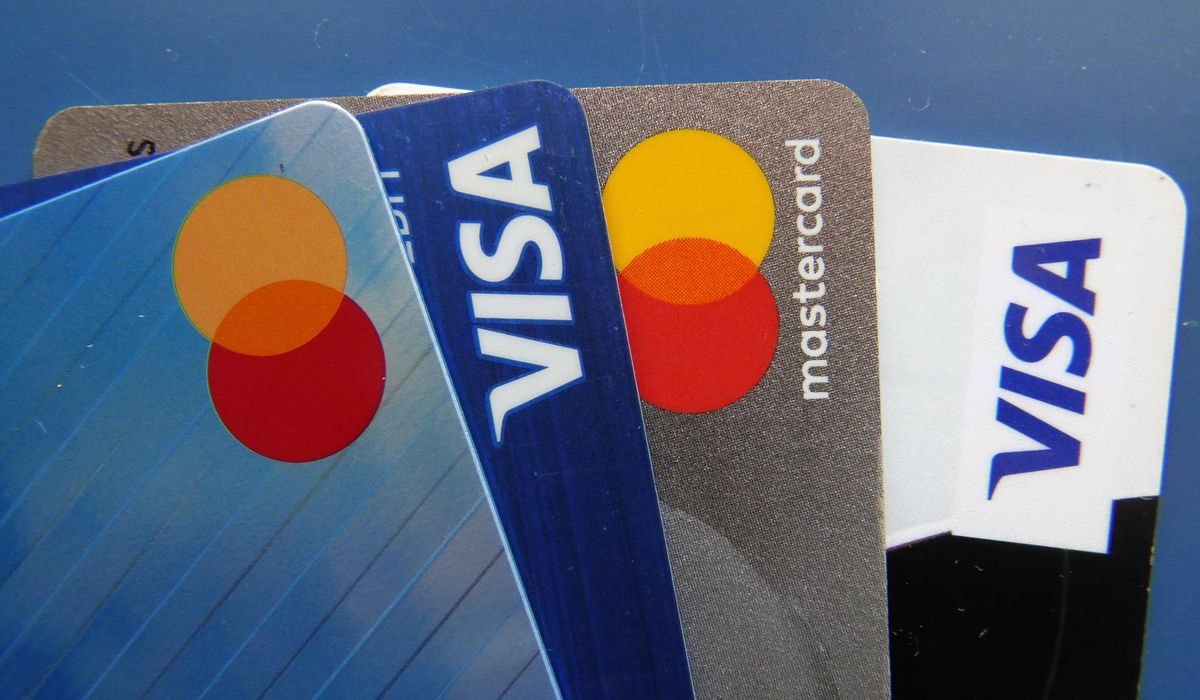

A federal judge sentenced a former federal employee to more than three years in prison after he admitted to stealing more than $1.1 million in taxpayer money over 15 years by ringing up personal charges or sending money to himself through his government-issued charge card.
James Montoya, who worked in information technology for the U.S. Geological Survey, fabricated three PayPal accounts for fake IT vendors and then siphoned more than $1 million to himself through those accounts.
He also charged more than $120,000 in personal expenses to the taxpayer-backed card, at one point racking up a $1,960.30 charge for leather electric seats for his Dodge Ram, and another time leaving taxpayers on the hook for $590 for Disney toys.
He ran the scams from 2008 to 2023. Authorities finally caught up with him when an inspector general used data analytics to review charge card spending.
“Stealing from the federal government is stealing from hard-working American taxpayers,” Peter McNeilly, the U.S. attorney in Colorado, said this week in announcing the case outcome.
Montoya was ordered to serve 41 months in prison, to spend three more years on supervised release, and to pay $1,122,009.47 in restitution.
Prosecutors described his scams as a massive breach of public trust, saying he was making $119,000 in annual salary at the end and continued to steal.
“Rather than live within his budget, or find a second source of legitimate income, the defendant made the decision, hundreds of times, to steal and to use his government charge card like a personal credit card to support his lifestyle and hobbies,” Assistant U.S. Attorney Sonia told the judge in a sentencing recommendation memo.
She’d asked for a 46-month sentence and a $15,000 fine in addition to the restitution, saying strong penalties were needed to convince other employees not to try fraud.
“In order for government offices, like the USGS, to function efficiently, the agency depends on its employees to follow certain protocols and act in an honest manner. The defendant’s conduct merits a serious sanction to deter others from engaging in similar conduct,” she wrote.
Montoya took steps to hide his scams.
He used names for the three PayPal accounts that would seem likely recipients for IT payments: Chiphead Solutions, Amazon Resale and Oracle Outlet. He also submitted falsified invoices and receipts to justify payments, citing IT-related equipment or services never delivered.
In reality, he controlled the three accounts and siphoned the money to his personal bank accounts.
A defense lawyer told the judge ahead of sentencing that Montoya was putting his home on the market to pay restitution. The lawyer also said Montoya, after being caught, did admit to his scams and assisted investigators in their probe.
Montoya had worked for USGS since 1986.
The Washington Times has sought comment from USGS for this story.
Charge cards have long been a tricky spot for federal agencies.
The Defense Department inspector general last month reported that there were more than 263,000 active accounts in 2024 for employees who investigators said were probably no longer with the department.
There were also more than 8,000 active accounts associated with Social Security numbers that didn’t match any current or former employee.