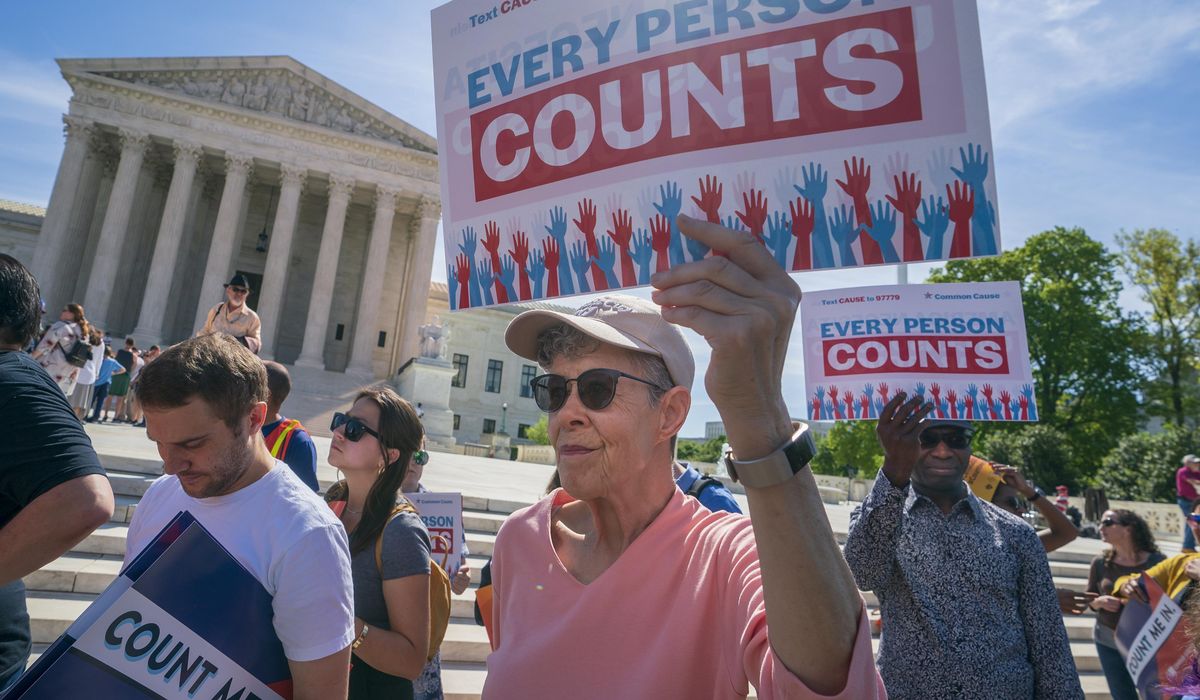
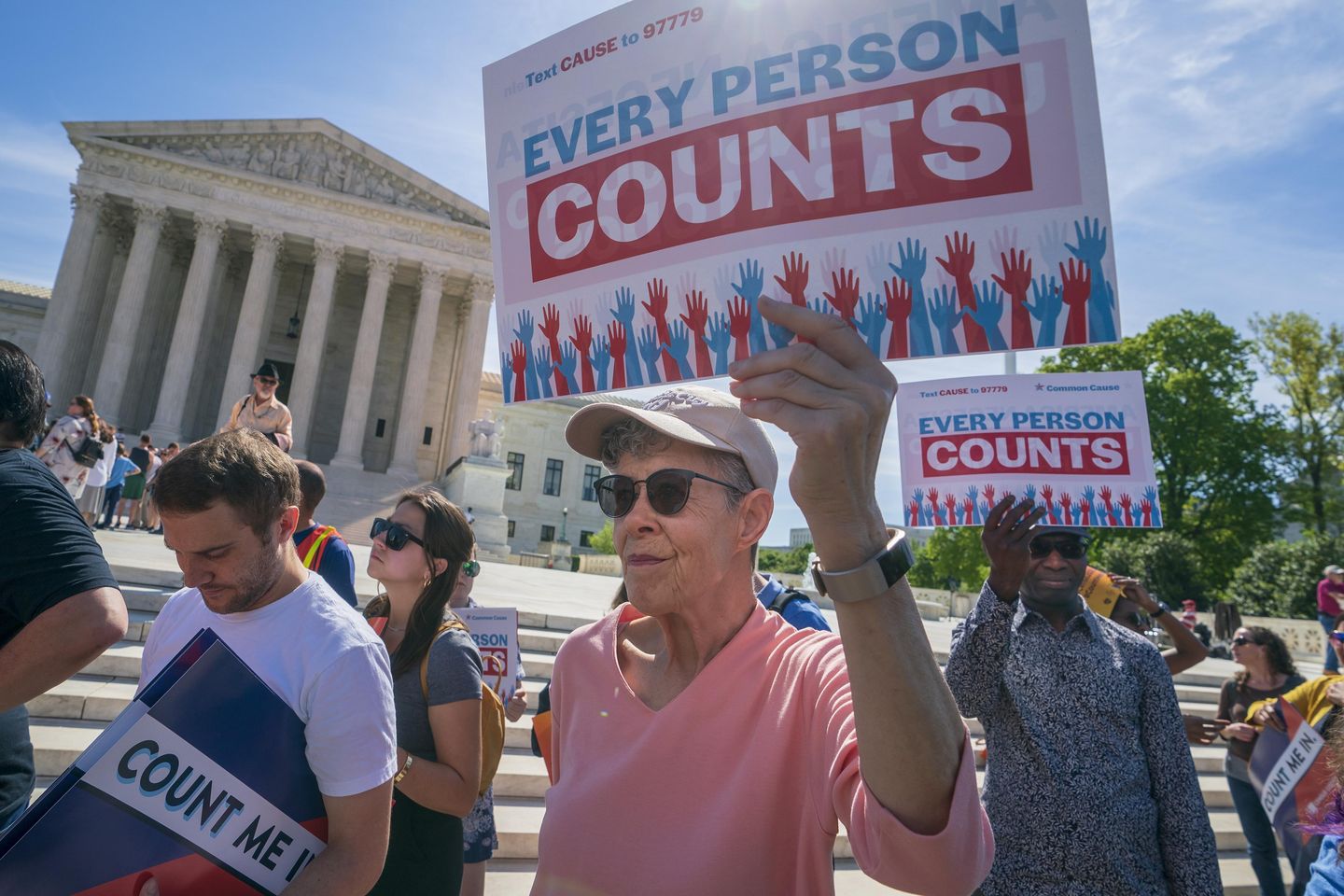
The House Oversight and Accountability Committee approved a bill Tuesday that would add a question about citizenship to the decennial census and divvy up U.S. House seats based only on the number of citizens.
The measure cleared on a 20-19 party-line vote, with both sides acknowledging the raw political power questions at play.
Under the legislation, the census form sent to all households every 10 years would ask whether each resident is a citizen.
The government would then use that count as the basis for dividing up the 435 House seats among the states, replacing the current method that uses the total count of residents in the country.
Republicans swatted aside Democrats’ worries that asking would frighten people — unauthorized immigrants in particular — from filling out the census.
“We just want to know, very simply, are you a citizen or a noncitizen. It’s an easy question, it’s not confusing and it does not reveal anything about an immigrant’s legal status,” said Rep. James Comer, Kentucky Republican and committee chairman.
Rep. Robert Garcia, the top Democrat on the panel, said even asking about citizenship would skew the census.
He said the 14th Amendment requires that all individuals in the country be counted in allocating House seats.
“This bill is unconstitutional, and we should all oppose it,” he told colleagues.
The legislation would apply to the 2030 census and beyond, both in asking about citizenship and using that count for apportioning seats.
Using citizenship would be a major change in how political power is allocated, both in the House and the Electoral College, which is based on House representation.
Rep. Andy Biggs, Arizona Republican, said noncitizens are more concentrated in urban, heavily Democratic areas. That means they boost the population of those states, even though they cannot vote.
He said of the 24 districts where at least 1 in 5 adults are noncitizens, only four elected Republicans in 2022, after the last census. Of the 54 districts where at least 98% of the adult population are citizens, 49 elected Republicans.
“Only Americans should decide American elections, and that means starting at the apportionment process, and that means starting at the census process,” Mr. Biggs said.
The Census Bureau figured there were about 340 million people in the U.S. as of 2024, and about 24 million of them weren’t citizens.
That is based on the American Community Survey, a rolling census survey that goes to a small number of households and does ask about citizenship.
The full 10-year census, which goes to all households, used to ask about citizenship until the question was dropped from the main form and instead placed in the surveys that go to fewer homes.
President Trump tried to add a question about citizenship to the 2020 census, but that move was blocked by the Supreme Court. The justices ruled that asking about citizenship is legal — and indeed had been the norm for much of the country’s history — but ruled that Mr. Trump broke procedural law in the way he attempted to rush the process of including the question.
Congressional legislation would circumvent that issue altogether.