
Beijing is “out for blood” and wants to exact a toll on Japan for recent signals that Tokyo would view a Chinese attack on Taiwan as a threat to Japan’s security, according to a leading scholar on China’s foreign policy.
Yun Sun, senior fellow and director of the China Program at the Stimson Center in Washington, said during an online forum Tuesday that China believes it must respond aggressively to the comments from Japanese Prime Minister Sanae Takaichi, who last month equated a Chinese move against Taiwan to a “survival-threatening situation” for Japan.
Ms. Yun, an expert on China’s relationships with neighboring countries, said Beijing views those comments as potentially the first domino to fall in a broader trend in which other key players across the Pacific and beyond commit to defend Taiwan in some capacity if China invades the island democracy.
Communist leaders in China, Ms. Yun said, believe they can’t let that happen.
“In Beijing’s view, if China does not push back on Takaichi’s comment, the future question on Japan’s role in the Taiwan contingency will no longer be whether Japan will play a role, but how Japan will play the role. The new narrative will change the course of policy and change the course of discussion, and potentially introduce a new normal of U.S. allies’ collective response to Taiwan contingency,” she said during Tuesday’s Washington Brief, a monthly online forum hosted by The Washington Times Foundation and moderated by former CIA official Joseph DeTrani.
Ms. Yun said other nations, such as Australia or even NATO countries, could follow Japan’s lead and cast a Taiwan offensive as a threat to themselves and the broader global order. China believes it must act now to stop that trend, she said.
“Currently, what we’re seeing is China is out for blood,” she said. “Beijing aims to use this opportunity to the maximum to push back, to set the record straight and deny Japan any legitimate role in a future Taiwan contingency.”
She added, “China is trying to instigate Japanese public opinion, or to solicit, basically, Japanese economic costs to Japan that even Japan has to pay such a high cost for just a mere comment by the prime minister, just imagine what the true cost will be if Japan does decide to intervene … in a future Taiwan contingency.”
Beijing initiated a multipronged offensive against Tokyo following the Nov. 7 comments. Chinese diplomats have threatened violence against Ms. Takaichi, demanded a retraction and even sent a letter to the United Nations. Chinese state media has lambasted her, and anti-Japanese protests have taken place. Beijing has warned its tourists not to visit Japan, plus halted Japanese seafood imports.
China issued more threats to Japan this week. In a letter to U.N. Secretary-General Antonio Guterres, China’s ambassador to the U.N., Fu Cong, said the comments from Ms. Takaichi represent the “greatest challenge” to relations between the two countries.
“If the Japanese side truly seeks to develop stable China-Japan relations, it should clearly reaffirm the one-China principle … immediately retract the erroneous remarks and take practical steps to honour its commitments to China,” Mr. Fu wrote in the letter, according to the South China Morning Post. “Otherwise, the Japanese side should bear all the consequences arising therefrom.”
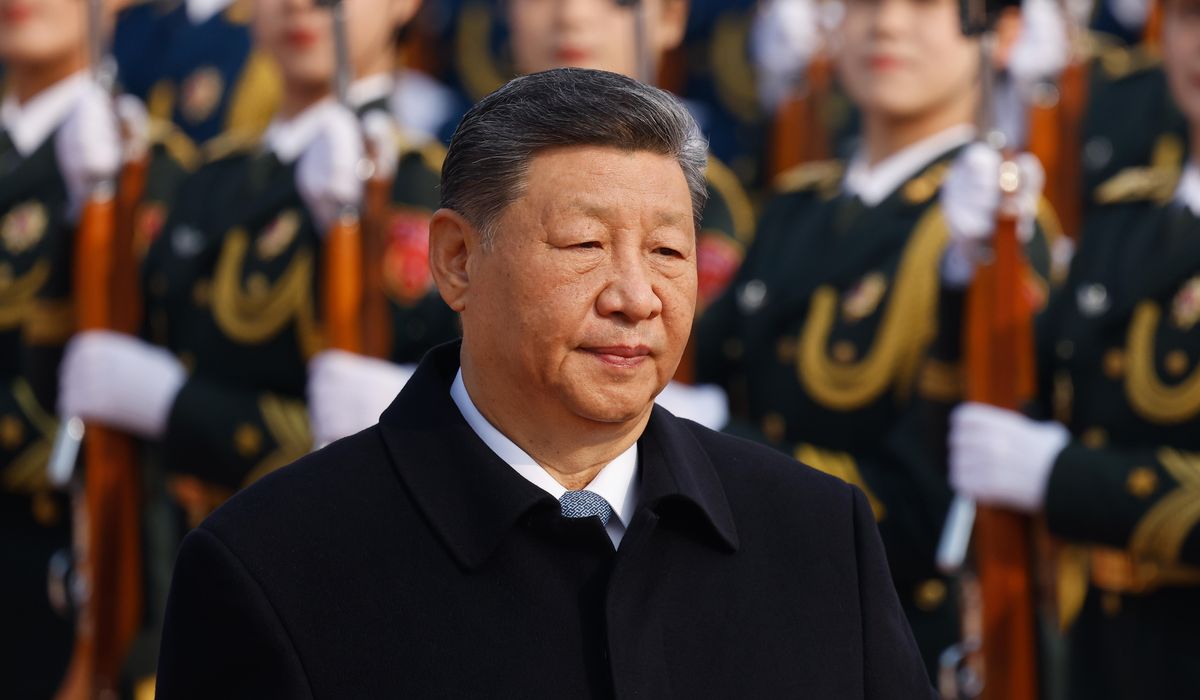
Some analysts believe that China views Ms. Takaichi’s remarks as a potential reversal in what otherwise could be viewed as positive trends on Taiwan. President Trump’s recent meeting with Chinese President Xi Jinping, along with other signals from the White House that it wants to improve relations with Beijing, could have been interpreted inside China that U.S. military action to defend Taiwan is becoming less likely.
“I think that contributed to how China has interpreted the situation,” Ms. Yun said. “Because in the Chinese view, for the longest time, the reason that China could not achieve unification [with Taiwan] is the United States.”
Beijing also may have learned lessons from Russia’s 2022 invasion of Ukraine and the steps it took, or failed to take, in the years leading up to it, according to Alexandre Mansourov, a professor at Georgetown University’s Center for Security Studies.
“It needs, definitely, to isolate Taiwan diplomatically by preventing other key regional powers from backing Taiwan,” Mr. Mansourov said during Tuesday’s Washington Brief event. “That’s the lesson of the war in Ukraine. That’s what Russia failed to do, from 2014 [onward] — by convincing the countries like Germany, France and Britain that any military intervention by NATO would be very ineffective, very high cost for them.”
Russian President Vladimir Putin “failed to do it,” he continued, “and so now they’re reaping, you know, the results of that failed diplomatic preventive action.”
“The Chinese learned from that,” Mr. Mansourov said.
Last week, Ms. Takaichi’s government issued a written reply to a Japanese lawmaker’s question about the recent Taiwan comments.
In that reply, the government said it “totally maintains” the position that an attack on Taiwan would be a survival-threatening situation for Japan and that the government “does not believe any review or reconsideration is necessary,” according to Japan’s NHK media outlet.
• Andrew Salmon contributed to this report.