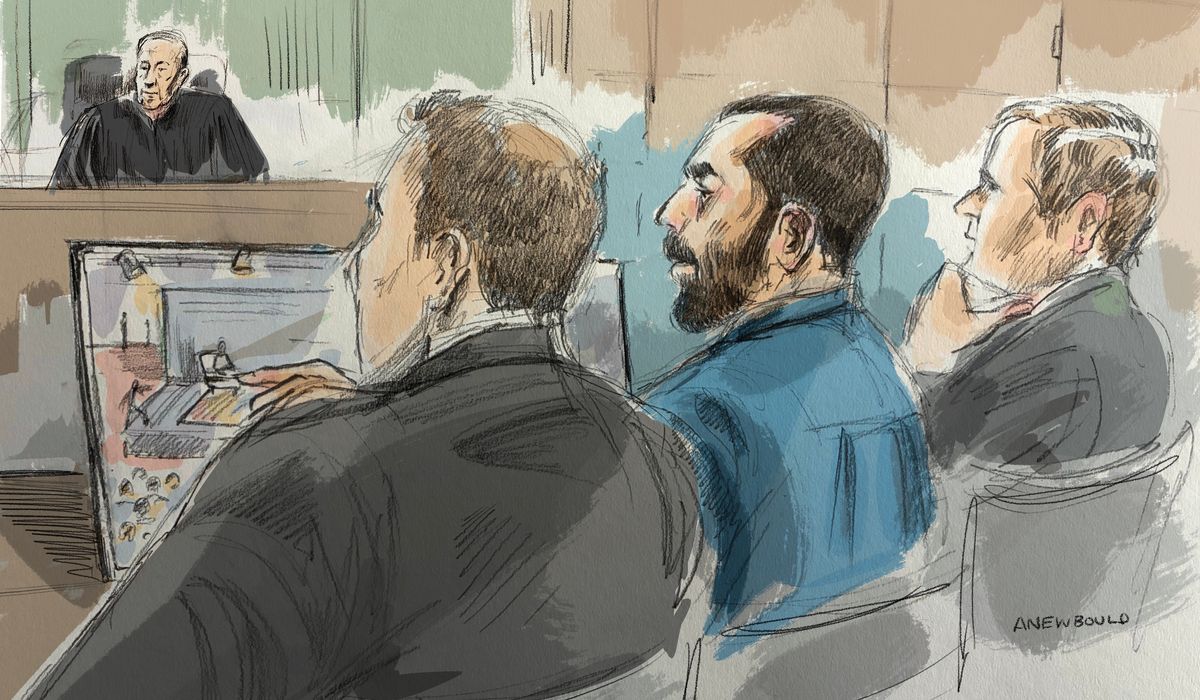
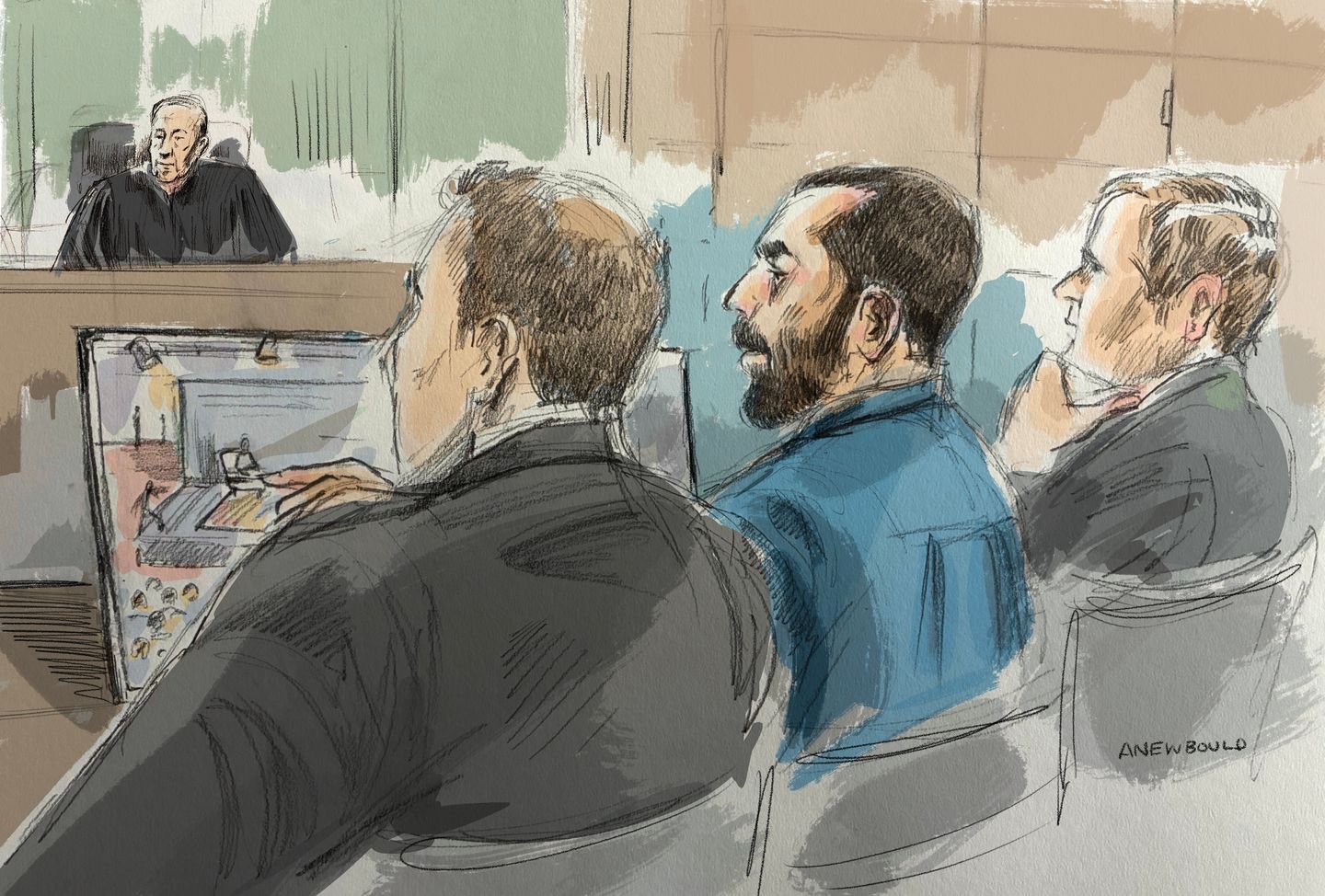
A federal jury has convicted Hadi Matar, 28, of Fairview, New Jersey, on terrorism charges stemming from his 2022 attack on author Salman Rushdie, the Justice Department announced. Matar was found guilty of attempting to provide material support to Hizballah, a designated foreign terrorist organization, engaging in an act of terrorism transcending national boundaries and providing material support to terrorists, prosecutors said.
Assistant Attorney General for National Security John A. Eisenberg said Matar spent more than a year immersing himself in Hizballah’s ideology and preparing to act on a fatwa issued by Iran’s ayatollahs calling for Rushdie’s murder. Eisenberg called the attack “a chilling reminder of the global reach of Iranian terrorism.” U.S. Attorney Michael DiGiacomo for the Western District of New York said Matar, who was born and raised in the United States, aligned himself with the terroristic values of Iran’s leaders and spent months preparing to carry out what he hoped would be Rushdie’s execution. DiGiacomo credited members of the public and law enforcement with saving Rushdie and capturing Matar. FBI Counterterrorism Division Assistant Director Jarod Brown said the attack was not impulsive but rather a violent act carried out in support of a designated foreign terrorist organization.
According to the Justice Department, Matar attempted to murder Rushdie on Aug. 12, 2022, at the Chautauqua Institution in Mayville, New York, acting on a fatwa first issued in 1989 by Iranian Supreme Leader Ruhollah Khomeini, reaffirmed in 2017 by Iranian Supreme Leader Ali Khamenei and endorsed in a 2006 speech by Hizballah Secretary General Hassan Nasrallah. Prosecutors said Matar spent more than a year researching the fatwa’s continuing validity and discussed it, along with Hizballah’s endorsement, with individuals in Iran, Australia and Canada. He also created videos combining material about the fatwa with footage of Nasrallah endorsing it in 2006, according to the release.
Officials said Matar traveled to the attack site using the name “Hassan Mughniyeh” and carried a false driver’s license bearing that name. The name combined Nasrallah’s first name with the surname of Imad Mughniyeh, the former head of Hizballah’s External Security Organization who was responsible for planning several Hizballah terrorist attacks. On the morning of the attack, Matar visited a Hizballah-run website and took screenshots of images of Hizballah martyrs who had died in August.
Matar faces a maximum sentence of life in prison when he is sentenced Nov. 3 by U.S. District Judge Richard J. Arcara, who presided over the trial, the Justice Department said. Assistant U.S. Attorneys Timothy C. Lynch and Charles M. Kruly and Trial Attorney Jennifer Burke of the National Security Division’s Counterterrorism Section prosecuted the case.
The FBI’s Buffalo office and the New York State Police investigated the case, with additional assistance from the FBI’s Newark, New Jersey, office and the Bergen County Prosecutor’s Office.
This article was constructed with the assistance of artificial intelligence and published by a member of The Washington Times’ AI News Desk team. The contents of this report are based solely on The Washington Times’ original reporting, wire services, and/or other sources cited within the report. For more information, please read our AI policy or contact Steve Fink, Director of Artificial Intelligence, at sfink@washingtontimes.com
The Washington Times AI Ethics Newsroom Committee can be reached at aispotlight@washingtontimes.com.