NEWS AND ANALYSIS:
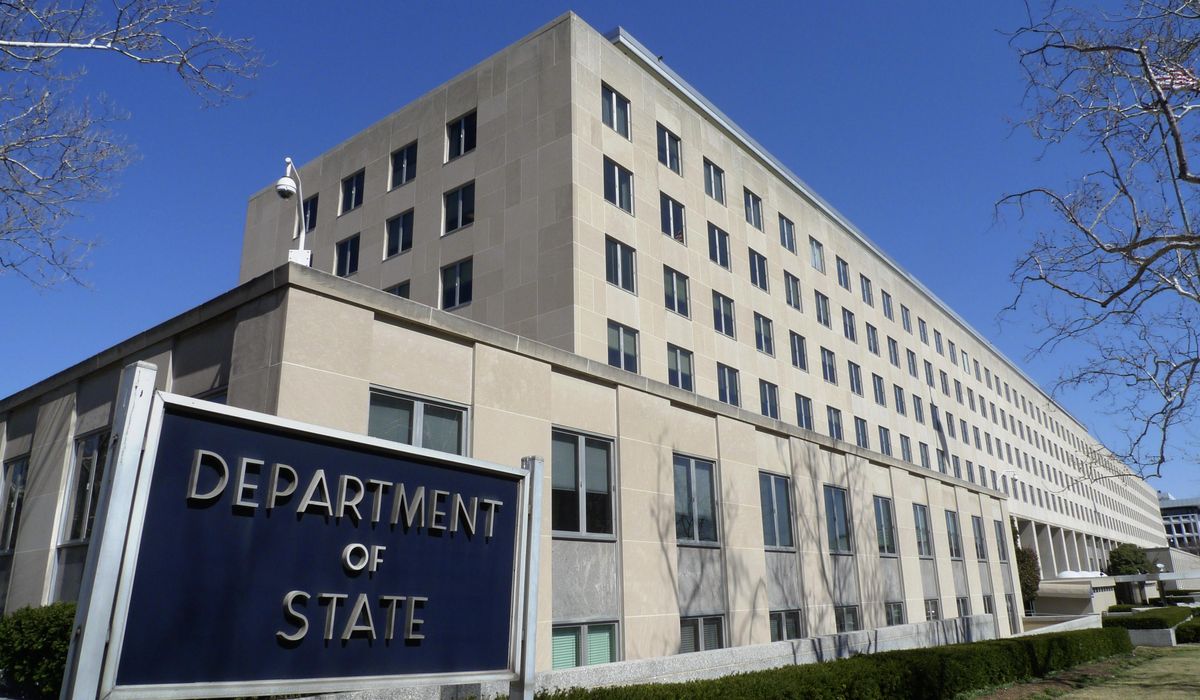
The State Department and U.S. Agency for International Development spent $1.2 billion on programs designed to counter Chinese influence around the world but failed to evaluate whether the programs were effective, according to the Government Accountability Office.
Congress in late 2019 provided State and USAID with $1.6 billion for programs to counteract China’s economic coercion, military exports and other malign activities seen in programs such as Beijing’s Belt and Road Initiative.
The money was part of a Countering Chinese Influence Fund that was directed at blunting activities of the Chinese government, the Chinese Communist Party and affiliated entities acting on their behalf globally.
However, GAO stated that an interagency working group overseeing the project failed to rely on key stakeholders or regional experts and failed to assess if the programs were effective, the report said.
The GAO reviewed an estimated 470 projects funded by State and USAID valued at about $1.2 billion from 2020 to 2023. Auditors found that “working group officials do not have readily available and reliable data on the types and status of these projects,” the agency stated in a report made public this week.
“The working group has not assessed the results of efforts to counter Chinese influence across the portfolio of projects,” the report stated.
Officials told GAO that bureaus and overseas government posts involved in managing the projects provided incomplete data and reports with errors.
Among the 470 projects, officials were unable to provide the time frame for when money was spent for 129 projects and 38 “lines of effort.” Data was also absent from nearly one-third of the approved proposals.
“As a result, working group officials lack critical information to track how funds were used and determine whether the funding ultimately supports the activities described in approved proposals,” the report said.
The program was launched over concerns that China is attempting to become the world’s most powerful military and economic power, the report said.
Projects included U.S. efforts to prevent China from controlling the United Nations, countering Chinese economic coercion such as so-called debt trap diplomacy, and efforts to prevent China from promoting its communist system around the world.
State’s Bureau of International Narcotics and Law Enforcement Affairs spent $3 million in 2023 to provide security screening technology for port security authorities in four countries. The goal was to prevent China from gaining further control of port security operations in the countries.
Other funded projects sought to counteract China’s overseas nuclear energy projects, limit Chinese military exports and prevent China from developing military technology.
One program spent $600,000 in seeking to educate European academic institutions about the risks of illicit technology transfer to Chinese military and defense-affiliated research facilities.
Another spent $475,000 trained journalists in Western Hemisphere nations that have diplomatic relations with Taiwan to detect Chinese propaganda.
The counter-influence program also used $2.3 million to teach awareness of malicious Chinese cyberattacks in East Asia, South Asia and the Pacific islands. Intelligence training worth $3 million was also provided to some foreign nations to help counter malign Chinese activities.
All funding for the program was cut off in February 2025 under the Trump administration’s revamping of all foreign aid.
USAID was largely dismantled and its functions moved to the State Department as a result of what the Trump administration and Republicans in Congress have said is the misuse of billions of federal funds, including providing money to domestic liberal political groups.
The House Oversight and Government Reform Committee has accused Democrats of turning USAID into a “personal slush fund, funneling billions into left-wing propaganda” including climate activism and diversity, equity and inclusion programs.
The State Department told GAO in a written response to the report that its office of China coordination is working to set up a unit to track funding on the counter-influence projects.
“The Department is committed to decision-making based on the best available information and ensuring accountability in how funds are spent to counter Chinese malign influence,” the statement said.
State is also working to develop a comprehensive monitoring and evaluation system for assessing the efficacy of funds spent on countering Beijing influence, the statement said.
Indo-Pacific Command back to Pacific Command
The Pentagon announced on Tuesday that it is renaming the Indo-Pacific Command, the military command in charge of all forces throughout the Asia-Pacific region, back to its original name, the Pacific Command.
The name change “honors the command’s deep historical roots, fostering a sense of pride and collective spirit among all who serve in the Pacific,” the Defense Department, currently unofficially renamed the War Department by the Trump administration, said in a statement.
The command was first established in 1947 by then-President Truman and is the oldest and largest unified combatant command.
“From its critical role in establishing the post-WWII regional security architecture to its coordination of joint forces during the Korean War, the Vietnam War, and countless humanitarian operations, the USPACOM namesake carries decades of military heritage and enduring regional partnerships,” the statement said, noting there is no change in the command’s area of responsibility.
The command deploys about 344,000 troops and civilians in an area from the waters off the West Coast to India, and from Antarctica to the North Pole.
Its forces include 200 ships of the Pacific Fleet, nearly 1,100 aircraft and about 106,000 Army personnel.
The command received the Indo-Pacific moniker in 2018 under then-Defense Secretary James N. Mattis as a way to better integrate both Japan and India into the U.S. strategy of countering China.
The late Japanese Prime Minister Shinzo Abe first coined the joining of the Indian and Pacific Oceans in 2016 by calling for a “free and open Indo-Pacific” over concerns about growing Chinese hegemony.
A Pentagon spokesman did not respond when asked about the name change.
The Senate Armed Services Committee last week voted to formally change the Pentagon’s name to the Department of War in the defense policy bill.
Report: Chinese AI threatens U.S. security
Advanced artificial intelligence systems now being used by China are a major threat to American national security, according to a think tank report.
The report by the Center for New American Security said Beijing’s advanced artificial intelligence systems “pose a serious and growing threat to U.S. national security.”
At least seven Chinese developers now produce systems with powerful capabilities such as coding, reasoning, multimodal recognition, and agentic tasks download by anyone in the world.
“The Chinese Communist Party (CCP), which collapses the boundaries between state, military, and private sector, treats these systems as instruments of political control, economic dominance, and great-power competition,” the report, made public Wednesday, states.
The most significant risks from Chinese AI are products of the communist system that builds, shapes, and deploys the systems.
“This party-state does not tolerate independent power centers and treats AI as a tool of statecraft across every dimension of strategic competition,” the report said.
Kinetically, China AI is enhancing military capabilities and offensive cyber operations. It is also fueling concerns about Beijing’s use of AI for biological weapons development.
Chinese cognitive warfare programs are being powered by AI through more effective censorship, surveillance and influence campaigns and effective espionage.
Economically, AI is driving China’s industrial dominance and creating dependencies that allow Beijing to extend its reach over both emerging and advanced economies.
“These risks affect the United States through two vectors: state instrumentalization, in which the CCP directly wields AI systems, and proliferation and dependency, in which Chinese systems spread globally through open-weight release, model compression, and aggressive pricing,” the report said.
The seven major AI developers were identified as Alibaba, Baidu, DeepSeek, MiniMax, Moonshot, Tencent, and Zhipu.
The most immediate danger is the use of AI in China’s aggressive offensive cyber operations.
“Ideological alignment with the CCP is deepening with every new model,” the report said. “DeepSeek-based agents are 12 times more likely to follow malicious instructions than their U.S. counterparts.”
The report urges the U.S. government to publish national security risk assessments of advanced Chinese AI systems and to issue more detailed cybersecurity alerts and advisories on the threats.
Adm. Sam Paparo, commander of the Pacific Command, said in April that the Chinese military is already using AI to boost combat power.
“I think they see AI’s power from a targeting standpoint, mass data analytics, to quickly discern where the target is, given the covariance among all the factors that come into various sensors,” Adm. Paparo told the Senate Armed Services Committee.
“I think they see the power of AI for strategic decision making, to know the game that you’re playing, to be able to suss out what an adversary’s intentions are, I think they’re right to see that,” he said.
The report, “Red Lines: Understanding the National Security Risks of China’s Advanced AI,” was written by CNAS senior fellow Daniel Remler.
• Contact Bill Gertz on X @BillGertz.