The United States has gone four days without congressional authorization of the Foreign Intelligence Surveillance Act Section 702, a key component of America’s national security. The federal government relies on it to surveil foreigners without a warrant, looking for potential threats to the country.
Senate Majority Leader John Thune suggests that confirming a director of national intelligence could be the key to unlocking FISA.
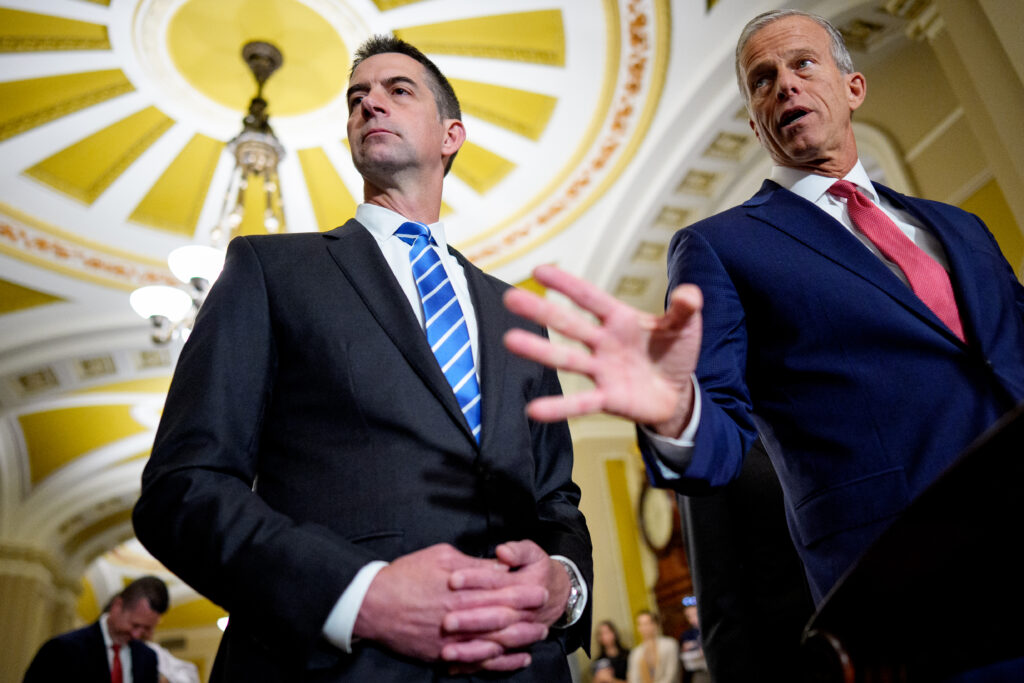
“Jay Clayton is an imminently qualified individual to become the new director of national intelligence,” Thune told members of the press Tuesday afternoon. “We are looking forward to processing him this week.”
Senate Democrats previously blocked the FISA extension after President Donald Trump named Bill Pulte as the acting director of national intelligence, claiming he was not up for the job and unfit to oversee FISA.
Since Democrats seem warmer to the idea of Clayton over Pulte, it is not impossible Clayton will be officially confirmed by the end of the week.
Thune noted that Clayton’s “vision, experience, judgement, and competence” are all characteristics that qualify him for the job, even though Clayton has no experience or official background in intelligence.
As a former U.S. attorney for the Southern District of New York, Clayton did deal with some intelligence matters, Thune said.
However, Minority Leader Chuck Schumer did not sound as convinced. Even though some Democrats, including Senate Intelligence Committee Vice Chairman Mark Warner, have been optimistic about Clayton, Schumer said they are “waiting for the hearing” to see if he is qualified.
“You can ask any Democrat; there are lots of questions about Clayton that have to be answered,” Schumer said.
The Office of the Director of National Intelligence is responsible for overseeing the intelligence community. The United States Intelligence Community includes 18 independent federal agencies and departments, including the Department of Defense and every branch of military intelligence, the Federal Bureau of Investigation, the Central Intelligence Agency, and the Drug Enforcement Administration.
Thune said FISA “needs to be fixed quickly” and he is “hopeful the Democrats will cooperate.”
Sen. Tom Cotton, R-Ark., chairman of the Senate Intelligence Committee, stood next to Thune for roughly 10 minutes but did not answer a single question regarding FISA or Clayton’s confirmation hearing.
Clayton will appear before the committee for his confirmation hearing Wednesday; the committee will have an opportunity to vote on his confirmation Thursday. If the committee moves the nomination along, he could be confirmed by unanimous consent in the Senate by the end of the day, leaving a more realistic FISA opportunity for the following week.
Thune highlighted the “unprecedented” situation congressional Democrats have put the country in. “Trump is the first president in history not to have a civilian nominee confirmed either by voice vote or by a unanimous consent,” he said, adding that it is the “Democrat process” to drag on confirmations.