Minnesota Republican Party delegates held a brief moment of silence for Derek Chauvin during their state convention in Duluth, and the expected outrage arrived right on schedule.
A delegate brought the motion from the floor; the convention approved it by voice vote, and the pause lasted about ten seconds. For the political class still guarding the St. George Floyd story like sacred ground, even ten seconds proved too much.
Ben Crump and Antonio Romanucci, attorneys for the Floyd family, demanded, nay SCREAMED (not really), a public retraction and an apology. Minnesota Attorney General Keith Ellison called the gesture cruel to the Floyd family and disrespectful to everyone who values accountability under the law. From Newsmax:
“The audacity of the Minnesota Republican Party to honor an individual who has both been convicted by a jury of his peers for the murder of a fellow human being, while at the same time violated a professional oath to protect and serve his community, is disgusting,” Floyd family attorneys Ben Crump and Antonio Romanucci wrote Tuesday in a statement, according to The Hill.
The attorneys demanded that state GOP leaders “issue an immediate retraction of this immoral act and issue an apology to the family of George Floyd and to the people of Minnesota that they serve.”
Speaking only for myself, they can suck rotten eggs.
Alex Plechash, chairman of the Minnesota Republican Party, said party leadership didn’t support the motion—surprise, surprise—and described it as a spontaneous reaction from delegates. Danny Nadeau, the convention chairman, handled the procedure without endorsing the message.
George Floyd, as we remember, died on May 25, 2020, after Minneapolis police responded to a call about a counterfeit $20 bill. The Hennepin County Medical Examiner ruled the death a homicide and listed the cause as cardiopulmonary arrest complicating law restraint and neck compression.
The same official report also listed arteriosclerotic and hypertensive heart disease, fentanyl intoxication, and recent meth use as significant conditions.
We’re led to believe such an official report from a medical examiner, especially after so many people were fatally shot, yet during COVID, the bullets didn’t kill them — the virus did.
Derek Chauvin was convicted of second-degree murder, third-degree murder, and second-degree manslaughter, receiving a 22-1/2-year state sentence and later receiving a concurrent 21-year federal sentence after pleading guilty to civil rights violations.
He now serves time in a federal facility in Texas. Appeals courts have upheld his conviction, while Chauvin has continued to pursue legal challenges tied to medical testimony, jury instructions, and police training evidence used at trial.
Chauvin wore a badge, took an oath, and a jury convicted him. Yet the demand on everybody else goes far beyond accepting a verdict.
The demand requires silence about medical complications, about the atmosphere in Minneapolis, about political pressure, about trial questions, and about why countless other victims never received anything close to the same attention.
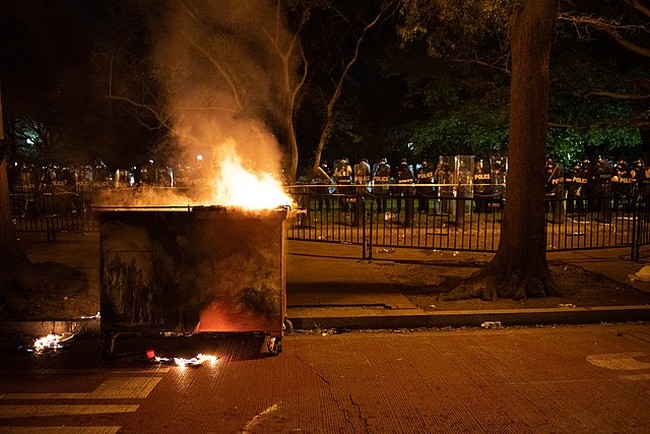
Cities burned, dozens died, billions of dollars in riot damage occurred, and nobody on the left mourned the victims from the Summer of Peace.
A country can accept a court verdict while still questioning the machinery surrounding it. Jurors saw the city under threat of more upheaval; politicians spoke as if acquittal would prove national guilt.
Corporations, universities, city councils, sports leagues, and church leaders rushed to repeat the approved language. Floyd became more than a man who died in police custody: he became an emblem, and emblems don’t tolerate footnotes.
The reaction to a ten-second pause proves how tightly the story remains controlled. A political convention didn’t vacate Chauvin’s conviction; it didn’t erase Floyd’s death; it didn’t overturn a sentence, change a medical report, or rewrite state law.
Yet the demand for an apology came instantly because the gesture challenged the approved moral order.
In Minneapolis politics, some grief gets institutional protection, and some doubt gets treated like vandalism.
Keith Ellison and the Floyd family’s attorney have every right to object. The same freedom belongs to delegates who believe Chauvin became a symbol of political panic, legal pressure, and institutional cowardice.
The real argument concerns whether Americans may still talk about complicated facts after elites decide a narrative has hardened into public memory.
The Man Who Shot Liberty Valance gave America one of its clearest warnings about myth and power: “When the legend becomes fact, print the legend.” Minnesota still prints the legend, and anybody who asks for the footnotes gets treated like a trespasser.
The Chauvin case remains part of American history because George Floyd’s death shook half the country, changed policing, fueled riots, and gave activists a permanent tool.
Yet history deserves a fuller record than murals, ritual language, and political ceremonies can provide.
Ten seconds in Duluth didn’t settle anything; it only showed how much power the legend still holds.
Minnesota’s leaders don’t want a debate over Derek Chauvin, George Floyd, the medical record, or the trial atmosphere. They want obedience to a settled script. Use promo code FIGHT to get 60% off VIP access and support coverage willing to ask the questions the political class wants buried.