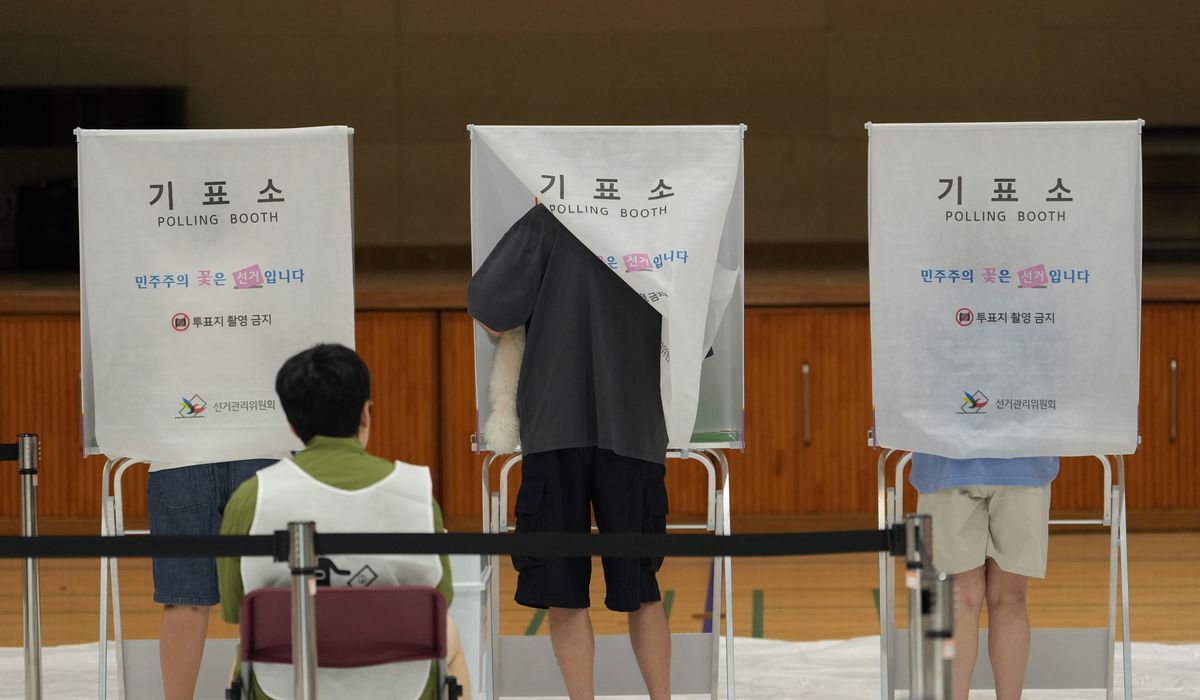
SEOUL, South Korea — Local elections across South Korea Wednesday were expected to be a plebiscite on liberal President Lee Jae-myung, who has been in power exactly one year.
Instead, they may become a plebiscite on electoral oversight as a crisis erupted over ballot shortages.
Hours after voting stations closed and with media exit polls anticipating a win of 10 or 11 of 16 key races by Mr. Lee’s Democratic Party of Korea, the conservative opposition People Power Party formally alleged electoral mismanagement. After paper ballots were found to be lacking at an estimated 17 Seoul voting stations, angry citizens protested, leading to an apology by the head of the National Electoral Commission, or NEC, and the extension of voting hours in some wards.
Even so, PPP’s demands for a recount were refused. As reported in local media, the presidential Blue House told the NEC to “take measures to ensure there are no disruptions to voting and vote counting.”
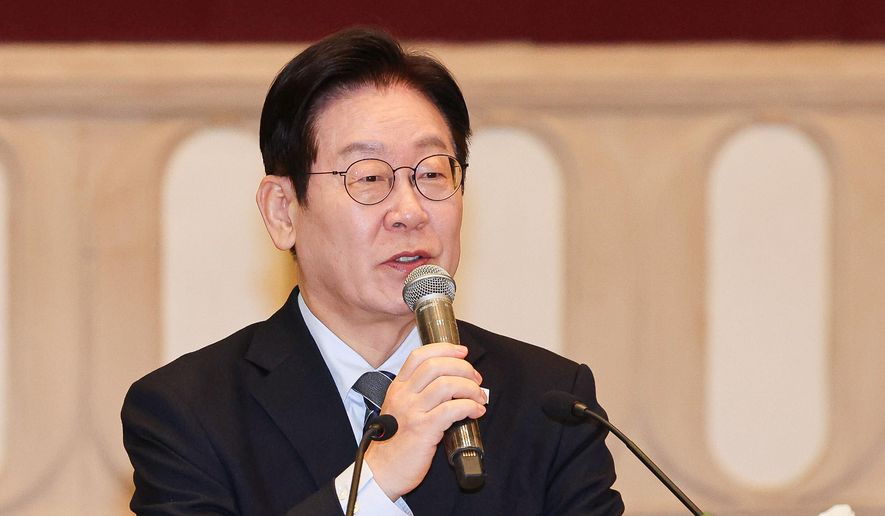
South Korean President Lee Jae Myung …
more >
If the ballot brouhaha gains traction in the days ahead, it could reignite the biggest political nightmare Korea has suffered since democratizing in 1987. “This is not the first time,” said PPP leader Jang Dong-hyuk in a statement sent to media, calling Wednesday’s ballots “polluted.” “It’s a recurring problem in every election.”
A December 2024 attempt by then-conservative President Yoon Suk Yeol to declare martial law was grounded — in part — in Yoon’s suspicions about malfeasance or mismanagement by the NEC. Martial law was swiftly quashed. Citizens rallied against a measure that harked back to Korea’s authoritarian past, while lawmakers defied commandos and police by forcing their way into the Assembly building and voting down the measure.
Yoon was impeached and imprisoned, and is now serving multiple, multiyear sentences. Mr. Lee won a landslide victory in a snap presidential election in June 2025. His governance is set in stone regardless of Wednesday’s mayoral and gubernatorial elections. His presidential term runs through June 2030. The DPK won majority control of the National Assembly in 2024 and holds it until April 2028.
That grants Mr. Lee and the DPK full control over national politics: Victory in today’s local elections would have been simply icing on the cake.
The PPP, disempowered, fears that the DPK had been holding back its most controversial legislation until Wednesday’s local elections were done and dusted. It worries that the DPK-controlled Assembly is set to reform the prosecution, load judicial benches with sympathetic judges and suppress free expression.
One year under Lee
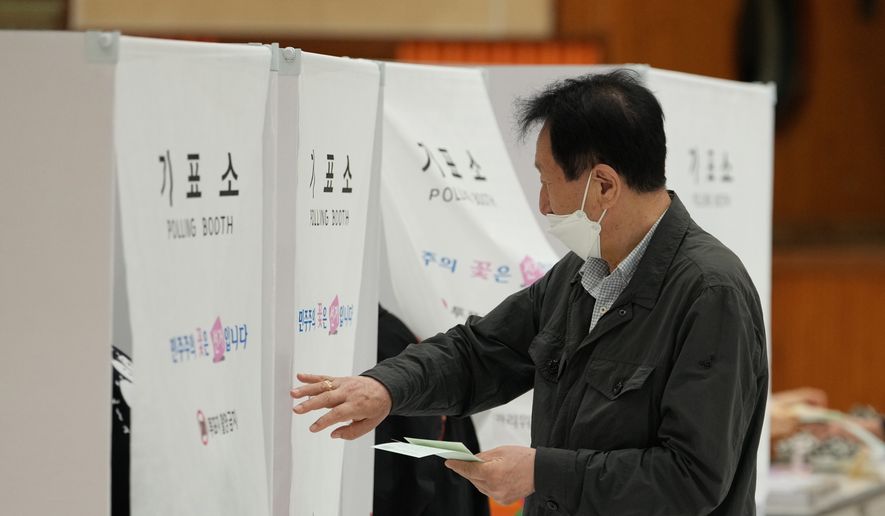
A voter arrives to cast his …
more >
Many media painted Wednesday’s elections as a plebiscite on Mr. Lee who, during his first year as president, has ditched prior hardcore positions and embraced moderate pragmatism. Mr. Lee’s detractors accuse him of being a hard leftist, even a communist. But under him, investor and business confidence has soared, generating an unprecedented boom in South Korea’s historically undervalued stock market.
The benchmark KOSPI index stood at 2,737.92 points the day after Mr. Lee’s election. Its latest status was 8801.49 points — a more than threefold rise in just one year. KOSPI’s meteoric ascent has seen it overtake the British, Canadian and Indian stock markets in monetary value, overturning decades of the so-called “Korea Discount,” under which South Korean firms’ stock was undervalued compared to peers in other nations.
Mr. Lee has also been derided as pro-Chinese, and a North Korea sympathizer. In fact, despite his prior lack of diplomatic experience — his pathway into national politics was local politics — he has managed a delicate balancing act, maintaining amicable relations with Beijing, Tokyo and Washington. His continued outreach to a disinterested Pyongyang, however, has generated no response.
Disagreements regarding the use of U.S. Forces in Korea for potential regional missions — vocally promoted by the current U.S. commanding general on the peninsula, but anathema to a risk-averse Seoul, wary of irking Beijing — have been largely kept inside the diplomatic box. Mr. Lee’s intention to take wartime control of South Korean forces out of U.S. and into local hands by 2030, is a work in progress. So too is his aim to arm his navy with nuclear attack submarines — a surprise initiative that won the support of U.S. President Trump.
Like other regional leaders, he is grappling with growth jitters and currency weaknesses against the backdrop of the ongoing Gulf crisis. His popularity remains high. The latest poll saw him winning 59% approval ratings for his handling of state affairs.
Having lost its grip on all political levers, the PPP is nervous. A major fear among conservatives is that with the election over, Mr. Lee and the DPK may remove prior restraints and push ahead with radical policies.
“President Lee is trying to pass acts for prosecution reform,” said Charles Choo, PPP Foreign Press spokesperson. Prosecution reform has long been a holy grail among Korean liberal politicians.