As adversaries such as China expand their advanced military capabilities, U.S. leaders are increasingly calling for America to strengthen its own domestically produced defense arsenal.
“It’s foolish to rely on a country that hates us for national security, which is why I’ve repeatedly called for a complete decoupling of Chinese-made chips and semiconductors from the American arsenal,” Sen. Rick Scott, R-Fla., a senior member of the Senate Armed Services Committee, told the Daily Signal.
“We should not be relying on Communist China for anything—full stop. For years, the [Chinese Communist Party] has been trying to destroy America. They spy on us, send fentanyl to kill our kids, and conspire with our enemies. President Trump built the toughest military in modern history by prioritizing American dominance, which must be fueled with weapons and systems made in the USA,” he added.
Driven by that push to rely on homegrown capabilities, the U.S. Department of War has spent at least $55 billion over the past decade on domestic artificial intelligence production. That investment has helped spur a new wave of American innovation in defense-related technologies.
One example of American innovation taking opportunity of Congress’ emphasis on American-made defense is Headwall, a U.S.-based startup specializing in AI-powered products for crisis command centers—systems that play a critical role in emergency response, rescue missions, and high-profile security operations.
The Maryland-based company develops AI-driven virtual command centers that rely on advanced software to be used by the military, law enforcement, hospitals, and rescue crews. Company leaders agree with Scott’s assessment that importing foreign defense technology poses a potentially deadly security risk.
“It’s important we have technology we can trust that we control—technology that is in our data centers in our country, on our soil, where we’re in control of what’s going on,” Headwall co-founder Geoff Bundt told the Daily Signal.
He added that the technology “can also be run in a completely off-network environment,” underscoring its “huge importance” for national security.
Adam Weiner, Headwall’s co-founder, said he and his partner launched the company because of a shared belief in the importance of American innovation for national defense.
“We strongly believe that lifesaving, reliable, and homegrown innovation, for the sake of our national security, matters and is needed,” Weiner said.
“Somebody has to do this here in the U.S.,” he added. “As a result, not only are we providing the market with more trustworthy and lifesaving products, but we are adding jobs right here in Prince George’s County.”
Technologies such as live threat identification, data collection, ground layout planning, and real-time situational awareness—capabilities offered by Headwall—are currently among those the U.S. military indirectly sources from China and other adversaries.
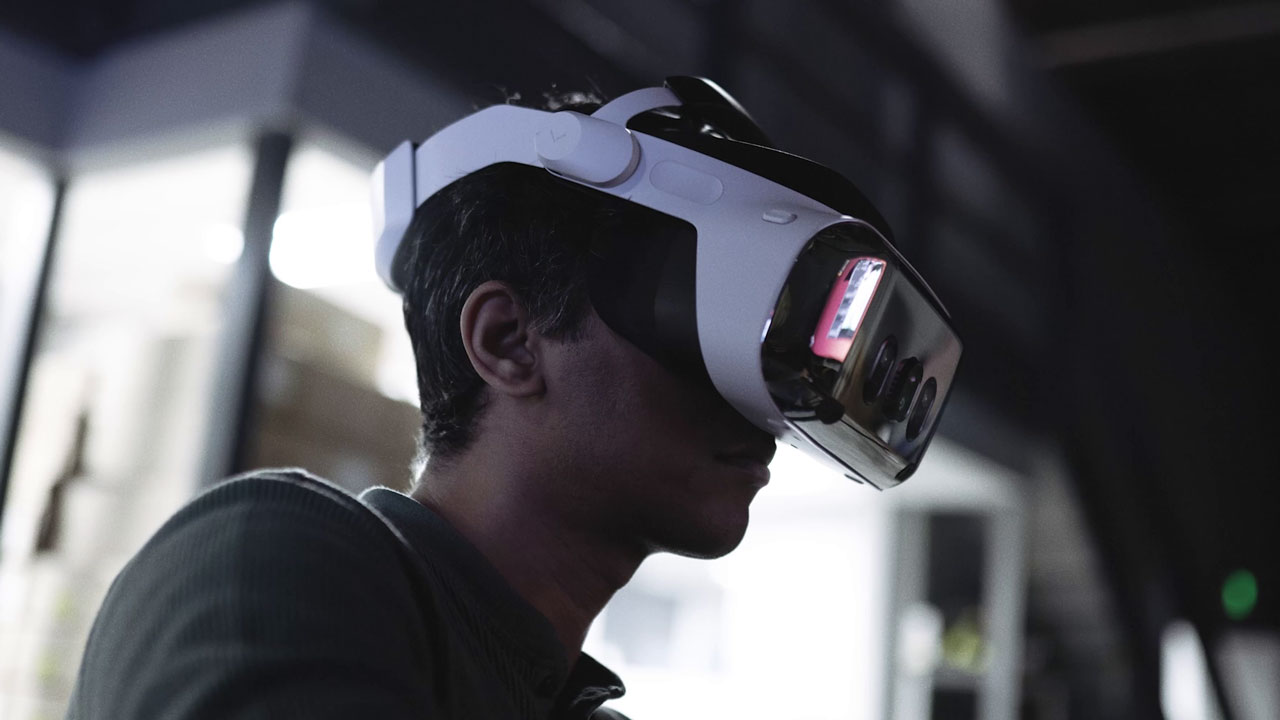
One of the company’s primary products is a software application for mixed-reality headsets that consolidates the previously mentioned capabilities into a single system, a development which the company’s leaders believe could reduce U.S. reliance on foreign-sourced technologies.
According to the American Security Project, the Department of War has relied heavily on Chinese-manufactured off-the-shelf subcomponents and semiconductors in its military systems, a dependence Scott has warned poses a major national security risk.
The Center for Strategic and International Studies has similarly noted that the United States continues to purchase raw materials, critical minerals, and components from China for AI and military products, despite ongoing efforts to reduce reliance on foreign supply chains—highlighting the importance of expanding American-made alternatives.
In April, the House Select Committee on the Chinese Communist Party released a report urging the federal government—regardless of which party is in power—to shift away from foreign-origin AI and invest more heavily in domestically developed AI chips and technologies.
“Artificial intelligence sits at the center of U.S.-China competition, and both governments treat leadership in AI as a national security priority,” the report noted.
“Beijing wants control of the full AI stack, not just competitive applications,” it continued. “Beijing is pursuing that autonomy to strengthen its military, harden itself against foreign pressure, and keep the technologies underpinning future economic and military power under Party-state control.”