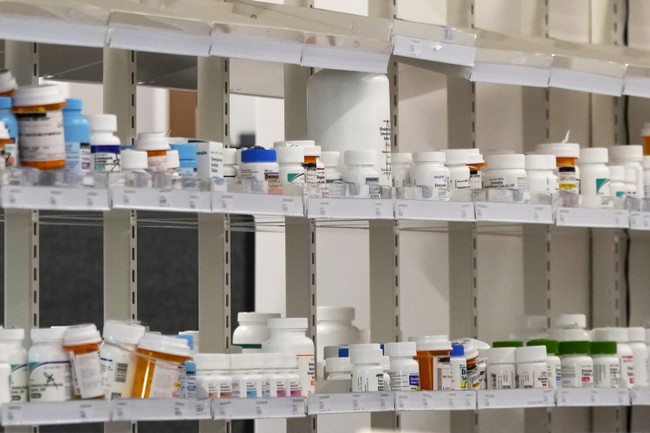
Here’s a paradox for you to think over: half of all new medicines are developed in the United States, yet Americans pay two to three times more for those medicines than people in other developed countries.
If it sounds unfair, that’s because it is.
The United States is the world’s leader when it comes to pharmaceutical innovation. American firms regularly research, develop, and market life-saving medicines that are then distributed all over the world.
These new drugs don’t come on the cheap. They involve painstaking research, enormous R&D costs, investment in scientific talent, and patience with Washington’s slow approval process. Manufacturing a new medication is a costly and time-consuming risk — 90% of all experimental drugs never make it to market.
Yet it’s a risk American companies regularly take, and the world is better off for it. So why is it that wealthy nations — Germany comes to mind here — pay so much less than Americans for U.S.-made prescription drugs?
The answer, as President Trump likes to say, is that they’re ripping us off. The Germans have implemented unfair regulatory rules that save themselves money while marking up drug costs for Americans.
The U.S. pharmaceutical market is relatively decentralized. Companies are free to compete and develop new products before setting prices that are largely determined by market forces.
The federal government does negotiate drug prices sometimes, but this is mostly limited to prescriptions distributed through Medicare. Otherwise, the manufacturer sets a rate, negotiates with insurers and pharmacy benefit managers, and ends up with a relatively market-pegged price.
Whereas in Germany, a state-affiliated umbrella group representing nearly all Germans has the power to negotiate the price of all U.S.-made medicines. These so-called Sickness Funds drive a hard bargain — out of 230 drugs assessed between 2011 and 2019, 35 were decided in arbitration, and 28 saw the drugmaker withdraw because the offered price was too low.
Germany negotiates prices down — well below where they would otherwise be. And drugmakers, forced to charge less in the German market, have to make up the difference elsewhere.
Like in the United States, which lacks a dedicated nationwide negotiator.
A good deal for Germans is thus free-riding off of Americans. Those inexpensive prescriptions Europeans love to boast about are driving up prescription costs on this side of the Atlantic.
It’s about to get even worse. Germany’s population is aging rapidly , and its healthcare costs are skyrocketing. This led the German government to recently pass a bill that seeks to trim health spending by mandating even lower prices on prescription drugs.
These new price controls are draconian even by German standards. And again, since America has no similar law, drug companies will recoup German losses by charging Americans more. This at a time of sharp inflation when many families are already struggling to pay their bills.
The good news is that President Trump came into office promising to make other countries pay their fair share. And he’s demanding that the Germans do just that.
At a recent meeting with the German ambassador, Trump administration officials made it known they weren’t pleased with the new price controls. They warned that the United States could slap more tariffs on Germany in retaliation against their unfair pricing practices.
This is the right approach. Germany’s finagling with pharmaceutical prices is exactly the kind of trade imbalance that Trump is determined to correct.
The U.S. has only 4.5% of the world’s population, yet it develops most new medicines and spends enormously on pharmaceutical development. Trump must make clear that others don’t get to skim off that hard work.
Thankfully, a little trade pressure can go a long way. After Trump issued similar warnings to the United Kingdom, the British government struck a deal that will see their National Health Service pay 25% more for innovative American drugs. This will save American patients money, as will driving a harder bargain with the Germans.
What Trump understands is that German-style price caps aren’t the answer. American researchers deserve to be paid well when they develop the miracle cures of tomorrow.
The solution isn’t more government but letting the market work. And that means making sure one country doesn’t get to freeload off of another.
Editor’s Note: Do you enjoy PJ Media’s conservative reporting that takes on the radical left and woke media? Support our work so that we can continue to bring you the truth.
Join PJ Media VIP and use promo code FIGHT to receive 60% off your membership.