Last week’s indictment of Raul Castro and five Cuban pilots for the 1996 killing of four Americans flying humanitarian missions near Cuba had a curious footnote: One of the pilots is already in the U.S.
Luis Raul Gonzalez-Pardo Rodriguez came to the U.S. in 2024, entering the country thanks to one of President Joseph R. Biden’s “parole” programs.
That a retired lieutenant colonel of the Cuban air force was allowed in marks a major failure of vetting by the Biden administration and undercuts the claims of former Homeland Security Secretary Alejandro Mayorkas, who said every parolee underwent “national security and public safety vetting.”
“It is deeply alarming that one of the indicted regime pilots was allowed into the United States under the Biden administration without proper vetting,” said Rep. Carlos Gimenez, Florida Republican. “This is exactly what happens when weak enforcement and reckless open-border policies put politics ahead of public safety.”
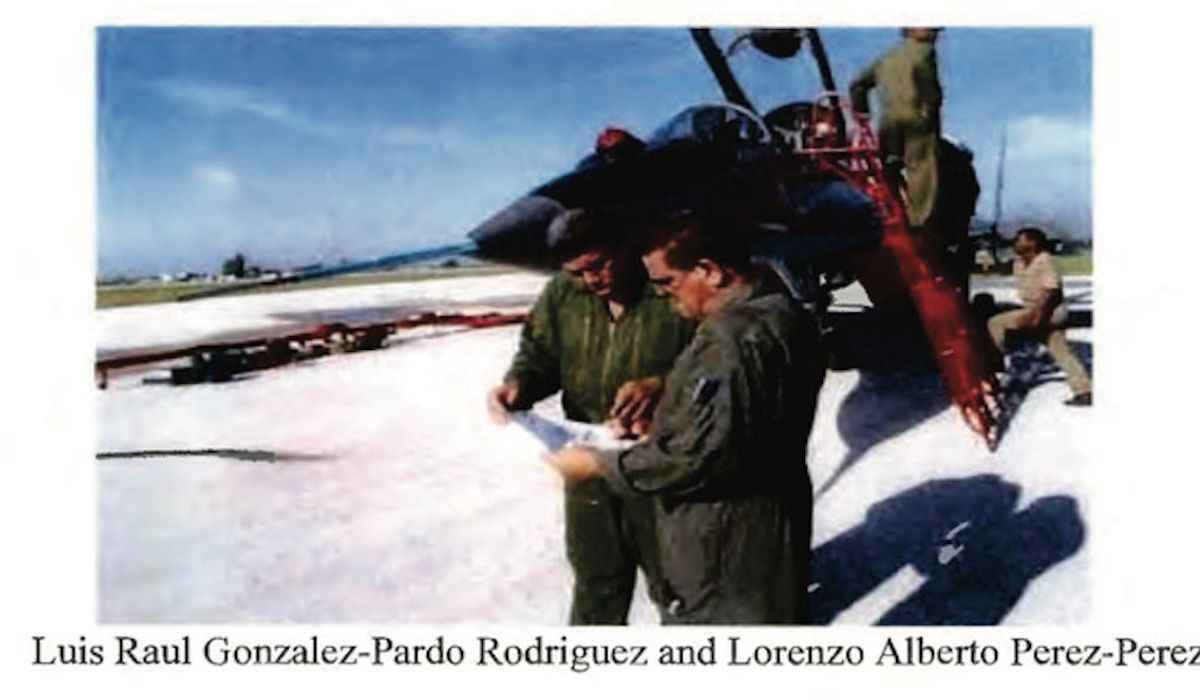
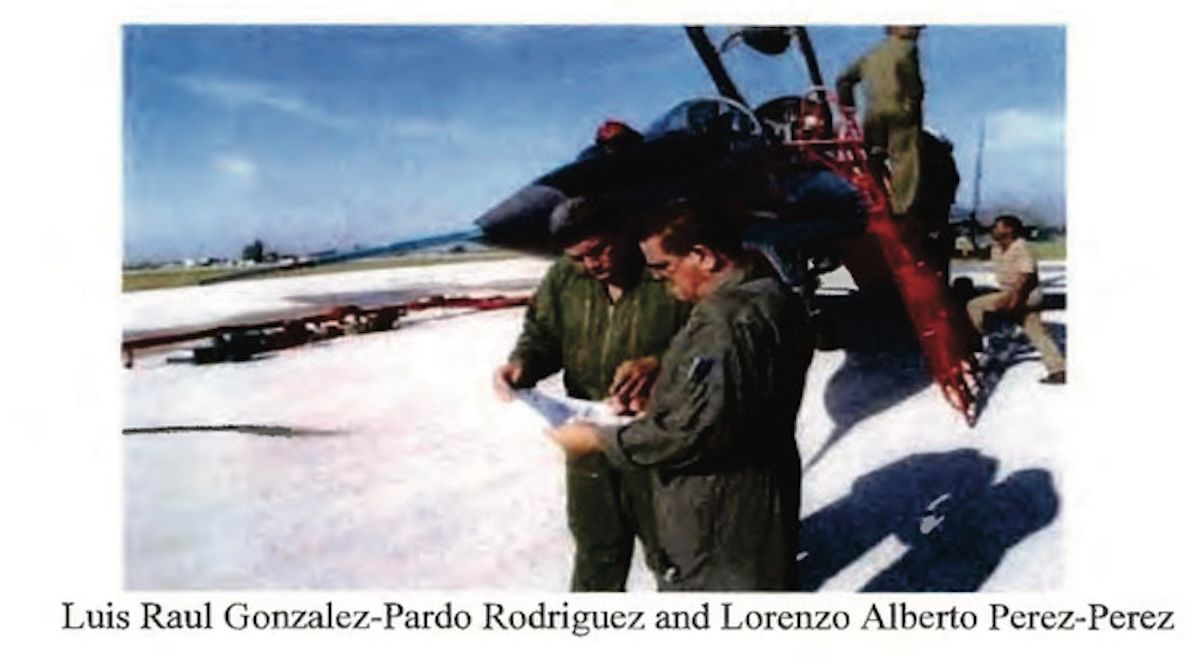
Gonzalez-Pardo Rodriguez was named in last week’s indictment as one of five pilots who acted on orders of Mr. Castro, then-Cuban defense chief, in trying to shoot down three Cessnas flown by Brothers to the Rescue, an exile-led group that flew humanitarian missions aimed at helping refugees and boosting a pro-democracy movement on the island.
Two of the planes, which were unarmed and over international waters heading away from Cuba, were shot down. Four American citizens were killed.
The pilot of one of the Cuban MiGs, Lorenzo Alberto Perez-Perez, stands accused of firing the air-to-air missiles that downed those planes.
Prosecutors said Gonzalez-Pardo Rodriguez was on the runway at San Antonio de los Banos at that point, listening to the radio traffic as the first MiG was authorized to fire and took the shots. Gonzalez-Pardo Rodriguez was then ordered into the air to hunt a third Brothers to the Rescue Cessna. That plane escaped.
Twenty-eight years later, Gonzalez-Pardo Rodriguez would make it to the U.S. under the Biden parole program known as Cuba, Haiti, Nicaragua, Venezuela, or CHNV. Created by Mr. Mayorkas, the program was intended to give people from those four nations who lacked legal permission to enter the U.S. a chance to come without rushing the southwestern border. They applied ahead of time, arranged for a financial sponsor to pledge to support them if needed, and then flew into airports in America’s interior.
Mr. Mayorkas allowed 30,000 CHNV permits a month. He said those who were approved had to pass the security and safety background check.
Analysts said that means either the Biden administration was aware of Gonzalez-Pardo Rodriguez’s background and allowed him in, or else the vetting wasn’t as thorough as Mr. Mayorkas touted.
“This is what they wanted,” said Emilio Gonzalez, who ran U.S. Citizenship and Immigration Services in the Bush administration. “They wanted to bring in as many people as humanly possible. This guy is an example. The Tren de Aragua guys are examples. The people who are engaging in Medicaid fraud in Minnesota are examples.”
The Department of Homeland Security, in a statement to The Washington Times, confirmed his arrival and a daughter’s arrival in April 2024 under the CHNV program.
“This broken process allowed hundreds of thousands of unvetted aliens to circumvent the traditional parole process,” the department said.
It said his parole was canceled on April 25, 2025, after DHS terminated the CHNV parole program altogether. At that point Gonzalez-Pardo Rodriguez became an illegal immigrant, DHS said.
The department didn’t describe what vetting he underwent in 2024 or divulge details of who sponsored him for the CHNV program.
If the department had gone looking, it could have spotted his military past: Gonzalez-Pardo Rodriguez admitted in a 2016 visa application that he spent 30 years in Cuba’s armed forces.
But a year later, in another visa application, he omitted that. He also omitted it last year, when he applied for a green card in the U.S.
He has now pled guilty to lying on the green card application. He is scheduled to be sentenced for that offense on Thursday.
Gonzalez-Pardo Rodriguez admitted in his plea agreement to spending years as a pilot for Cuba’s military. He said he was recruited in his teens and sent to Russia to study combat aviation from 1977 to 1980.
He made two subsequent training trips to Russia and served two missions in Angola, where Fidel Castro had deployed Cuban troops to back communist troops fighting pro-Western forces.
The agreement doesn’t mention the Brothers to the Rescue matter.
But JustTheNews reported this month that Gonzalez-Pardo Rodriguez has turned state’s witness and is telling what he knows.
Several experts told The Times that would make sense — and could explain why the case against Mr. Castro, which had languished for decades, was revived.
“He was in the cockpit, he was in the air, he heard the kill order,” said Emilio Gonzalez, the former USCIS director.
Gonzalez-Pardo Rodriguez’s lawyer didn’t respond to an inquiry for this report. In a court filing ahead of sentencing, attorney Miguel Rosada said his client feared that being truthful about his military service would “jeopardize his ability to remain in the United States.”
“This offense represents a serious lapse in judgment, but it does not define the entirety of the Defendant’s life or character. He is a husband, father, grandfather, provider, and caretaker who has otherwise lived a life marked by hard work, sacrifice, and devotion to his family and community,” Mr. Rosada said in asking the judge for lenience.
Gonzalez-Pardo Rodriguez’s relatives flooded the court with character letters depicting a common Cuban story of families with people in the U.S. and Cuba, and a belief that America was the safety valve for an impoverished country.
His wife of 27 years, Ohilda de la C. Mesa Guanche, said her own retirement left her money for little more than “a bottle of oil, a pound of bread and a bag of rice.”
She said Gonzalez-Pardo Rodriguez came to the U.S. to earn money to support their family back home. That included paying for meals and medications for her ailing 87-year-old father.
“There was no other option but to immigrate to the United States of America,” she wrote to the judge.