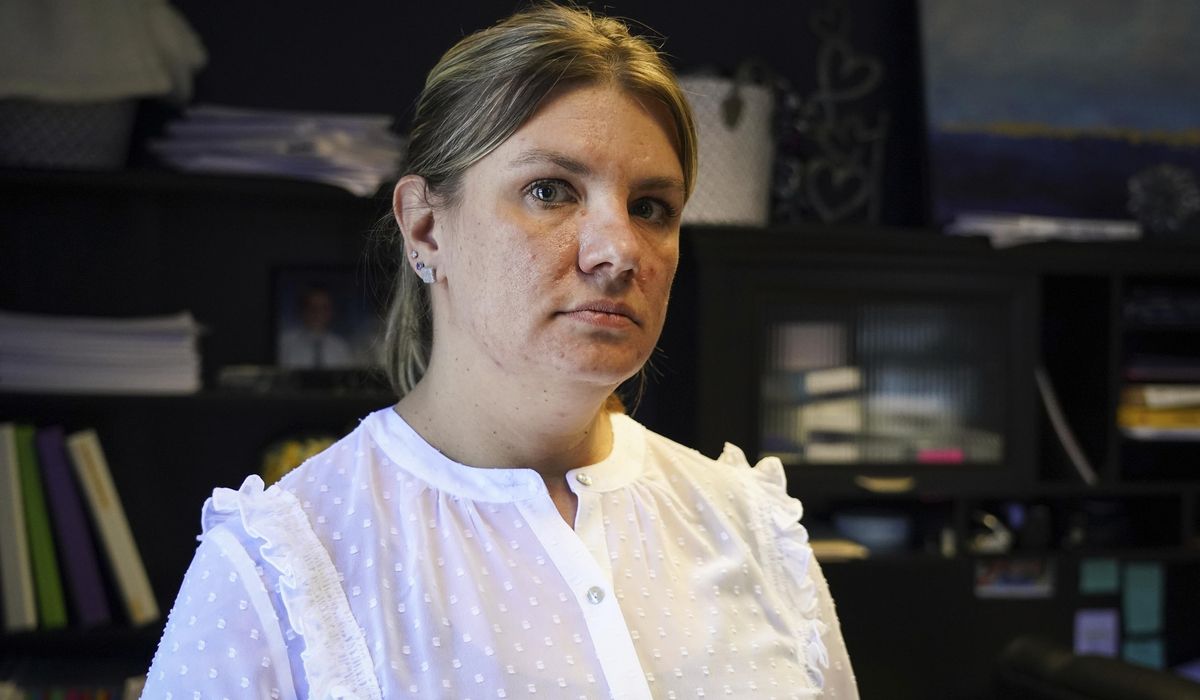
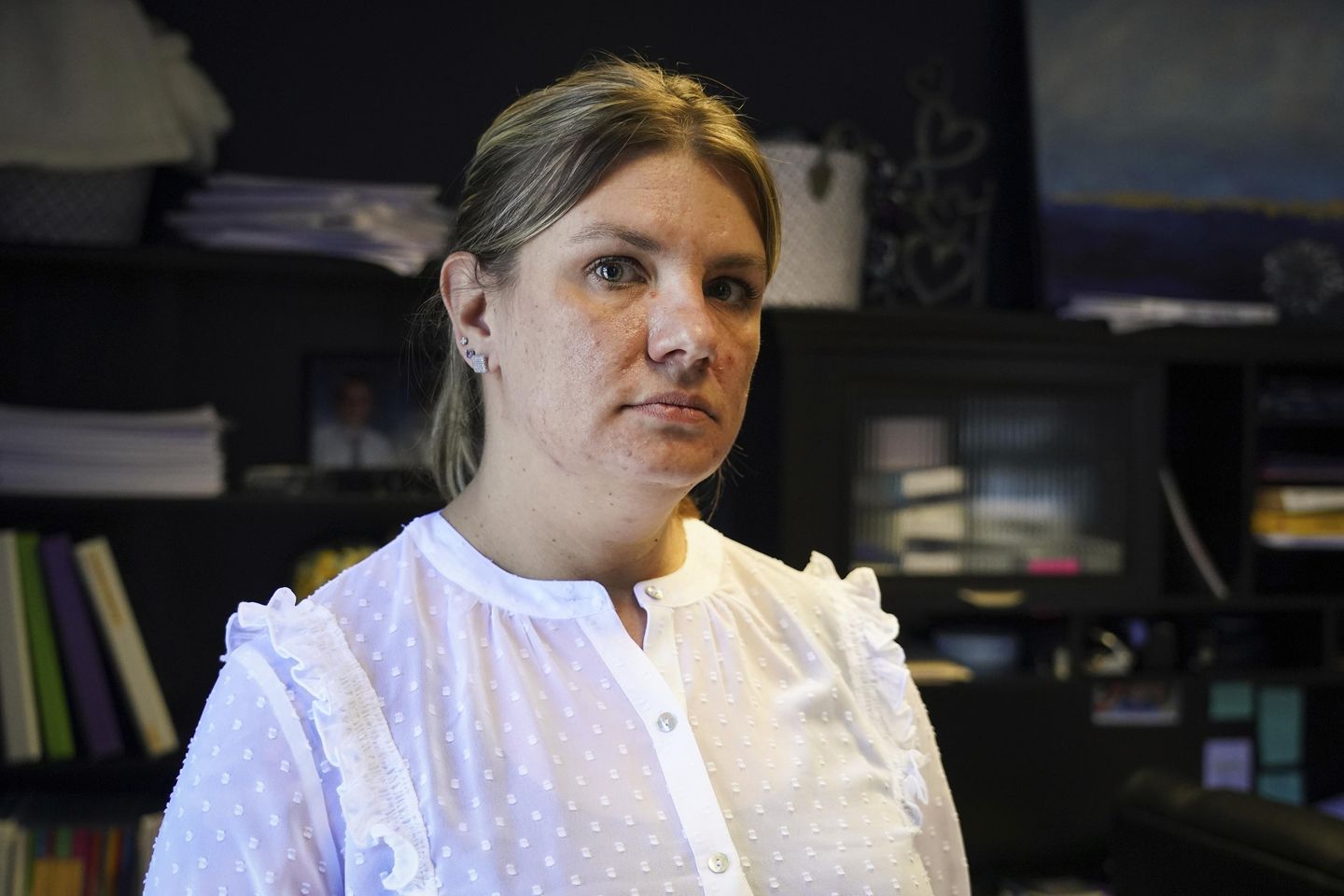
Peel away all the political posturing, the thorny questions about Somali immigrants and the hundreds of millions of dollars in fraud in Minnesota, and you will find Aimee Bock at the center of things.
Bock was the mastermind behind Feeding Our Future, a nonprofit that served as a conduit for federal funds meant to feed children during the COVID-19 pandemic. The money was intended for students who might otherwise go hungry because they were missing out on the free breakfasts and lunches at school.
By the time the dust settled, federal authorities say, Feeding Our Future had stolen more than $242 million in one of the largest pandemic frauds ever to be exposed.
Bock was convicted at trial in a federal court last year and is scheduled to be sentenced Thursday. Prosecutors are asking for an almost unheard-of 50-year sentence. Bock’s attorney has countered with a request that she be sentenced to time served or, at most, about three years.
Feeding Our Future was publicly exposed on a cold January day in early 2022 when federal agents swarmed Minneapolis. They raided Bock’s offices and served search warrants on her and dozens of businesses that were supposed to be dishing out the meals.
By September, the government had charged 47 people. That number has now grown to 79 defendants, with 66 convictions, most of them connected to the area’s Somali community.
It was the case that blew the lid off pandemic fraud, revealing that it went well beyond unemployment and small-business scams. Soon, the country would learn that no pandemic assistance program was immune to fraud.
IRS tax credits, vaccine sign-ups, rental assistance — all of them were targets.
Even today, Feeding Our Future still stands out for the sheer chutzpah of the scheme.
“When you think about the size and scope of that fraud, $250 million, stolen, from children that were supposed to be getting fed. The money’s never going to be recovered,” said Haywood Talcove, CEO of government at LexisNexis Risk Solutions.
He has spent years studying fraud and was one of the early voices warning the country about how much money was seeping away during the pandemic emergency. Once the fraudsters tasted the sweetness of government cash, he said, they never looked back.
“What it showed to me was the lack of controls in the system,” he said. “You think it just happened in Minneapolis? No. You take a look at the fraud that’s taken place in California, with the hospice fraud, it’s the same.”
Scamming the state proved relatively easy.
According to voluminous court proceedings, more than 250 businesses signed up to serve as meal distribution centers, and Feeding Our Future served as the conduit for the funds.
The sites would claim to be serving an outlandish number of daily meals at locations that could not have physically accommodated them. In reality, they were serving few, or none at all.
The government’s subsidy was low, a few dollars a day, but with the number of meals claimed, it quickly added up to major money.
“The thing about this food program is the sky’s the limit. You want to claim you’re feeding 20K kids a day, have at it,” said Bill Glahn, who has tracked the cases as a fellow at the Center of the American Experiment in Minnesota.
When state investigators did raise questions, Bock, a White woman, was quick to deploy accusations of “systemic racism” against those who sought to expose the fraud, saying they were targeting the largely Somali-run programs.
She even filed lawsuits alleging racial discrimination to force state agencies to keep the money flowing.
When Feeding Our Future prevailed in one of them, colleagues sang “Oh sweet Aimee” to her, prosecutors said.
When the state changed its program to block for-profit operations from serving meals, Feeding Our Future lied to authorities, claiming its own employees would now be the ones manning the meal distribution points.
Assistant U.S. Attorney Rebecca Kline told Judge Nancy Brasel, who will decide the sentencing Thursday, that Bock’s offenses were outrageous enough to justify a half-century behind bars.
“The brazen and staggering nature of her crimes has shaken Minnesota to its core, leaving lasting damage and eroding public trust. Her actions have permanently altered the state, and not for the better,” the prosecutor said.
Kenneth Udoibok, Bock’s defense attorney, said the Justice Department’s recommended sentence is far out of line. He said others in her situation averaged seven to 10 years.
“A sentence between time served and 37 months would constitute substantial punishment under the circumstances of this case,” he told the judge. “Ms. Bock has already spent significant time in custody following the verdict. She faces massive restitution exposure, extensive forfeiture, permanent felony convictions and lifelong professional consequences.”
Mr. Glahn said many of the scammers from Feeding Our Future cut their teeth on childcare fraud, billing the state for children that never showed up for care.
It was easy for them to start billing for meals for those children and then claim others too, he said.
Feeding Our Future’s meals fraud lasted about 18 months. When it ended, the scammers turned to other government programs. Minnesota showed a massive surge in Medicaid claims.
“Programs that didn’t exist at all or were billing $2 million a year were all of a sudden paying $200 million a year, $300 million a year,” Mr. Glahn said.
Bock wasn’t the only one pulling off the meals scam. Feeding Our Future was one of several operators in Minnesota doing the same thing and locked in a fierce competition to recruit local businesses.
“She was in a very vicious market share battle with these other nonprofits,” Mr. Glahn said. “The scammers would go and sign up with whoever would give them the biggest cut.”
All told, prosecutors said, the nonprofit kept about $18 million of the scam payments.
Mr. Glahn said one of the other nonprofits totaled $210 million in fraud, and the third came to about $25 million. That means the total amount of the scam is nearly half a billion dollars.
Prosecutors have brought charges covering only about $300 million of that, the vast majority of it tied to Bock.
That irks Bock, who has spent years pointing the finger at the other programs, saying they were the ones perpetrating the fraud for which she was singled out.
Bock has been trying to take down much of Minnesota’s government with her.
Her court filings are laced with accusations that the state’s top-tier officials tacitly approved of what she was doing, because the agency kept approving her filings and cutting her checks. She cast herself as a whistleblower, bringing her concerns to a state agency that refused to investigate fraud.
Mr. Glahn said Bock has a “legitimate point” about the governor and attorney general.
“That’s kind of a larger theme of the people who have been convicted — we sent the invoices in, you guys paid them, so we didn’t think we were doing anything wrong,” Mr. Glahn said.
Still, he said, it doesn’t diminish Bock’s own culpability.
“She’s still guilty, but it’s still a legitimate public policy point,” he said.