For nearly 20 years, a hidden assumption inside a climate computer model has been scaring the hope for a good future out of your children.
Last week, the scientists behind it finally admitted what critics had been saying all along: The most-often-used climate scenario was implausible. It was never going to happen.
And the damage it did — to public trust, to policy, and most of all to a generation of kids who grew up believing the world was ending — is incalculable.
The worst-case climate scenario is called RCP 8.5. It sits at the extreme high end of a range of climate modeling pathways, projecting atmospheric CO₂ concentrations exceeding 1,000 parts per million by 2100 and temperature rises of up to five degrees Celsius.
To reach those numbers, the model assumed the world would massively expand coal burning for the rest of the century, ultimately consuming more coal than geologists believe exists in recoverable reserves.
It assumed runaway population growth, no technological progress, and zero energy transition. Essentially, it was a “burn all available fossil fuels on the planet and do nothing to mitigate it” scenario.
Despite that off-the-rails assumption, RCP 8.5 became the default scenario for climate impact research. RCP8.5 was not a “worst case” clearly labeled as such; it was “The case.” The one used in study after study, headline after headline.
The international committee that oversees IPCC climate scenarios has now published a new framework for its next assessment report, and RCP 8.5 isn’t in it. The official verdict, in the language of the committee itself: implausible.
Climate researcher Roger Pielke Jr., who has documented the misuse of this scenario for years, called it the most significant development in climate research in decades.
He estimates that between 2018 and 2024, roughly 34,000 academic papers were published using RCP 8.5, with a matching avalanche of media coverage amplifying each one.
“Tens of thousands of research papers have been published using these scenarios,” he wrote. “Governments and international organizations have built these implausible scenarios into policy and regulation. We now know that all of this is built on a foundation of sand.”
That’s not a fringe skeptic talking. That’s one of the most-cited climate researchers in the world, and he spent years being ignored while the machine kept churning out alarming studies built on a scenario everyone in the room privately knew was extreme.
The consequences extended far beyond academic journals. This extreme scenario was used to justify the most sweeping expansions of government control over energy, industry, and personal choice in modern history: policies that would have been dismissed as radical overreach if the underlying science had been honestly presented.
The human cost of that foundation of sand is only now being fully reckoned with.
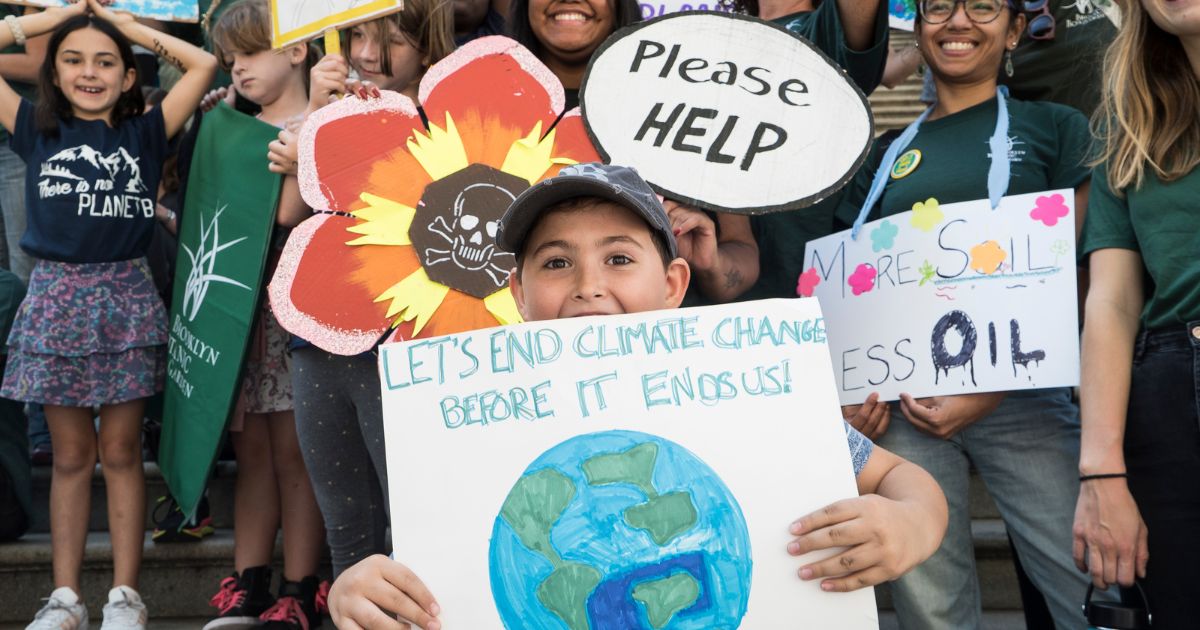
A landmark global survey published in The Lancet in 2021, covering 10,000 young people aged 16 to 25 across 10 countries, found that 59 percent were very worried or extremely worried about climate change.
More than 45 percent said those feelings negatively affected their daily life. Three-quarters said they believe the future is frightening. More than half reported feeling regularly powerless, helpless, or guilty.
A separate survey of Australian children aged 10 to 14 found that one in four worried the world would end before they got older. This is not teenagers processing abstract fears. It is 10-year-olds carrying existential dread to school in their backpacks.
This is what two decades of RCP 8.5-fueled climate alarm produced. Classrooms where the worst-case modeling scenario was presented not as a what-if, but as the expected future. A generation told, with the full authority of science and media behind it, that they were inheriting a dying planet.
The curriculum didn’t explain that the projections came from a scenario requiring humanity to somehow locate and burn coal reserves that don’t exist. The nightly news and major newspapers didn’t mention it either.
That climate-model-driven doomsday scenario is now officially dead. But the fear it planted is still very much alive in millions of young people who have shaped their entire worldview around a future that was always the worst-case science fiction.
Someone owes them a correction and an apology. The researchers who kept using RCP 8.5 long after its flaws were known, the journals that published their work without requiring disclosure, the editors who ran the headlines, the teachers who put the projections on the board without the caveat they deserved: All of them played a role in this.
Science corrected itself eventually, reluctantly, nine years after the warnings started. That matters.
But the children who grew up in the shadow of this scenario aren’t going to heal because a technical committee updated its modeling framework.
They need to hear, clearly and loudly, what science now says: The apocalypse they were promised was never the real forecast.
It was always the worst of the worst cases. And that climate doomsday prediction isn’t coming — in fact, it never was.
That message is long overdue. Let’s make sure it reaches them.
The views expressed in this opinion article are those of their author and are not necessarily either shared or endorsed by the owners of this website. If you are interested in contributing an Op-Ed to The Western Journal, you can learn about our submission guidelines and process here.
Advertise with The Western Journal and reach millions of highly engaged readers, while supporting our work. Advertise Today.