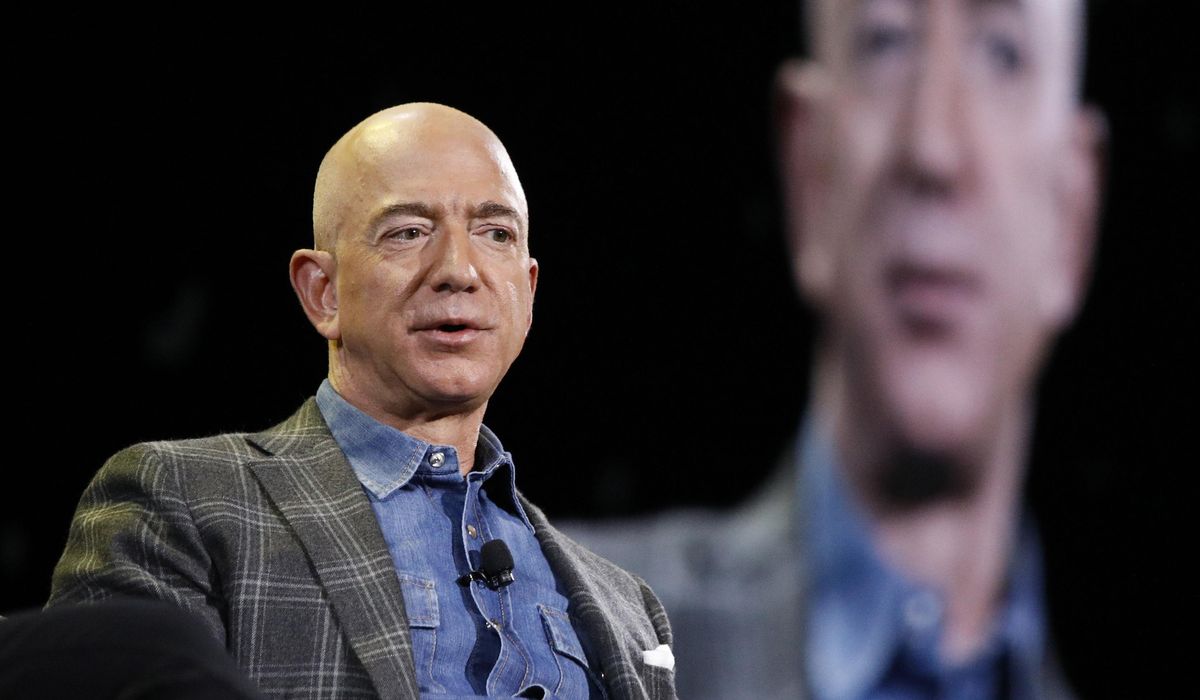
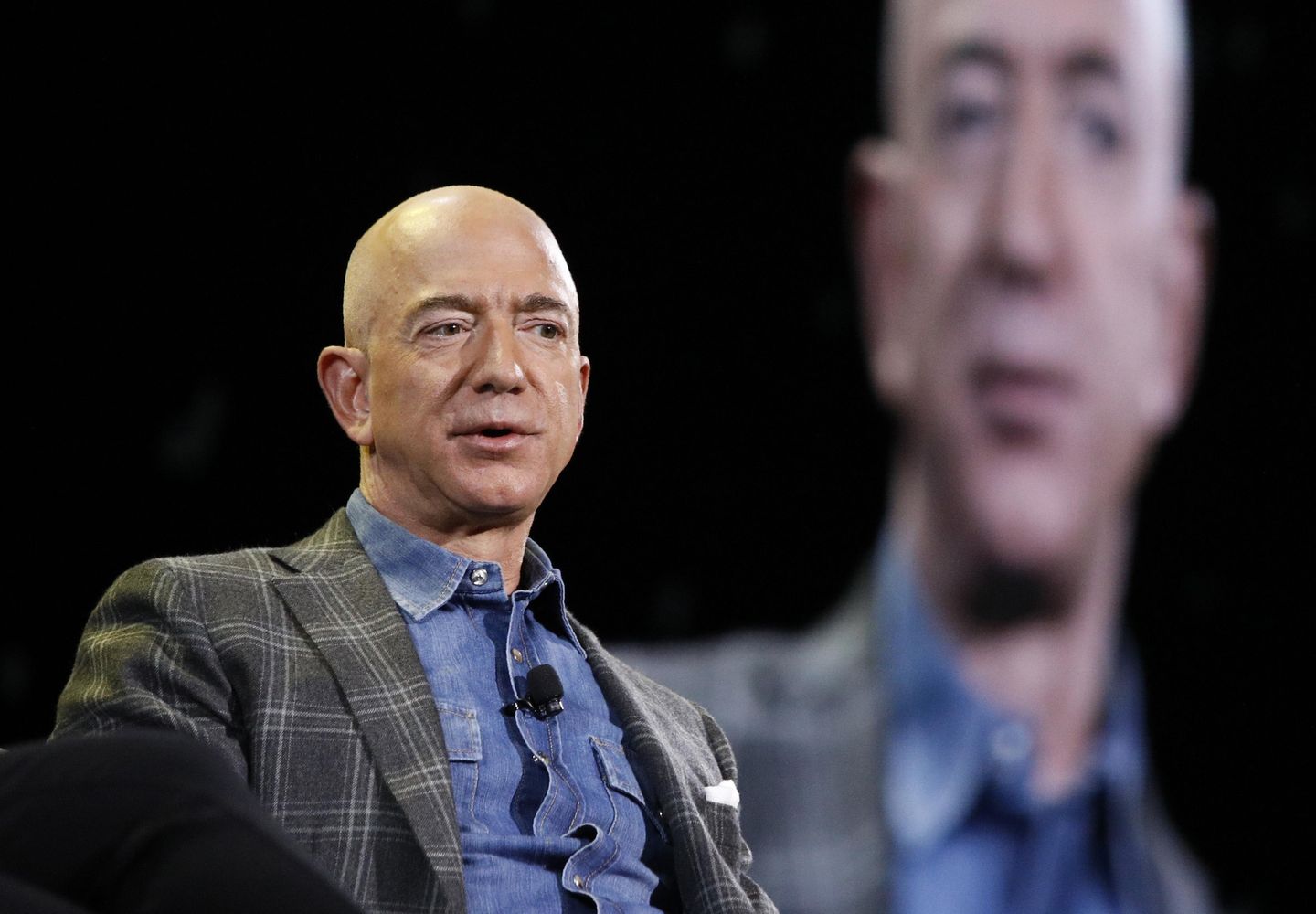
Amazon Executive Chairman Jeff Bezos said Wednesday that the bottom half of American earners should pay zero federal income tax, framing the current arrangement as economically incoherent and morally unjustifiable.
“The top 1% of taxpayers pay about 40% of all the tax revenue, and the bottom half pay 3%,” Mr. Bezos told CNBC’s Andrew Ross Sorkin on “Squawk Box.” “I don’t think it should be 3%. I think it should be zero.”
Speaking from Blue Origin’s rocket facility in Merritt Island, Florida, Mr. Bezos repeatedly invoked the image of a nurse in Queens earning $75,000 a year and paying more than $1,000 a month in taxes.
“We shouldn’t be asking this nurse in Queens to send money to Washington,” he said. “They should be sending her an apology. It really makes no sense.”
The bottom half of taxpayers had an adjusted gross income of nearly $54,000 in 2023, according to the Tax Foundation, citing the most recent IRS statistics. By contrast, households in the top 1% earned at least $676,000 that year. The average income tax rate across all filers was 14.1%, while top earners paid an average rate of 26.3% — compared with 3.7% for the bottom half. There were more than 76 million households in the bottom half in 2023, and they paid an average of $913 in federal income taxes that year.
Mr. Bezos said lower earners’ tax burden amounts to “a small amount of money for the government” while representing a significant hardship for working families. He said he would “advocate” for such a change but did not offer specifics on how lawmakers would enact it.
Mr. Bezos, whose net worth is estimated at roughly $269 billion by Forbes, acknowledged calls for higher taxes on the wealthy but said doubling his own tax bill would not help struggling workers. “You could double the taxes I pay, and it’s not going to help that teacher in Queens,” he said. “I promise you.”
The billionaire described the current economic landscape as a “tale of two economies,” a reference to the so-called K-shaped recovery in which higher-income households have benefited from rising markets while lower- and middle-income consumers struggle with elevated costs and financial strain. Federal Reserve Bank of New York researchers found that sharply higher gasoline prices stemming from the Iran war further widened that divergence, with high-income households increasing their gas spending while low-income households cut consumption but still paid significantly more at the pump.
Mr. Bezos’ comments come amid broader legislative debate over the tax treatment of lower earners. Sen. Cory Booker, Democrat of New Jersey, introduced the Keep Your Pay Act in March, which would effectively make the first $75,000 of income tax-free for households filing jointly by more than doubling the standard deduction, while offsetting the cost through higher taxes on corporations and wealthy individuals. The proposal would reduce the median American family’s federal income tax burden by an estimated 85%, according to the senator’s office.
Critics of raising taxes on higher earners note the progressive nature of the existing federal tax code — the top 1% accounted for roughly 21% of total adjusted gross income in 2023 but paid approximately 38% of all federal income taxes, according to the Tax Foundation. Supporters of higher levies on the wealthy, however, argue that the overall tax system is less progressive than it appears when accounting for payroll taxes, sales taxes and other levies that fall disproportionately on lower earners.
This article was constructed with the assistance of artificial intelligence and published by a member of The Washington Times’ AI News Desk team. The contents of this report are based solely on The Washington Times’ original reporting, wire services, and/or other sources cited within the report. For more information, please read our AI policy or contact Steve Fink, Director of Artificial Intelligence, at sfink@washingtontimes.com
The Washington Times AI Ethics Newsroom Committee can be reached at aispotlight@washingtontimes.com.