President Donald Trump keeps delivering the border-security promise that helped return him to the White House.
However, when the previous occupant of the Oval Office held the door open for millions, it created several problems.
One of them is where to put ’em?
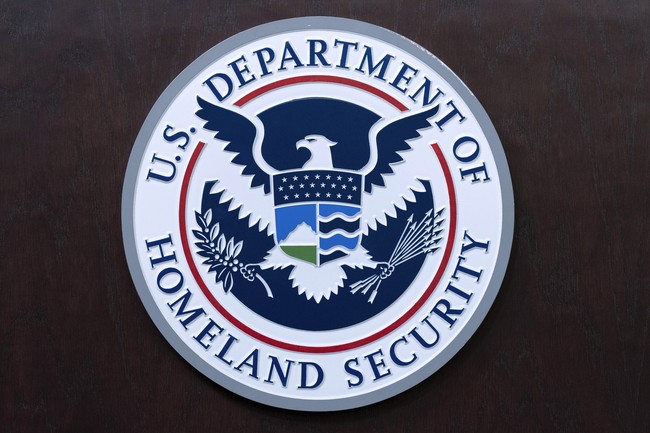
The DHS wants more detention space because illegal immigrants can’t be processed, held, and quickly removed without beds, staff, transportation, and secure facilities. Transforming empty warehouses into detention centers sounds efficient on paper, especially after years of Biden-era border chaos. Then the plan reaches a small town with a water system, sewer capacity, and residents who still expect the faucet to work when they turn the knob.
One Trump-supporting community is dealing with the fight between enforcement and infrastructure. Social Circle, Ga., now sits in the middle of the fight. The federal government bought a 1 million square foot warehouse for nearly $129 million and plans to convert it into a massive immigration detention center.
The proposal could house up to 10,000 detainees and require about 2,500 staff members in a city of roughly 5,000 people. Social Circle Mayor David Keener and City Manager Eric Taylor have made the obvious point that Washington skipped while measuring floor space: detainees drink water, toilets flush, kitchens run, showers drain, and small-town pipes don’t magically triple because federal lawyers say so.
The city has filed a federal lawsuit against the DHS and ICE, arguing the organizations moved ahead without the required environmental, health, and procedural reviews. Taylor previously locked the water meter at the site, and the City Council unanimously backed him.
The detention center could house as many as 8,500 immigrants awaiting deportation to their home countries as part of a massive initiative by the administration of President Donald J. Trump. Social Circle is among the numerous cities across the country that have been targeted as detention center sites. At full capacity, the converted warehouse would nearly triple the population of Social Circle, outstripping its water, sewer and emergency services capabilities.
“We understand the reason why the water is off,” said Councilman Tyson Jackson at the Tuesday, March 17 city council meeting. “It’s not a political stunt. It’s just the fact of the matter that we do not have enough water. I just want to come to a vote saying that we are behind you [Taylor] on this, so it’s not Eric making the decision of having the water turned off. We’re looking out for the citizens of Social Circle right now, to make sure we have enough water for them.”
Taylor announced his unilateral decision on Thursday, March 12. He told a crowd of dozens of people at a community meeting—including a number of city and area residents and progressive activists opposed to the detention center plan—that the lock would remain in place until either the city council told him to remove it or a federal court order, in the event that ICE challenges the move, mandated that the lock be removed.
As 95.5 WSB reported, their lawsuit brings up some points never considered.
According to the lawsuit, DHS plans to convert the warehouse into a detention facility that would hold 10,000 detainees and employ up to 2,500 staff members.
The city says the proposal would strain Social Circle’s infrastructure beyond capacity, threatening the city’s water supply and risking sewage overflows. The lawsuit also accuses the agencies of violating federal laws and creating a nuisance under Georgia law.
Social Circle says the planned “mega center” was part of what the lawsuit describes as an ICE director’s goal to operate “like (Amazon) Prime, but with human beings.”
The lawsuit says the proposed facility’s plan to open in June and house 10,000 detainees would overwhelm the city’s fresh water supply and sewage treatment capabilities, potentially resulting in dry taps and raw sewage spills.
By comparison, city leaders say Social Circle has about 5,000 residents.
None of that looks like a Berkeley-style fit over immigration enforcement; it looks like a small Georgia town saying its water and sewer systems already run near capacity, and no serious government should pretend 10,000 detainees plus thousands of staff can arrive without consequences.
Homeland Security Secretary Markwayne Mullin, recently confirmed by the U.S. Senate, has reportedly paused parts of the larger warehouse-conversion program while reviewing DHS operations.
The Social Circle site already belongs to the federal government, so the dispute now centers on whether Washington can force a project of this size forward before basic infrastructure questions get answered.
Enforcement supporters shouldn’t wave away those questions just because they support the mission; strong policy still needs competent execution.
Social Circle offers a useful lesson for the Trump administration: the country needs serious detention capacity, and ICE needs room to do its job after years of damage from open-border policies.
At the same time, federal power shouldn’t treat local infrastructure like a rounding error.
Keener and Taylor aren’t asking Washington to abandon immigration enforcement; they’re asking Washington to count gallons, sewage flow, police demands, road use, emergency services, and real costs before dropping a facility larger than the town itself into their backyard.
Also, the Social Circle City Council answers to its constituents. A project of this size directly affects the people of the city, and they are required to perform their due diligence.
Whether you agree with the politics, good for them to do so.
Trump’s border mission deserves support because the incompetence of the man without a brain has already badly hurt the country. Still, competence matters in government because bad planning gives opponents an easy target and punishes communities that may support the larger goal.
Social Circle doesn’t prove that ICE should stop building detention space; it proves Washington should build and behave like adults, not like old bureaucrats who discovered a warehouse listing and forgot people need plumbing. Even a community that supports the administration and its policies can disagree with the logistics.
Immigration enforcement requires more than tough speeches and good instincts; it needs planning, capacity, and officials who understand that even the right policy can stumble when Washington forgets how small towns actually work. Join PJ Media VIP today and use promo code FIGHT for 60% off your subscription.