SEOUL, South Korea — The latest trends in weapons technology are showing that low-tech, easy-to-obtain, disposable arms can confound even military superpowers.
While the U.S. wields vastly more sophisticated military resources than Iran, the Pentagon must confront both a depletion of its expensive precision munitions and its inability so far to eradicate Tehran’s threat to the Strait of Hormuz.
Still, America’s challenges in Iran pale in comparison to Russia’s misfortunes in its bloody, four-year campaign in Ukraine.
There, the Institute for the Study of War notes that Russia’s invasion may have passed its high-water mark: In April, for the first time in six months, Ukraine regained more terrain than it lost.
In both cases, high-tech military superpowers have been foiled by a combination of asymmetric tactics and economical, low-tech arms.
“Ukraine is teaching anew an old lesson,” said Gaston Breccia, a conflict analyst and military historian at the University of Pavia. “If you can produce cheap armaments in bigger numbers, you can probably overcome a superior but costlier technology.”
Kyiv is overcoming its dependency on weapons given or cast off by NATO by increasing its industrial self-reliance.
“The bulk of things used at the front now are domestically produced,” said Andrei Liskovich, a Ukrainian-American who is president of the Ukraine Defense Fund. “Almost everything is made in Ukraine, except for tactical ISR drones from China.”
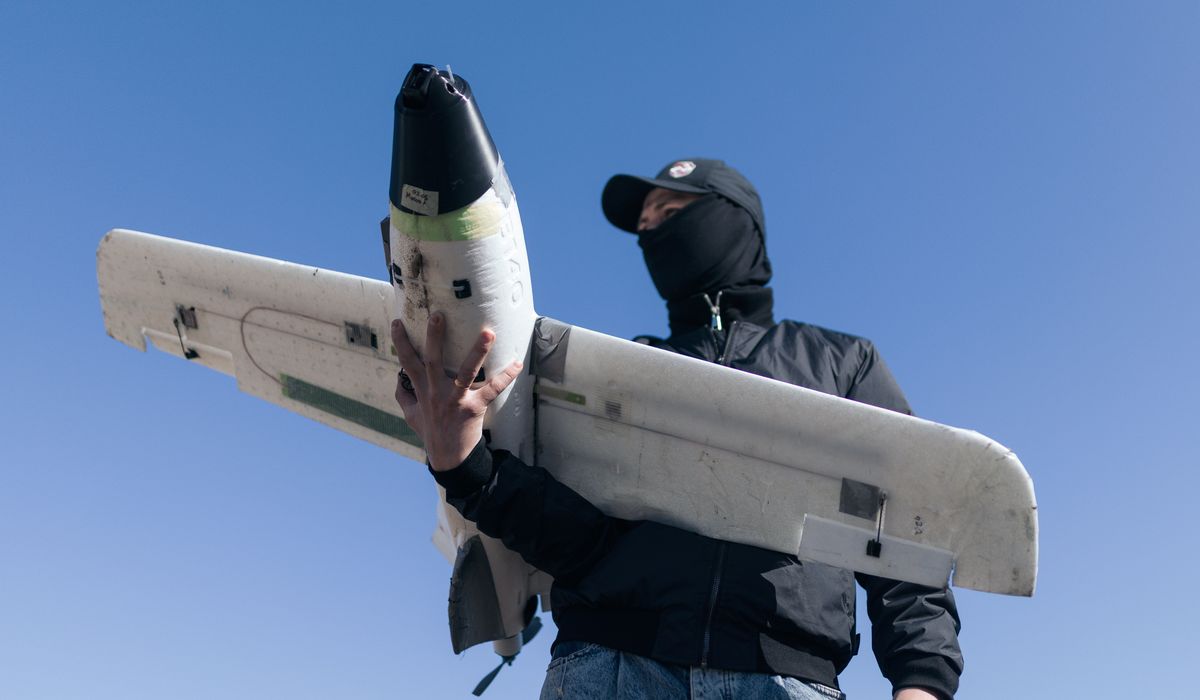
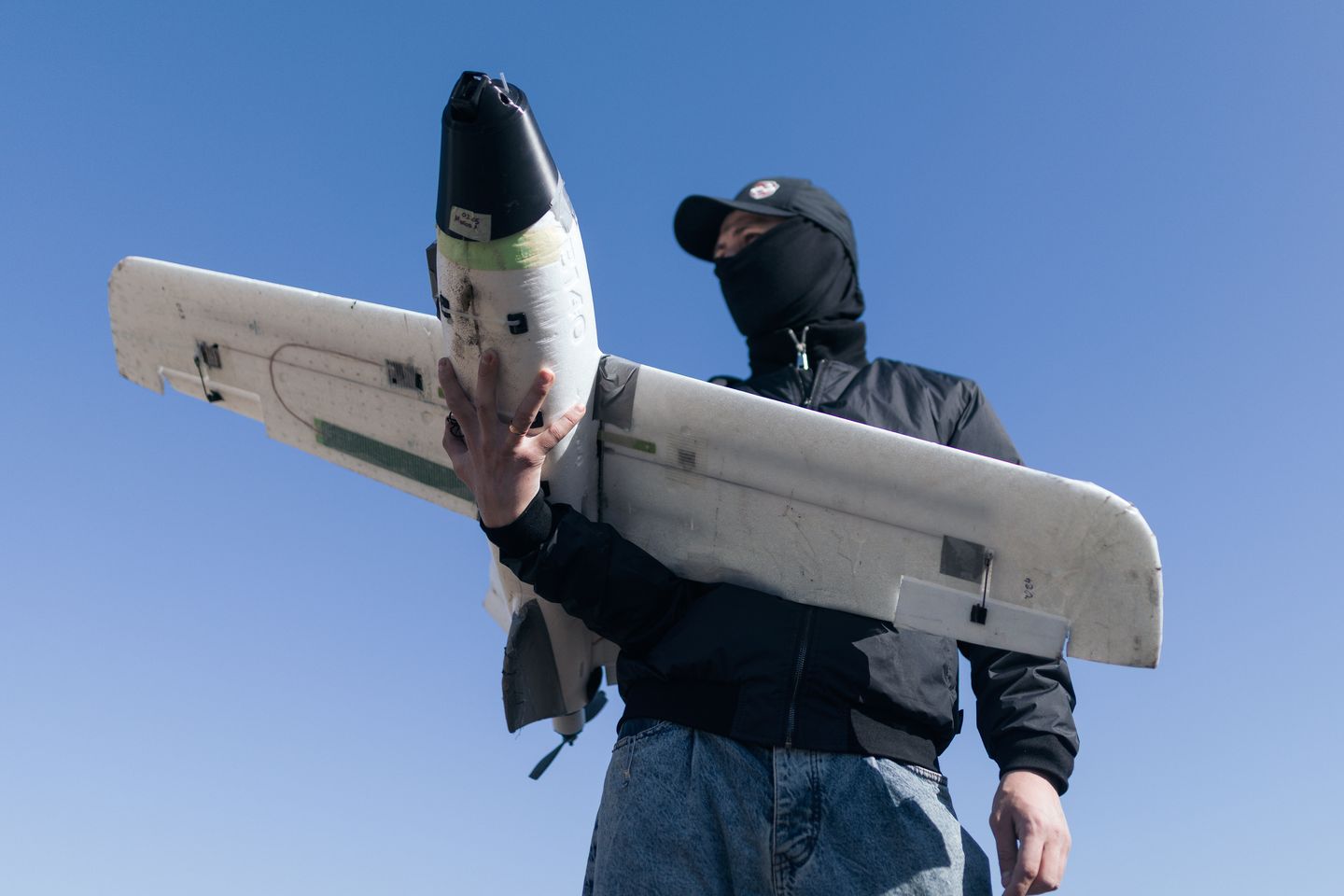
ISR — intelligence, surveillance and reconnaissance — sounds high-tech. However, the drones Mr. Liscovich referred to are economical, low-tech and commercially available models. They are used in peacetime for such ordinary tasks as wedding photography.
“The category has massive commercial volume and China has perfected it, in mass, at the right price point, as they had tons of demand in the commercial sector,” said Mr. Liskovich, who has been procuring items on global markets for Kyiv’s struggle since Russia invaded in February 2022.
“Ukraine’s equivalents are not that robust, though the Ukrainians make them much more resistant to jamming: They use military-spec radios or rely on GPS.”
Drone use expands
The Ukraine war has made clear the vulnerability of big, pricey, high-tech platforms — warships, armored fighting vehicles, artillery pieces, radar and other sensor units — to easy-to-deploy, cheap-to-obtain, attritable, unmanned systems.
Ubiquitous ISR drones, combined with satellite reconnaissance data, cast a wide, sharp light across the battle space, making concentrating forces ultra-risky. Once identified, the concentration’s coordinates are accelerated up the kill chain to both artillery and strike drones.
That latter category includes direct-drop bomber drones and first-person-view suicide drones, as well as interceptor drones, which ram enemy drones mid-air.
Aerial drones, also known as Unmanned Aerial Vehicles, or UAVs, are taking over battlefield tasks long undertaken by specialist troops. ISR drones are appropriating the jobs of artillery observation officers, scouts and spies.
Suicide drones are invalidating anti-tank missile teams to the point where the survivability and future role of tanks — a weapon that Russia has boasted about — is now in question.
Per reports, even the skills of Ukraine’s most successful sniper have been invalidated: He has hung up his scoped rifle and is operating with a drone unit. Drones can conduct sniper work — reconnaissance and targeted killing — more effectively than humans and at zero personnel risk.
On this deathscape, Russia’s current tactics are to send a duo of infantrymen in the direction of Ukrainian positions to probe for gaps, a senior officer from a NATO army recently told The Washington Times — adding that such missions are near suicidal.
If they live and manage to penetrate, the two can summon reinforcements — but increasingly, it is impossible to funnel forces to them.
That is due to the extension of the targeted area, the officer said. The line of contact — the “zero line” — is now flanked on both sides by a fully monitored kill zone that is 15-20 miles deep.
Artillery for more than a century has been able to strike far into the enemy’s rear. But improvements in ISR technology make strikes more precise and deadlier. And drones themselves are substituting for big guns as a key killing arm.
Kill zone depth is driving the latest development in uncrewed weaponry: unmanned ground systems, or UGVs.
Transport tasks, from unit resupply to casualty evacuation, are increasingly being taken over by UGVs.
“UGVs are being hit, but the alternative is worse,” Mr. Liscovich said. “Vehicles cannot get through.”
Ukraine has produced various UGV types, with the “Termite” model currently popular.
“They are not super sophisticated: They are custom-built in Ukraine, and components are not a huge challenge as they are not built from anything that is not commercially available — with the possible exception of communications systems,” Mr. Liscovich said. “They come in different sizes, but if you shave the top off a golf cart, that’s the standard size.”
In a development that has been likened to the films of the “Terminator” science fiction franchise, UGVs are also taking on combat work: trundling up to the zero line to blow up enemy strongpoints and even take prisoners.
“You can bolt a rocket launcher or a machine gun onto them,” he said.
Race for sensors, satellites
Though unmanned platforms are economical, neither UAVs or UAGs are fully autonomous: They require human guidance. The current tech race is communications and sensors.
“Historically, drones carried daytime or nighttime cameras. Now some carry infrared sensors that can see at night, and there is a new set of sensors — active radars that allow interceptor drones to operate in cloudy or foggy conditions,” Mr. Liscovich said. “These radars are very low resolution, but impactful, and their price point is, like, 500 euros [$581].”
Another ongoing tech challenge is increasing payloads.
The more weight — currently, up to 44 pounds — that disposable drones carry the better their ability to deliver more supplies to friendly troops or more bombs to enemy troops.
A payoff exists between communications systems and weight. The enemy cannot jam drones controlled by fiber-optic cable, but the drones’ spools add weight to the platforms, Mr. Liscovich said.
While that kit is inexpensive and relatively low tech, Mr. Liscovich admits that Ukraine also needs expensive, sophisticated systems — notably, a sovereign constellation of reconnaissance satellites.
Kyiv has not always enjoyed timely access to intelligence recorded by its allies’ satellites or the guidance needed to pinpoint its medium-range missiles onto targets inside Russia.
Hence, Kyiv is considering its own constellation, though, “even in the rosiest case, the earliest date to launch is October,” Mr. Liscovich said.
He said he hopes that the appointment of a dedicated official to coordinate with overseas satellite and space companies will improve the situation.
Yet weaponry is only one part of the equation to winning a war, Mr. Breccia warned. When soldiers engaged in wars of choice fight those engaged in existential struggles on their own soil, multiple factors favor the latter.
“Numbers, morale and the willingness to suffer casualties and to endure the hardships of war are the winning ingredients that can turn the scales against technological superiority,” he said.
Both the U.S. and the Soviet Union were driven from Afghanistan by primitive but determined enemies. But a bloodier example for the U.S. dates to the 1960s.
“Vietnam is a good case study,” Mr. Breccia said. “The North Vietnamese were willing, or at least capable, of enduring extreme hardships, beyond what the U.S. military was able to.”