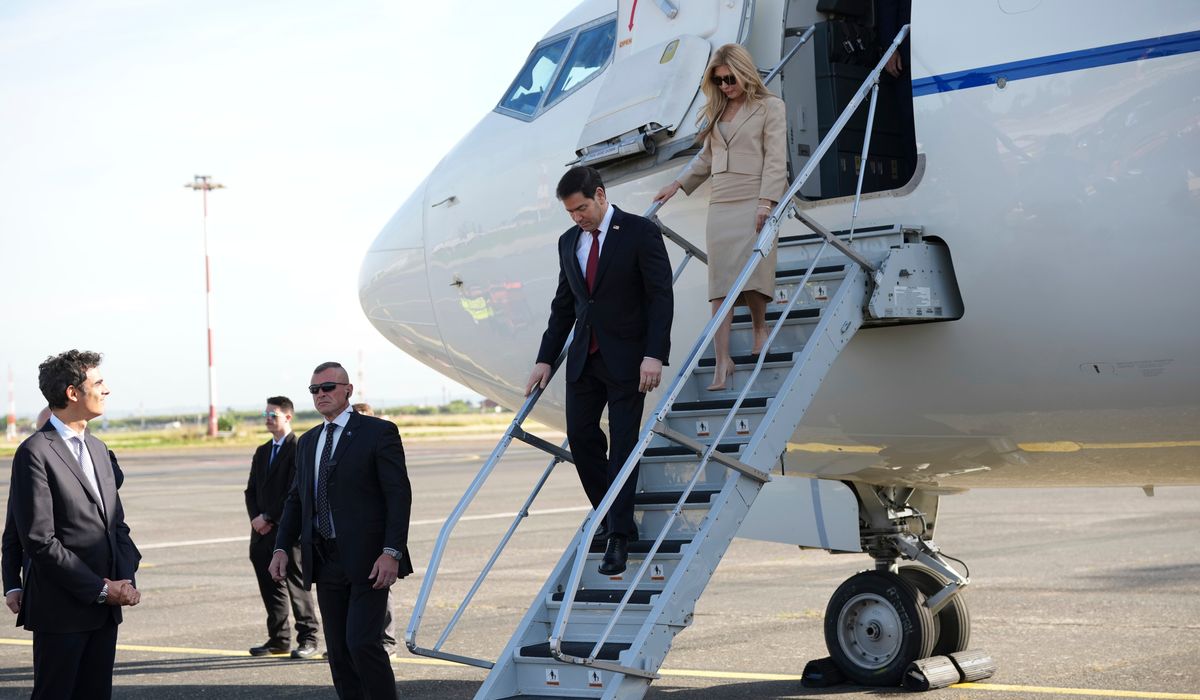
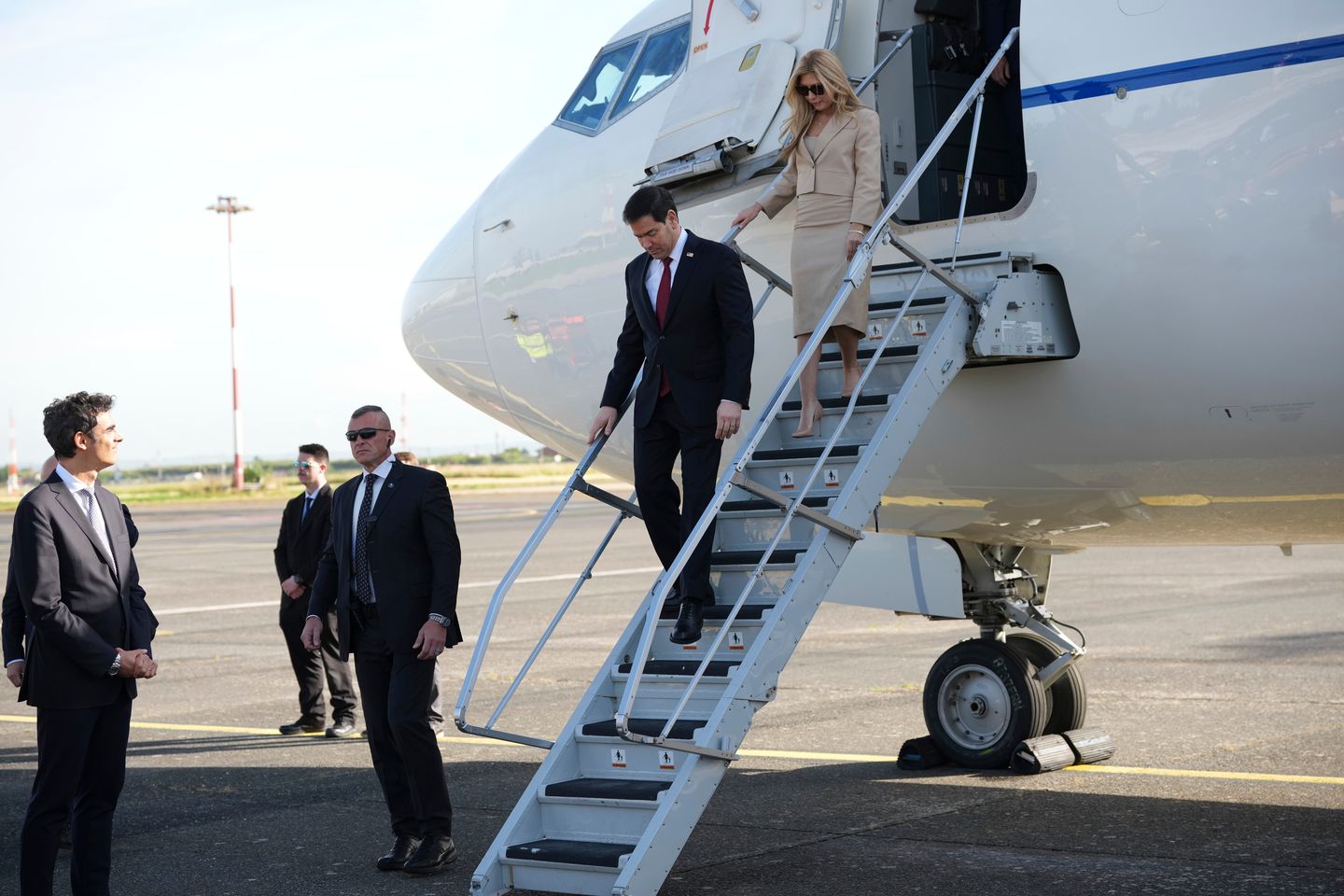
President Trump and top aides will discuss the flash point issue of Taiwan at the upcoming summit meeting in Beijing, Secretary of State Marco Rubio said Tuesday.
Mr. Rubio told reporters at the White House the president will broach the topic during his meeting with Chinese President Xi Jinping set for the middle of the month.
Asked if Mr. Trump will press Beijing on its Taiwan policy during the visit set for May 14 and 15, Mr. Rubio said, “I’m sure Taiwan will be a topic of conversation. It always is.
“As you know, the Chinese understand our position on that topic; we understand theirs,” he said. “And I think both parties — again, without getting ahead of myself and what will happen in the talks, but I think both countries understand that it is in neither one of our interests to see anything destabilized happen in that part of the world.”
China’s designs on Taiwan remain a point of high tension between Washington and Beijing.
In recent years, Chinese military operations around the island have increased sharply as part of what military leaders call a pressure campaign by Beijing.
“We don’t need any destabilizing events to occur with regards to Taiwan or anywhere in the Indo-Pacific,” Mr. Rubio said. “I think that’s to the mutual benefit of both the United States and the Chinese.”
The Trump administration recently announced new arms sales to Taiwan totaling $11 billion for advanced weapons, including HIMARS missiles, M109A7 Paladin howitzers and air defense missiles.
Beijing denounced the sale as a violation of its one-China principle.
China and the U.S. adhere to fundamentally differing policies on Taiwan, both called one-China policies.
China’s policy asserts Taiwan is part of its territory, and Beijing has not ruled out the use of force to take control.
U.S. policy views Taiwan as part of China but does not recognize Beijing’s sovereignty over the island. The American stance opposes any unilateral change in the tense status quo, something analysts say is being undermined by China through laws and military operations.
Mr. Trump upset a long-standing policy on U.S. arms sales to Taiwan in February by discussing the issue with Mr. Xi.
The discussions fueled speculation that Mr. Trump may offer concessions at the summit, such as a reduction in U.S. arms sales in reaching an economic deal with China.
The Pentagon is pressing Taiwan to rapidly build up its defenses in a bid to deter military action that U.S. military leaders say could take place as soon as 2027.
The PLA, meanwhile, is systematically escalating large-scale military exercises around Taiwan that the commander of the Indo-Pacific Command, Adm. Sam Paparo, has called rehearsals for an invasion.
The latest saber-rattling by Beijing took place in April when the Chinese aircraft carrier Liaoning sailed through the Taiwan Strait.
In addition to military actions, China is conducting legal and information warfare campaigns, the most visible feature of which was the recent visit to China by the pro-Beijing leader of the opposition Kuomintang Party, Cheng Li-wun. It was the first by a KMT leader in 10 years.
Beijing is claiming the U.S. is fueling “separatism” and formal independence by Taiwan.
Washington says all its actions are guided by the 1979 Taiwan Relations Act and U.S.-China communiques, including one that states U.S. arms sales to Taiwan are conditioned on threats from China, which have increased sharply.