Earlier this year, a local by-election in the United Kingdom drew widespread attention for its political outcomes. Less visible, but equally important, were the recurring questions about how those outcomes were reached.
The February Gorton and Denton by-elections resulted in a significant Green party victory, drawing headlines not only for the result, but for reports from independent observers documenting unusually high levels of “family voting,” a practice in which multiple individuals enter polling booths together. In this case, the number of affected votes exceeded the margin of victory—a finding that raises significant questions about an entire election that may have been undemocratic.
Just this weekend, news broke that the U.K.’s Home Secretary Shabana Mahmood’s postal ballot was examined in litigation connected to the 2004 Birmingham election fraud case, drawing attention to vulnerabilities that have never been fully resolved.
In this case, a court found widespread fraud across multiple wards, voided the results, and barred those responsible from office. Its reappearance in the public record underscores a broader concern that structural weaknesses in the British electoral system persist. It also raised the question of whether in closely contested races these weaknesses may affect outcomes in ways that are difficult to detect and even harder to remedy.
These fresh concerns over the U.K.’s electoral system—both in the case of Mahmood and in the February by-elections—are revealing of deeper, more pervasive problems.
In the past decade, prosecutions have been extremely low relative to reports of electoral fraud. In 1998, there were reportedly only nine convictions for postal vote fraud—a rate of less than one every two years. In 2017, hundreds of complaints (including 1,000 emails sent to the Electoral Commission and 60 letters from 47 MPs) about alleged double voting resulted in only one conviction. The 2004 Birmingham election fraud case—in which a court identified widespread manipulation of postal ballots, voided election results, and barred those responsible from holding office—was so egregious that presiding election commissioner Richard Mawrey QC remarked that the scale of fraud in this case would “disgrace a banana republic.”
At the center of these concerns is the postal voting system. In the U.K., voters can request and submit ballots by post with limited identity verification and outside a controlled environment. Ballots may be completed in shared settings, raising the risk of undue influence or coercion, and signature verification processes have been shown to produce inconsistencies.
These conditions do not in themselves prove widespread abuse, but they do create opportunities for it; areas with high levels of immigration from Pakistan and Bangladesh have been shown to be high-risk for undemocratic elections, as cultural practices like clan systems mean votes can be exchanged for loyalty and power. In the years since British voters were allowed to vote by post, there have been cases of rightful recipients never receiving their ballots (which were returned by someone else). There have also been cases where ballots were signed and filled out by candidate representatives to demonstrate loyalty.
Worse still, the identification systems for the postal vote do not include requirements for matching addresses on file with ballots, they do not include strict scrutiny over witness requirements, and they do not include a requirement that the voter turns the ballot to the Elections Office themselves.
Because of the vulnerabilities in the British system and the nature of the fraud (particularly around postal voting), using successful petitions or prosecutions as the sole indicator of fraud risk paints a very misleading picture of its systemic health.
The structure of the British election petition process is rooted in 19th-century legal design, requiring individuals to privately initiate and finance challenges. Political parties themselves lack standing to bring cases. Strict procedural requirements and short filing windows further reduce the number of disputes that reach formal review.
Taken together, these factors limit the system’s ability to address potential problems once they arise.
In theory, in order to successfully prove postal voting fraud, a private citizen would have to bring the charge themselves—incurring all the burdens financial and otherwise—and prove that fraud occurred (likely behind closed doors) to authorities in a system where scrutiny is relatively impossible.
These weaknesses of the British electoral system intersect with broader trends in the U.K.’s civic decline, including the erosion of shared national identity, elite reluctance to confront institutional dysfunction, and growing sectarian political mobilization in certain localities. Underlying all of this is problematically high levels of immigration from culturally distant nations. This has included many immigrants who have not displayed assimilation to the beliefs, values, and practices of their new home.
The implications for the U.S. are at once practical, symbolic, and strategic. If election integrity is so severely compromised in our leading civilizational ally, can we continue to operate on the same grounds as we used to?
The Anglo-American alliance relies on a high degree of mutual confidence that both countries’ electoral processes are sound; we must share the strict adherence to free and fair elections. Americans do not want to see clear vulnerabilities dismissed in the leadership of our closest allies. We no doubt have issues with election integrity in the U.S., but this administration—and the American Right in general—has repeatedly affirmed its commitment to secure elections such as trying to pass the SAVE Act.
The U.K. occupies a singular position in American foreign policy; we are core partners in intelligence sharing, military planning, and diplomatic coordination. Even though the dynamics have shifted in President Donald Trump’s second term, the function of the ongoing U.S.-U.K. partnership assumes a baseline of institutional stability and public confidence. Electoral systems are foundational to both. Like limits on free speech, eroding electoral integrity has consequences that extend beyond domestic politics into the reliability of international commitments and the coherence of allied strategy.
Another broader international dimension is at play with the U.S and the U.K. historically positioning themselves as leading proponents of democratic governance. There is no doubt our adversaries will see weaknesses in our systems as an opportunity to challenge our position and to promote alternative models.
In the U.K.’s first-past-the-post system, where electoral outcomes can hinge on very small margins, these factors create a very real credible risk that results may not fully reflect voter intent in all constituencies.
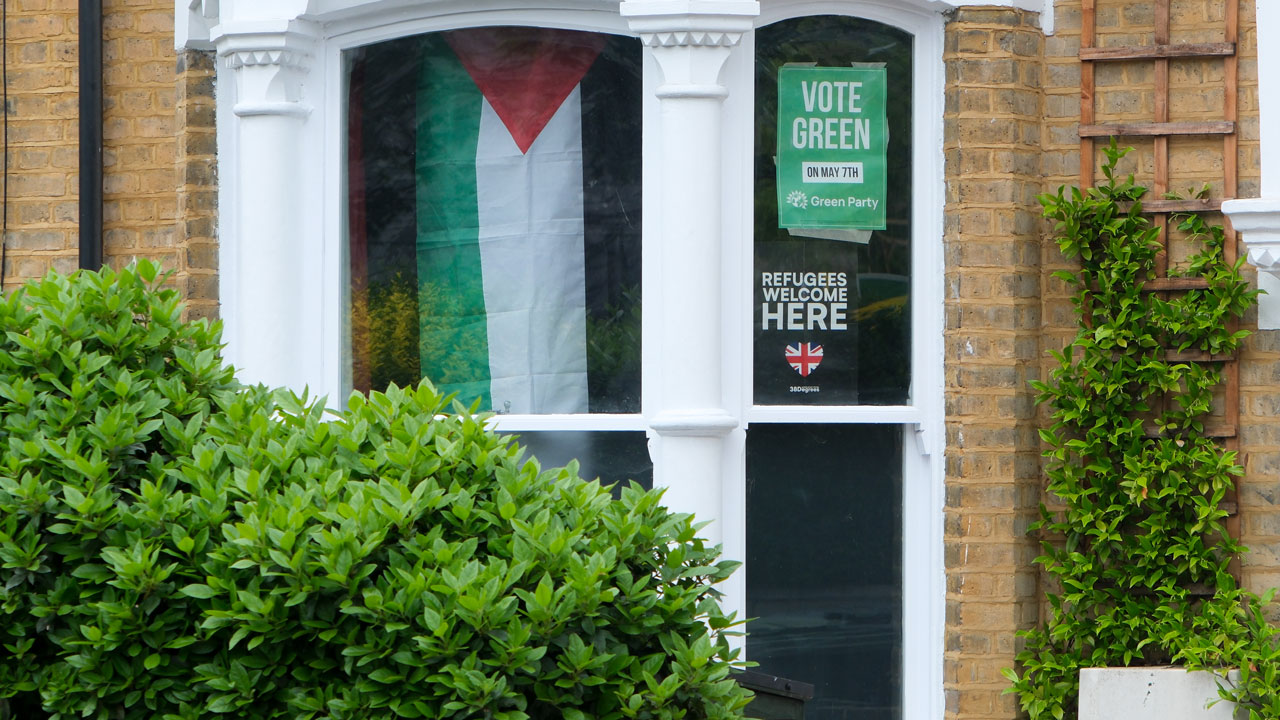
Special elections on May 7 will likely see wins for both Reform UK and the Green party as over 5,000 councilor seats are up for grabs. But on the eve of this pivotal vote in British politics, there are lingering questions about the democratic process that deserve attention no matter the political outcome.
We publish a variety of perspectives. Nothing written here is to be construed as representing the views of The Daily Signal.