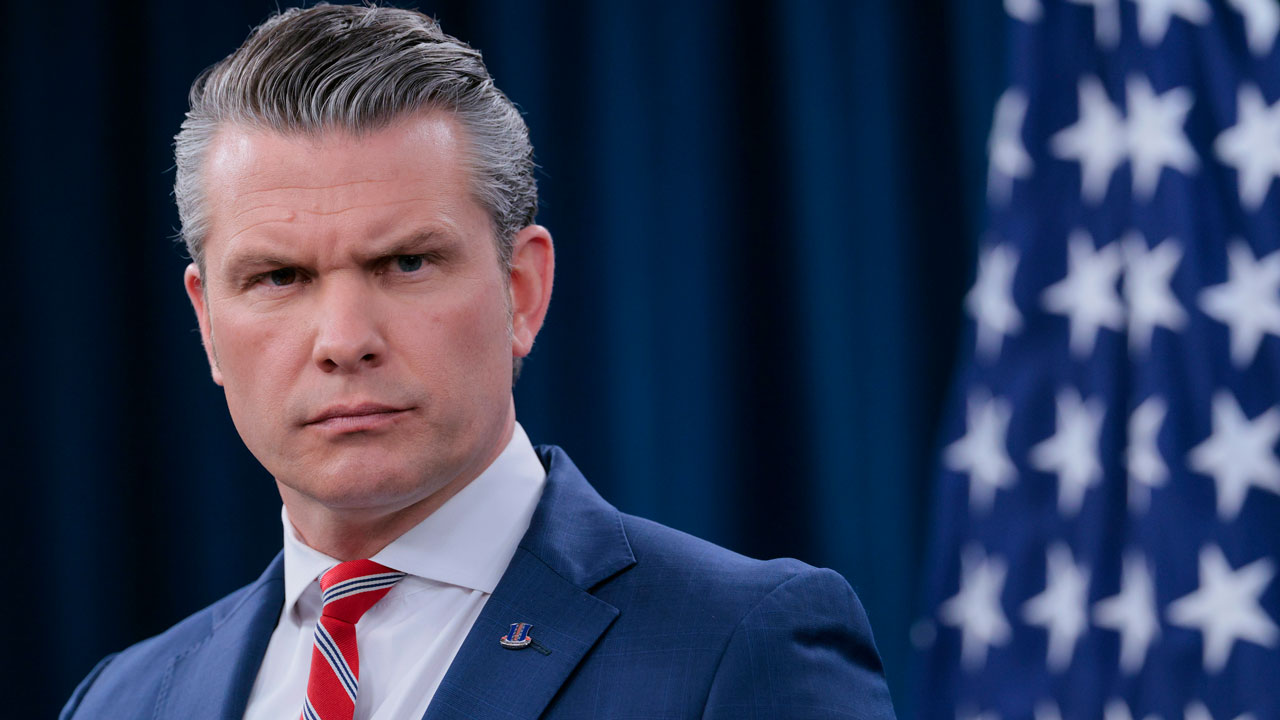
Secretary of War Pete Hegseth argued Tuesday morning that the United States has removed Iran’s control of the Strait of Hormuz as a bargaining chip in negotiations by gaining control of the vital global shipping lane.
“For too long Iran has been harassing ships, shooting at civilian tankers from all nations, and trying to impose a tolling system,” Hegseth said. “Two U.S. commercial ships, along with American destroyers, have already safely transited the strait, showing the lane is clear.”
He continued, “We know the Iranians are embarrassed by this fact. They said they controlled the strait. They do not.”
Roughly a fifth of the world’s oil trade passed through the strait before the war. The threat of Iranian attacks has effectively paralyzed traffic in the global shipping lane, resulting in heightened oil prices, and pain for Americans at the pump.
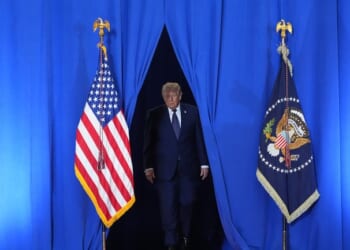
Hegseth delivered his remarks a day after the United States sank Iranian boats that President Donald Trump said had attacked a South Korean vessel.
Last week, Trump sent letters to Speaker of the House Mike Johnson, R-La., and Senate President Pro Tempore Chuck Grassley, R-Iowa, saying that hostilities with Iran “have terminated,” which, in theory, would absolve him of the need to seek a congressional extension of his war powers.
The War Powers Act is meant to forbid military engagements of over 60 days without congressional authorization.
Hegseth maintained that the ceasefire is still in effect, pausing the war powers clock and obviating the need for authorization.
“The ceasefire is not over. Ultimately, this is a separate, distinct project,” Hegseth said of Operation Project Freedom—the effort to regain control of the strait.
“With the ceasefire, the clock stops,” he said of the need to seek the support of Congress 60 days into the conflict.
The secretary also argued the crackdown in the strait assists the ceasefire strategy, rather than hurting it.
Trump “holds the cards… and Project Freedom only strengthens that hand,” said Hegseth.