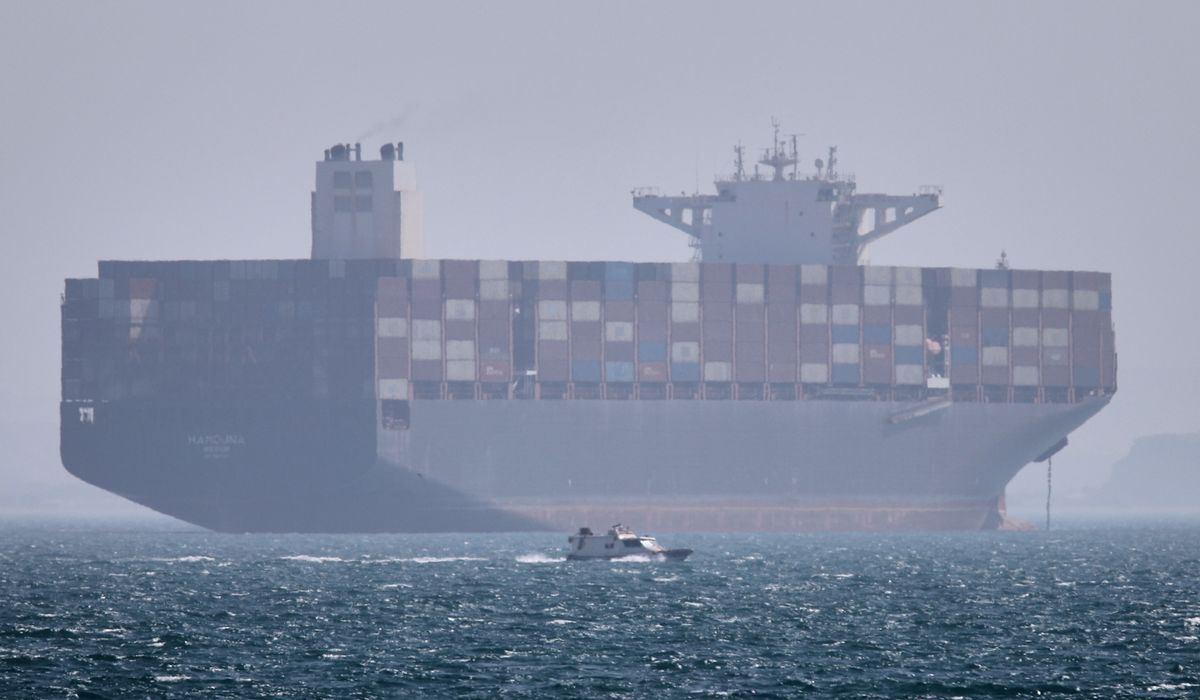
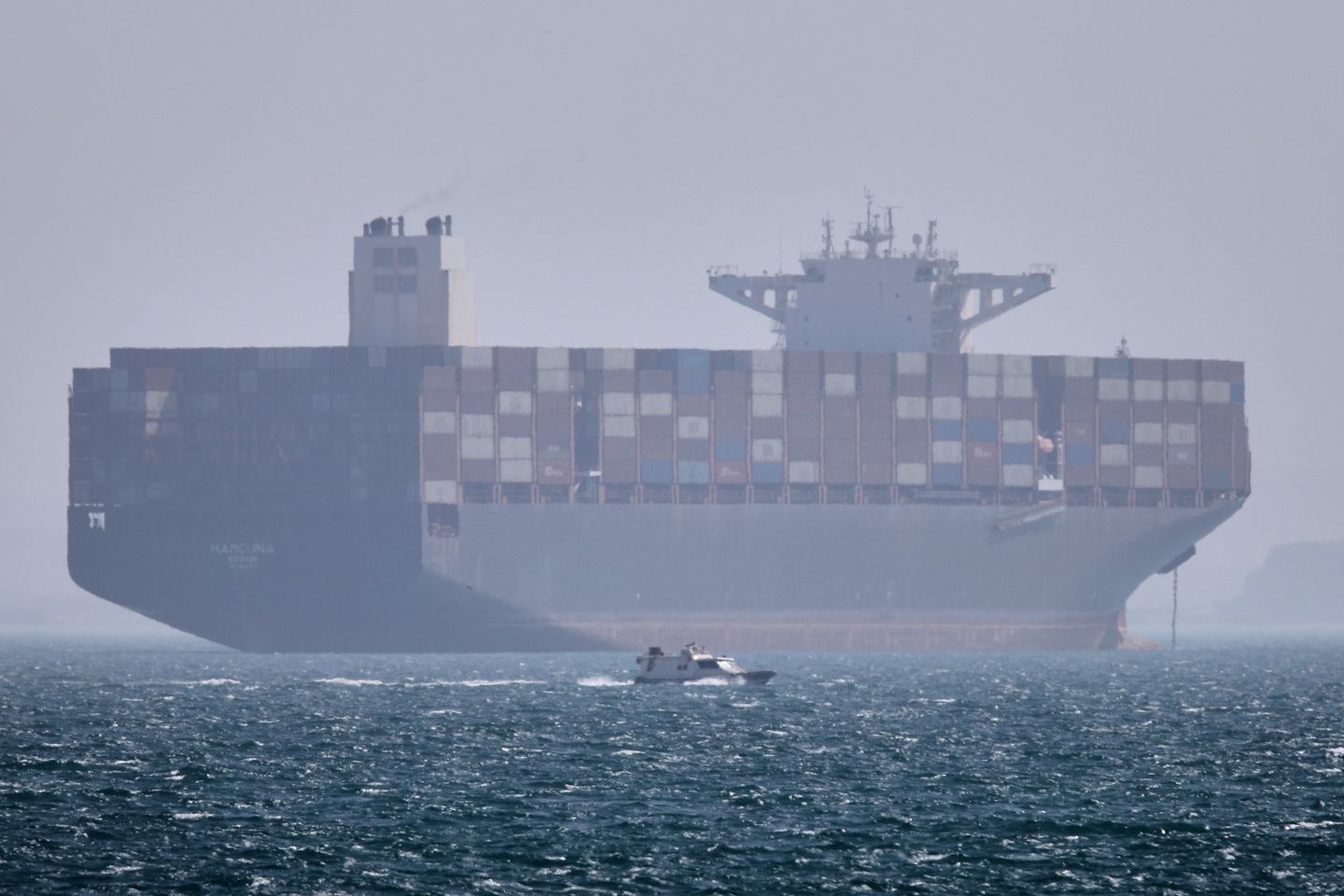
Iran threatened ships in the Strait of Hormuz on Monday as the U.S. began to guide vessels through the waterway, a bold operation President Trump launched to break an impasse in peace talks and reduce the economic fallout from the war.
U.S. Central Command reported early success from the operation, dubbed “Project Freedom.” But clear risks remained as Tehran talked tough and the United Arab Emirates reported Iranian attacks on its vessels.
The Emiratis also warned citizens to stay away from windows and open areas in a series of missile alerts on Monday, the first since a U.S.-Iran ceasefire in early April.
Mr. Trump ordered the Navy to deploy guided missile destroyers, more than 100 land and sea-based combat aircraft, and several sea and air drones to guide international commercial ships out of the Strait of Hormuz.
Iran has heavily restricted the waterway, which carries about a fifth of the world’s oil supply, by charging tolls and harassing ships as economic retaliation for Mr. Trump’s military operation against its territory and regime.
Mr. Trump is squeezing Iran’s economy with a blockade on Iranian ports. But the economic fallout from the standoff is raising gas prices in the U.S. and testing the patience of America’s allies in Europe and Asia.
SEE ALSO: Pentagon rejects Iran’s claim it struck U.S. Navy vessel near the Strait of Hormuz
“The administration’s new initiative is clearly an effort to push the pace on the Hormuz stalemate,” said Ilan Berman, senior vice president of the American Foreign Policy Council.
He said the White House seems “quite comfortable” with the impact of Mr. Trump’s blockade, which is decreasing Iranian oil exports and could affect overall production.
“But there are questions about how long the regime can hold out under these conditions, and the desire here seems to be to accelerate the timetable and get the strait open sooner rather than later — as a way of settling markets and of reassuring the president’s political base,” Mr. Berman said.
Early Monday, the U.S. denied Iranian claims that it struck an American Navy ship.
Iranian state media had said its military struck the Navy vessel southeast of the strait for “violating maritime security and navigation norms.”
“TRUTH: No U.S. Navy ships have been struck. U.S. forces are supporting Project Freedom and enforcing the naval blockade on Iranian ports,” the command wrote on X.
SEE ALSO: Trump says U.S. attacked Iranian boats, urges allies hurt by Strait of Hormuz closure to help
However, the United Arab Emirates said Iranian drones attacked one of its carriers as it transited the Strait of Hormuz.
The Gulf nation’s foreign ministry accused Iran of “acts of piracy” and said its chokehold on the strait is destabilizing the region. Later, British monitors reported a fire on a cargo ship off the Emirati coast, raising suspicions of ongoing Iranian attacks.
The Islamic Revolutionary Guard Corps, which has assumed de facto control of Iran, said Monday that reports saying U.S. vessels were successfully transiting the Strait of Hormuz were “baseless and completely false.”
“Other maritime movements in contradiction to the declared principles of the IRGC Navy will face serious risks, and violating vessels will be stopped by force,” IRGC officials said, according to Iran’s Mehr News Agency.
The incidents marked a tense start to Project Freedom. Under Mr. Trump’s initiative, the military will help crews avoid mines and other dangers and respond forcefully if Iranian forces try to intervene.
“The adversary gets a vote too, though. Iran retains some naval and drone [and] missile capabilities, and there’s a danger that the Iranian regime will act aggressively in the strait,” Mr. Berman said. “If it does, it would force the U.S. to react and set the stage for a breakdown of the ceasefire.”
If it works, Mr. Trump’s operation could reduce Tehran’s leverage in the conflict by taking away its control of the strait.
Yet it could result in renewed fighting that breaks a fragile ceasefire in the region. Mr. Trump has rejected Iran’s proposals for ending the war, saying they do not meet his terms.
The president says his main goal is to prevent Iran from getting a nuclear weapon.
Mr. Trump faces political pressure at home to wind down the war. With midterm elections looming, his war is polling relatively poorly, and motorists are seeing higher gas prices as crude oil gets more expensive.
The national average price of a gallon of gas stood at $4.46 on Monday, according to the AAA motor club.
It is an increase from $4.11 a week ago and $3-a-gallon gas, on average, at the start of the war on Feb. 28.