School choice and student transportation have a lot of Venn diagram overlap. A 2009 survey of parents in Denver and Washington, DC, found that more than a quarter of respondents reported not enrolling their child in the school they preferred due to transportation difficulties.
The Heritage Foundation recently released a report on modernizing student transportation for an era of school choice. Currently we have a Flintstones student transportation system in a world that increasingly needs Jetsons type solutions. Changes in policies and practices can modernize student transportation for the needs of a 21st century choice-based system. Students require new ways to get to schools and other places of learning.
Only one in ten American K-12 students either walked or biked to school in 2017, whereas nearly half of students did so in the 1960s. The consolidation of students into large and increasingly distant schools has gone poorly in terms of both academics and transportation.
However, one of the positive trends involves the creation of new schools. Every time a new micro-school, charter school, or private school opens, a small universe of students can either walk or bike to the school.
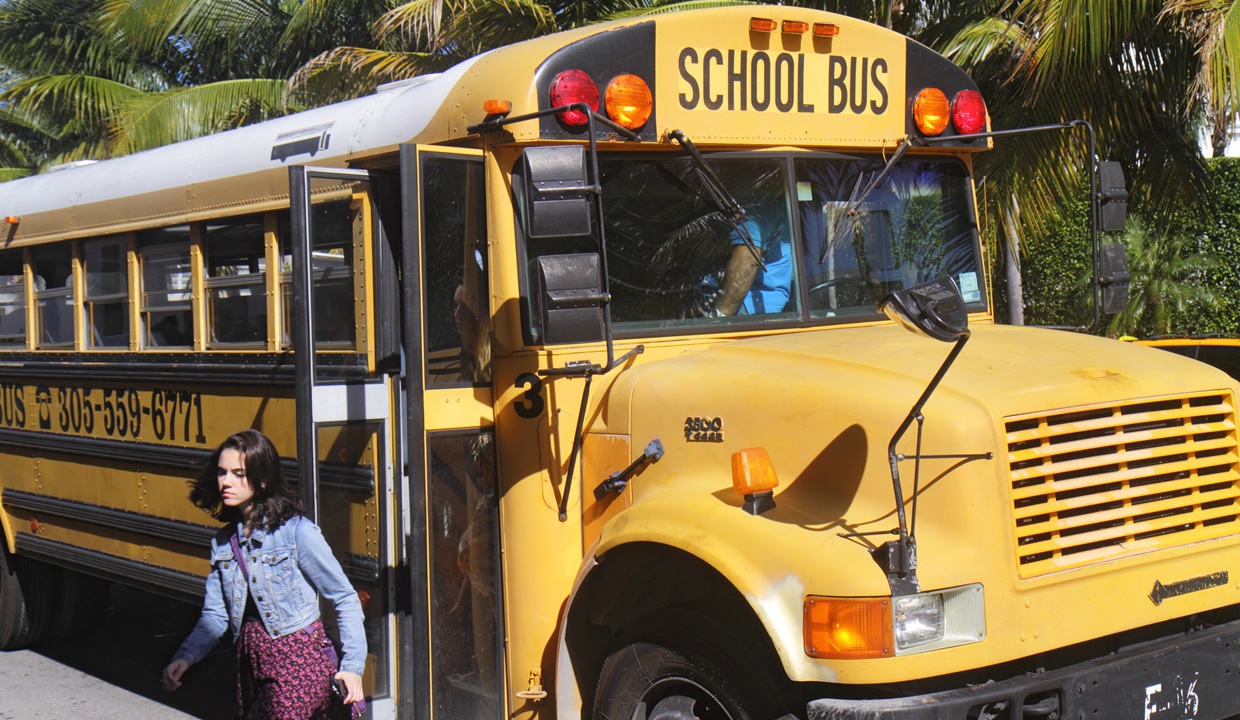
American taxpayers all pay for district yellow-school-bus systems, but in most states the buses run almost exclusively for the benefit of students attending their zoned district schools. In recent years, the yellow bus system has been struggling as ridership declines and districts struggle to hire drivers.
A federal law from 1986 requires states to develop a requirement that bus drivers have a commercial drivers license, but the private sector demand for such drivers has greatly increased, creating district shortages.
Under the current system, school districts decide where children go to school based on zip codes. This has grown antiquated in many states. Increasingly what families need is a system taking smaller groups of students to more schools, rather than a smaller group of buses taking students to the same place.
Repealing federal and state laws and rules preventing schools from using passenger vans for student transport to and from school would be a good starting point. While defenders of the increasingly failing status quo argue that only buses are safe enough to transport students, most students now get to school in a personal vehicle. In practice, no small number of families use small two-seat sport cars to get their students to school. If schools used more vans, parents could use fewer Miatas, and car lines could begin to shrink.
Another solution comes from New York City, where 700 schools co-locate within district facilities. Policymakers developed this practice to enable charter schools to operate within a city with extremely costly real estate. This policy makes sense—taxpayers invested in school buildings to educate students, and the New York City public schools had a surplus of underutilized and vacant space that was not accomplishing that mission. Lawmakers built student transportation into co-location; students retain their right to ride district buses regardless of which school they attend in a building with co-located schools.
Florida lawmakers recently drew upon the success of the NYC experience in passing a “Schools of Hope” program to bring in high quality charter schools into areas with poorly performing district schools and available space.
Policymakers should think much more boldly about co-location. A baby-bust started in 2008, which makes vacant and underutilized district space increasingly common. State policymakers should pass statewide co-location statutes to create standardized lease agreements for not just charter schools, but also for private and micro- schools.
If the yellow buses won’t take students where they want to go to school, we should let educators open schools that families will want to attend in the buses and buildings their tax dollars already purchased.
States have developed other solutions. Ohio and Pennsylvania require district buses to transport students to non-district schools within their attendance boundaries. Arizona created a competitive grant program to have schools develop innovative solutions.
Self-driving vehicles may eventually revolutionize student transportation but have only recently ventured out onto freeways and (for now) remain more expensive than ride-sharing services with human drivers. While potentially revolutionary, these technologies have yet to mature.
Another potential solution is to give families their allotment of transportation funds in a use-restricted account to allow them to develop their own solutions.
Lawmakers and administrators should not be watching yellow-bus ridership decline while costs increase and an ever-smaller percentage of students get transportation help. One-size fits few applies just as much to student transportation as it does to schools.