COLORADO SPRINGS, Colorado — Data centers in space, and perhaps even on the moon, could become crucial to U.S. national security.
That statement may have sounded like borderline science fiction just a few years ago. But military insiders and defense industry leaders say they believe a convergence of factors on Earth, including grass-roots political opposition, could dramatically slow the construction of the massive new data complexes needed to power today’s artificial intelligence models and other advanced technology.
The impact on national security could be quick and severe, potentially forcing the Pentagon to move some critical operations away from cities and states lacking the data center capacity necessary for certain military missions.
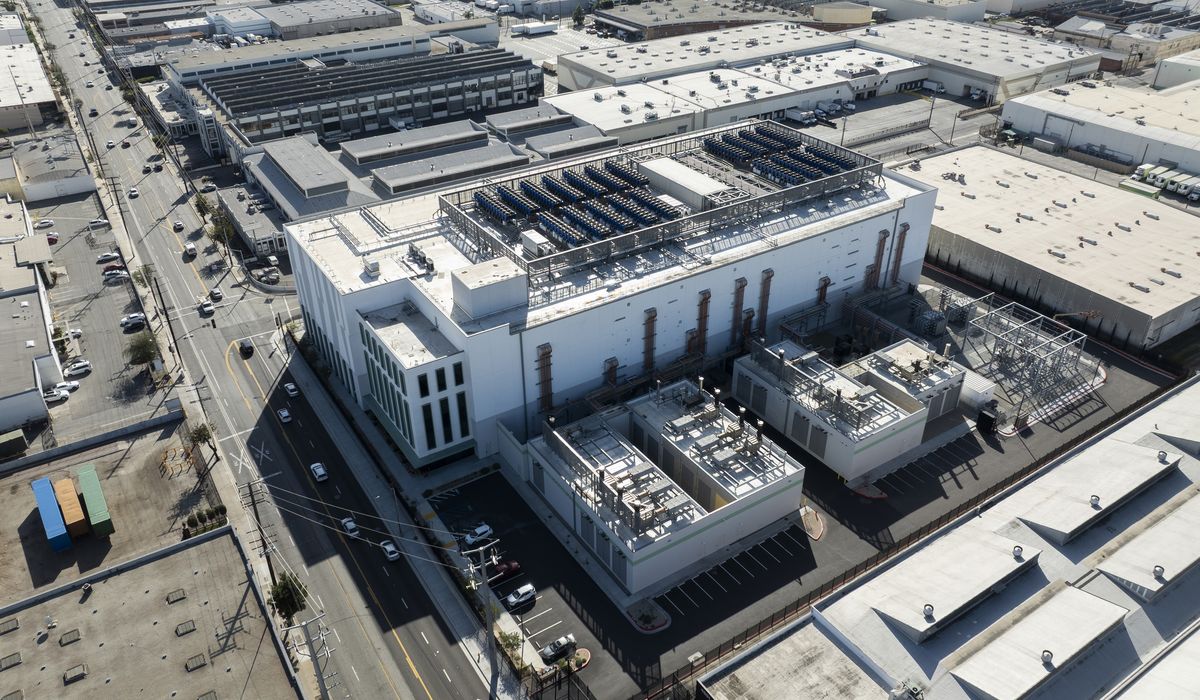
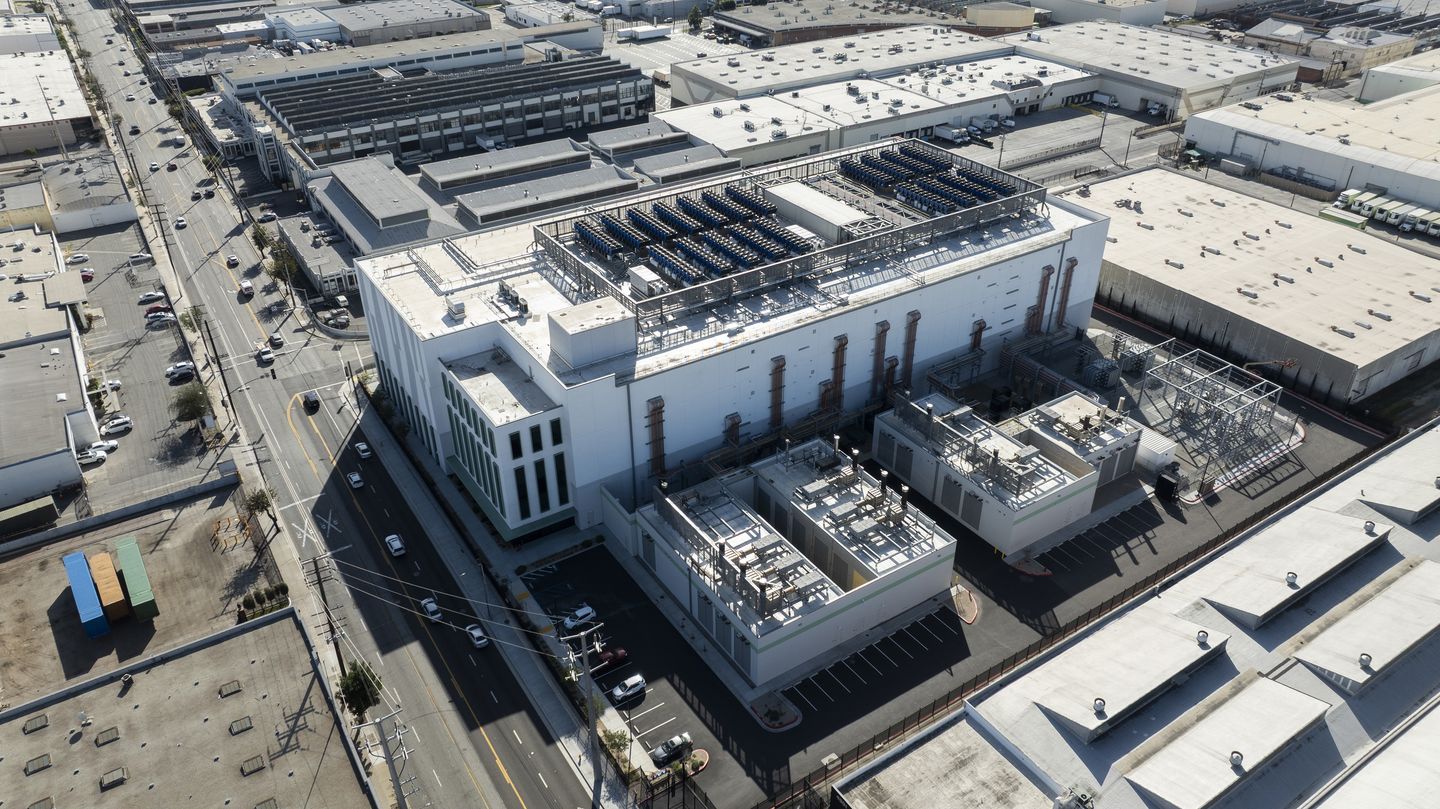
The nation’s appetite for data centers, for both consumer use and national security, is expected to explode in the next several years. Recent research from Goldman Sachs said the U.S. may need to spend as much as $720 billion to handle the power demand from terrestrial data centers, while a recent analysis by real estate investment firm Hines said that by 2030 the U.S. will need an area nearly three times the size of Manhattan to support expected data center growth.
That new reality has led some companies to look beyond the planet for fertile ground to operate data centers and other equipment needed to fuel America’s 21st-century way of life and its increasingly data-driven military.
“Data centers on Earth, they are becoming constrained,” said Rob DeMillo, co-founder and CEO of Sophia Space, a company that says it is building orbital data centers and servers specifically designed to function in space.
SPECIAL
COVERAGE: Threat Status Podcast
Mr. DeMillo cited numerous reasons why terrestrial data centers could become less viable over time.
“They are a drain on the local economy. They are a drain on the energy consumption of that region. They’re a drain on the water consumption of that region. That has an effect on everybody’s water and electric bills,” he said on the April 24 episode of The Washington Times’ Threat Status weekly podcast. “They generate a tremendous amount of heat that gets dumped into the local environment. There are land rights issues. There are issues involving just licensing the land for real estate and having that renewed.”
“In space you don’t have any of that,” Mr. DeMillo said during an interview at the Space Symposium conference here.
The operation of massive server farms in orbit may still be years away. Fully functional data centers on the lunar surface may be even further in the future, given the complexities involved. But there are signs that the underlying concepts aren’t as far-fetched as they once seemed.
In December, Nvidia-backed startup Starcloud reportedly trained an AI model from space for the first time. The AI model was trained using an Nvidia chip aboard a satellite launched into orbit. That could become a successful test case for operating data centers and all associated infrastructure in space.
But running large-scale data centers in space presents significant challenges, including how to cool the equipment in a wildly different environment and how to maintain hardware in a location highly difficult for human technicians to access.
Some specialists also warn that space-based data centers could become appealing targets for an adversary using anti-satellite weapons.
Scaling data center operations in space would likely hinge on the U.S. Space Force and other military components being able to protect those assets from potential enemy attack.
The cost of space launch has dropped dramatically in recent years. But it could still prove financially and logistically difficult for companies to deploy data centers into orbit quickly, affordably and at scale.
SpaceX CEO Elon Musk has been an outspoken proponent of data centers in space. But recent filings before the company’s initial public offering cast doubt on the idea’s viability, according to a recent Reuters report.
“Our initiatives to develop orbital AI compute and in-orbit, lunar and interplanetary industrialization are in early stages, involve significant technical complexity and unproven technologies, and may not achieve commercial viability,” the company said in its filing, Reuters reported.
Why it matters for U.S. national security
For U.S. national security, a dangerous combination of factors is emerging. For starters, there is the growing political backlash against data centers across the country.
Even the Trump administration, which strongly supports American leadership on AI and cementing U.S. leadership on all major tech issues, recognizes the political problems posed by data centers, particularly the potential for consumers to face massively higher electricity bills.
The politics are an even more significant factor at the state and local levels. At least 12 states are considering bans or moratoriums on constructing new data centers. Counties and municipalities across the country have done the same. One of the most notable moratoriums is in Denver, where the city council advanced a bill this year implementing a one-year halt on new data centers.
Those policies are an obvious problem for companies, including Big Tech giants that rely on huge data centers and server farms to power their products. But there could also be a direct impact to the U.S. military and its most data-intensive missions, such as missile defense, which centers on quickly processing huge amounts of data. That mission will become infinitely more complex and data-centric when President Trump’s proposed Golden Dome missile shield comes online, scheduled for 2028.
In fact, some key retired military officers raised the prospect of the U.S. eventually being forced to relocate some military functions if, for example, the state of Colorado or some of its major municipalities follow Denver’s lead and ban new data centers, even temporarily.
“Data is going to come in mountains into this area and we have to be able to deal with it,” said retired Air Force Gen. John E. Hyten, who served as vice chairman of the Joint Chiefs of Staff and commander of U.S. Strategic Command, among other prominent military roles.
Gen. Hyten specifically cited Colorado Springs, home to many major military bases and other important military hubs.
“We’re going to have mountains of data coming into Colorado Springs. So what is the military going to need and what is industry going to need to do that? They’re going to need big powerful data centers to process all of this data, to make sure it gets to the right place at the right time to support the warfighters we have around the world,” he said during a Space Symposium media roundtable.
Gen. Hyten said he believes banning new data centers is “crazy.” If such bans are implemented, he said, the military may need to build data centers directly on military property.
“We’re going to because we have to in order to do the mission,” he said. “And if we can’t, that’s the only time we’d move those missions out of Colorado because we won’t be able to do them anymore.”
Gen. Hyten’s suggestion that the military build data centers on its own property is already playing out. This month, the Army announced it selected Fort Bliss, Texas, and the Dugway Proving Ground in Utah to support its growing need for AI on the battlefield by hosting the service’s first civilian-built and -operated hyperscaled data centers.
Private capital will finance the projects through the Enhanced Use Lease program, under which the Army provides the land while the companies bear the construction and operational costs, military officials said.
• Mike Glenn contributed to this report.