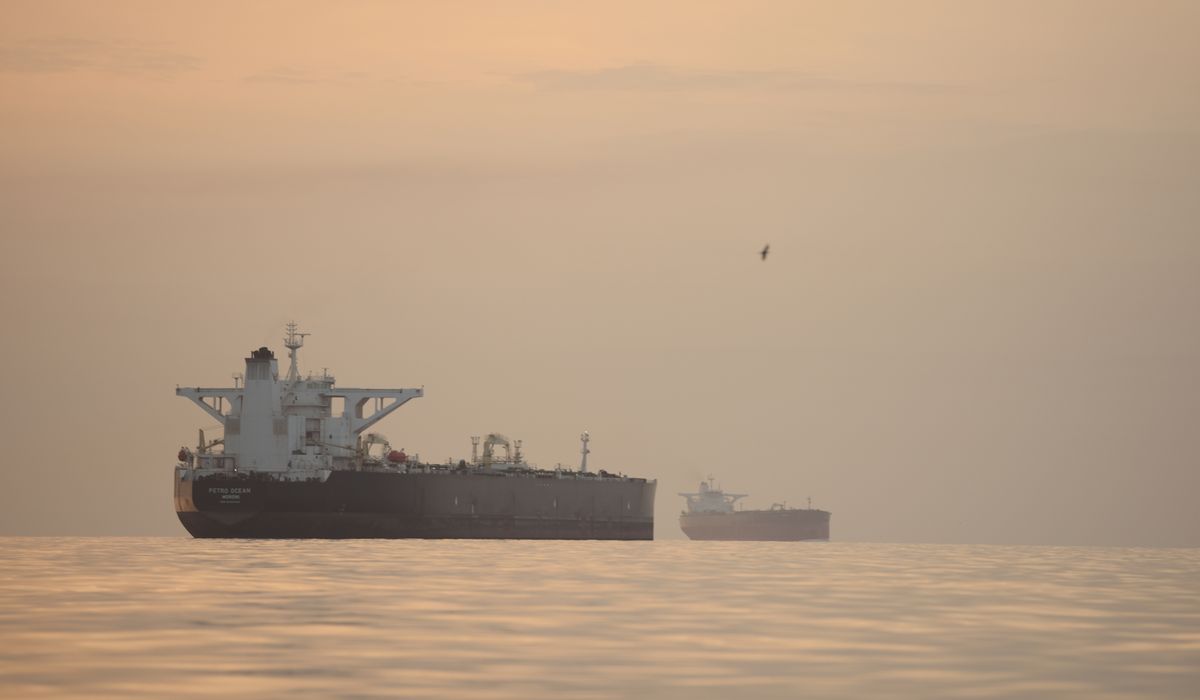
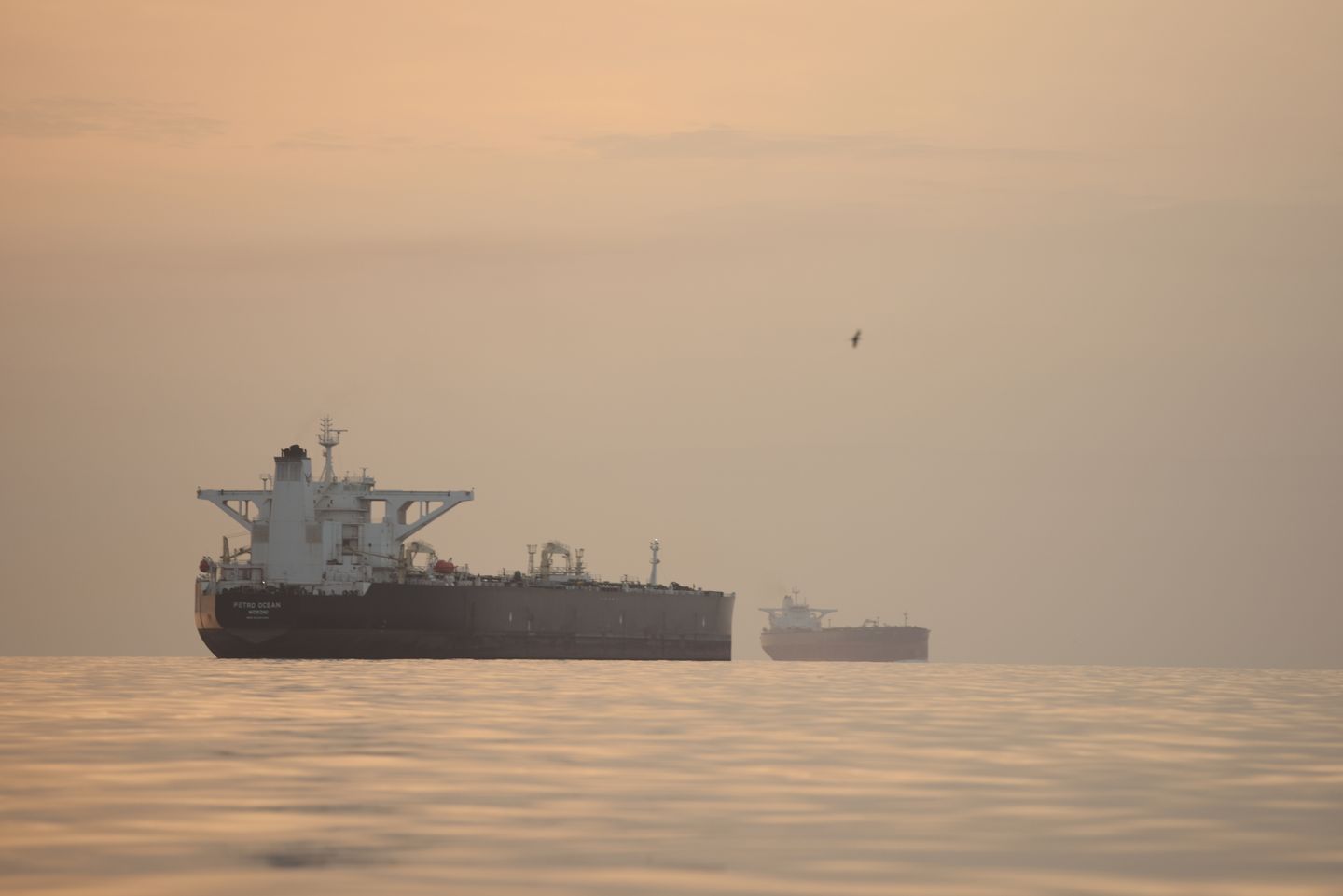
U.S. President Trump announced Sunday that the U.S. Navy intercepted an Iranian-flagged cargo ship attempting to maneuver around the naval blockade in the Strait of Hormuz.
The ship, named the TOUSKA, was intercepted by the USS Spruance on Sunday after the Americans issued several warnings to stop, Mr. Trump wrote in a Truth Social post.
“So our Navy ship stopped them right in their tracks by blowing a hole in the engine room. Right now, U.S. Marines have custody of the vessel,” Mr. Trump wrote. “The TOUSKA is under U.S. Treasury Sanctions because of its prior history of illegal activity. We have full custody of the ship, and are seeing what’s on board!”
The incident is the first of its kind since the start of the naval blockade, which began early last week and comes at a sensitive time for the two-week U.S.-Iranian ceasefire set to expire Wednesday.
Just hours before the interception, Mr. Trump announced that U.S. negotiators will travel to Pakistan on Monday for talks to end the Iran war.
Mr. Trump told a Fox News reporter that White House Special Envoy Steve Witkoff and Jared Kushner, the president’s son-in-law, will travel to Islamabad for talks this week. He did not say if they would be direct talks. Both men participated in the previous round of negotiations last week.
SEE ALSO: Iranian officials cast doubt on progress in further talks with U.S. in Pakistan
Pakistan has not confirmed if it would host the negotiations, but authorities in the country reportedly placed Islamabad on a heavy security lockdown on Sunday. Pakistani authorities took similar precautions ahead of the last round of U.S.-Iran talks.
Iran has not confirmed it will return to the peace talks.
Iranian state media reported on Sunday that officials have expressed doubt that participating in further peace talks with U.S. negotiators in Pakistan will yield results. The report said that the U.S.’s “unreasonable” demands and the ongoing naval blockade have hampered progress in negotiations.
In a Truth Social post, Mr. Trump blasted the Islamic republic for what he said was a “total violation of our ceasefire agreement,” after Iranian forces fired on two vessels attempting to traverse the Strait of Hormuz on Saturday.
The Strait of Hormuz was supposed to remain open for all commercial vessels under the terms of the agreement, though Iran insisted that ships travel through a pre-approved route and under the supervision of its military.
Iranian officials said Saturday that they had decided to reassert control over the strait, reversing Foreign Minister Abbas Araghchi’s declaration one day earlier that the waterway was “completely open.”
SEE ALSO: Trump administration pumps brakes on promise of sub-$3 gas, as Iran war drives prices higher
Before the ceasefire, Iran maintained effective control over the Strait of Hormuz for nearly a month, threatening to strike Western-linked vessels traveling through the waterway.
At least 20% of the world’s oil travels through the Strait of Hormuz each year, and its closure sent shockwaves through international energy markets.
Crude oil prices have been hovering just below $100 a barrel since the announcement of the U.S.-Iran ceasefire, but continued anxiety over the safety of the strait has kept prices at well-above pre-war averages.
Prices stood at approximately $84 a barrel on Friday afternoon.
The strait’s closure has also driven up U.S. gas prices, with the national average now sitting at $4.048 for regular unleaded, up from less than $3 in December, according to the automobile club AAA.
U.S. Energy Secretary Chris Wright on Sunday acknowledged that prices may not dip below $4 until next year.
“I don’t know. That could happen later this year. That might not happen until next year,” he said on CNN’s “State of the Union.”
Mr. Trump on Sunday rebuked Iran’s decision to close the strait but said it would ultimately not impact the U.S.
“They’re helping us without knowing, and they are the ones that lose with the closed passage, $500 Million Dollars a day! The United States loses nothing. In fact, many Ships are headed, right now, to the U.S., Texas, Louisiana, and Alaska, to load up, compliments of the [Islamic Revolutionary Guard Corps],” he posted on Truth Social.
After the ceasefire, the U.S. set up a naval blockade of Iranian ports last week along the Strait of Hormuz, cutting off key oil revenue for Tehran and pressuring the government to return to the negotiating table.
In his Sunday post, Mr. Trump also called on Iran to accept the “very fair and reasonable” deal offered by the U.S. If Tehran refuses the deal, he added, U.S. forces would “knock out” Iran’s bridges and power plants.
Mr. Trump issued similar threats before the two-week ceasefire was announced, sparking international and domestic outrage. Human rights and legal experts have argued that such attacks could constitute war crimes.
U.S. Ambassador to the United Nations Mike Waltz on Sunday echoed the president’s remarks, arguing that Iranian leadership is in disarray and that the naval blockade was going to force Iran to make a deal.
“Iran is increasingly isolated diplomatically, it’s struggling economically with its currency, and its foreign currency reserves are collapsing. And at the end of the day, they do not have the cards and they are coming back to the table for a deal,” the ambassador told NBC’s Kristen Welker.
The upcoming talks would mark the second official meeting of U.S. and Iranian diplomats since the war began.
The two parties met for on April 11 in Islamabad, with Vice President J.D. Vance, Mr. Witkoff and Mr. Kushner leading a team of U.S. negotiators through 21 hours of talks.
Iranian Parliamentary Speaker Mohammad Bagher Ghalibaf and Mr. Aragchi led Iran’s delegation.
In the days following the Pakistan meeting, Pakistani intermediaries have reportedly been working overtime to secure a date for another round of negotiations. Pakistan’s Army Chief, Field Marshal Asim Munir, visited Tehran last week for talks with Iranian President Masoud Pezeshkian.
The first round of talks did not result in a comprehensive agreement, but both sides said the negotiations were productive. Mr. Bagher Ghalibaf on Saturday said that the U.S. and Iran remain far apart on key issues, including the future of Iran’s nuclear program and control over the Strait of Hormuz, and that Washington will need to rebuild trust for any agreement to hold.
According to reports, the U.S. delegation has demanded that Iran completely abandon its uranium enrichment program, allow for the independent dilution or transfer of its stockpile of highly enriched uranium, stop funding proxy militia groups and relinquish control over the Strait of Hormuz.
Those demands are similar to the points proposed last year by U.S. officials during the last round of negotiations, which Iran rejected.
Iran issued a 10-point proposal for an agreement that included a lifting of U.S.-backed sanctions, recognition of Iran’s sovereignty over the Strait of Hormuz and a right to enrich uranium.