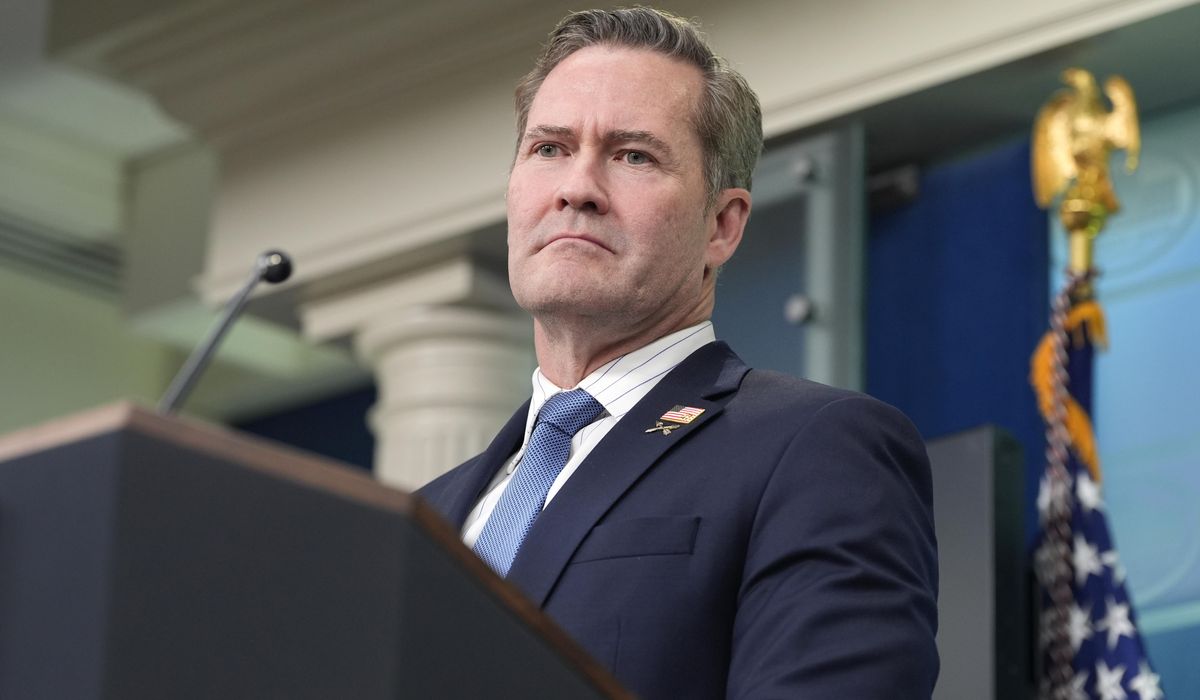
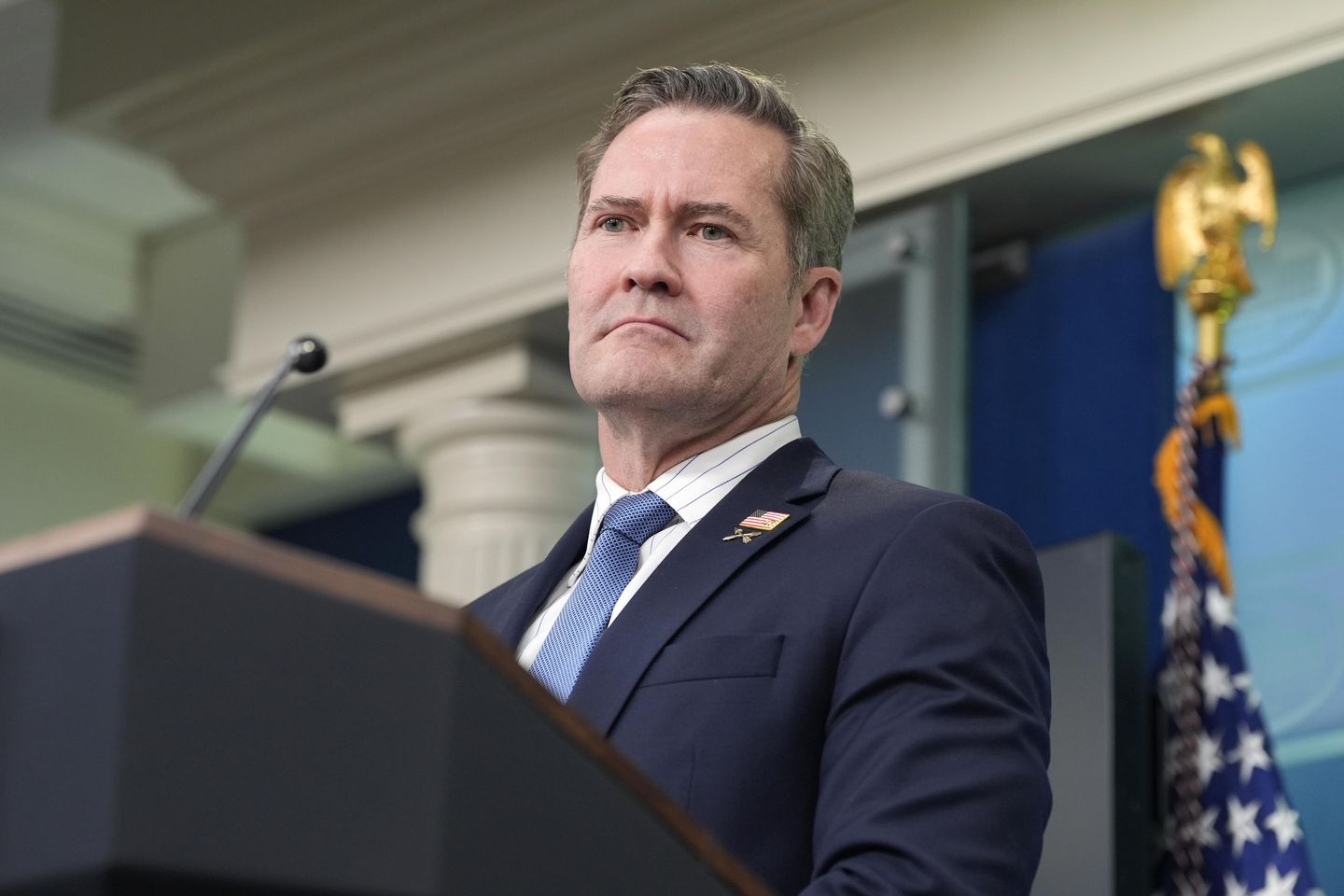
U.S. Ambassador to the United Nations Mike Waltz cast Iran’s leadership as chaotic and distracted on Sunday, pointing to Tehran’s decision to close the Strait of Hormuz as evidence that President Trump’s war strategy is working.
Mr. Waltz said the widespread attacks on Iran’s leadership during the war have resulted in deep, internal divisions in the Islamic republic that hamper consistent policy implementation.
“I think that shows the discord within their ranks,” Mr. Waltz told NBC’s Kristen Welker. “The foreign minister says it’s open, the [Islamic Revolutionary Guard Corps] says it’s closed. Regardless, it’s the U.S. Navy and President Trump, as commander-in-chief, who decides what comes in and comes out.”
Iranian officials announced Saturday that the Strait of Hormuz would be closed until further notice in response to the U.S. Navy’s blockade of Iranian ports. The announcement came one day after Iranian Foreign Minister Abbas Araghchi and Mr. Trump said the strait was completely open for all vessels.
Two commercial vessels reportedly came under attack from Iranian forces on Saturday as they attempted to traverse the waterway.
Despite the closure, Mr. Waltz maintained that Iran is weaker than ever and that the U.S. has an advantage going into the next round of negotiations.
“Iran is increasingly isolated diplomatically, it’s struggling economically with its currency, and its foreign currency reserves are collapsing. And at the end of the day, they do not have the cards and they are coming back to the table for a deal,” the ambassador said.
The U.S. blockade, launched early last week, aims to limit Iran’s ability to export oil. Before the blockade, Iran reportedly was able to export millions of barrels of oil to China while keeping the strait closed for other nations.
The Strait of Hormuz has been effectively closed for over a month, as Iran attempts to use the crucial waterway to pressure the U.S. to end the war. At least 20% of the world’s oil and liquid natural gas travels through the strait each year, and energy prices have jumped dramatically over the past few weeks.
The strait was intended to be open to during the two-week ceasefire between Iran and the U.S., signed last week. However, Iranian officials were outraged over Israel’s continued bombardment of Hezbollah fighters in southern Lebanon during the ceasefire, arguing that it violated the agreement.