In just a couple of years, the consensus around stopping U.S. military aid to Israel has shifted dramatically within the Democratic Party.
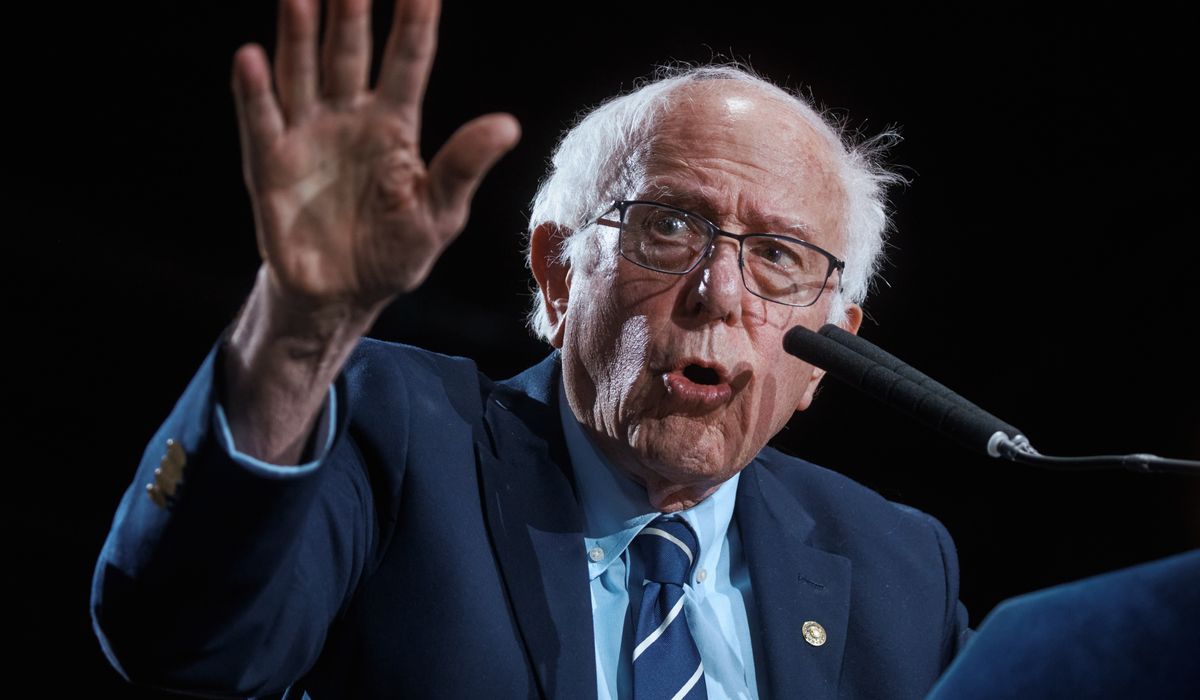
To put it in perspective: Sen. Bernard Sanders’ push to block that aid started with just 19 votes in 2024. Last year, that jumped to 27. This week? It hit 40.
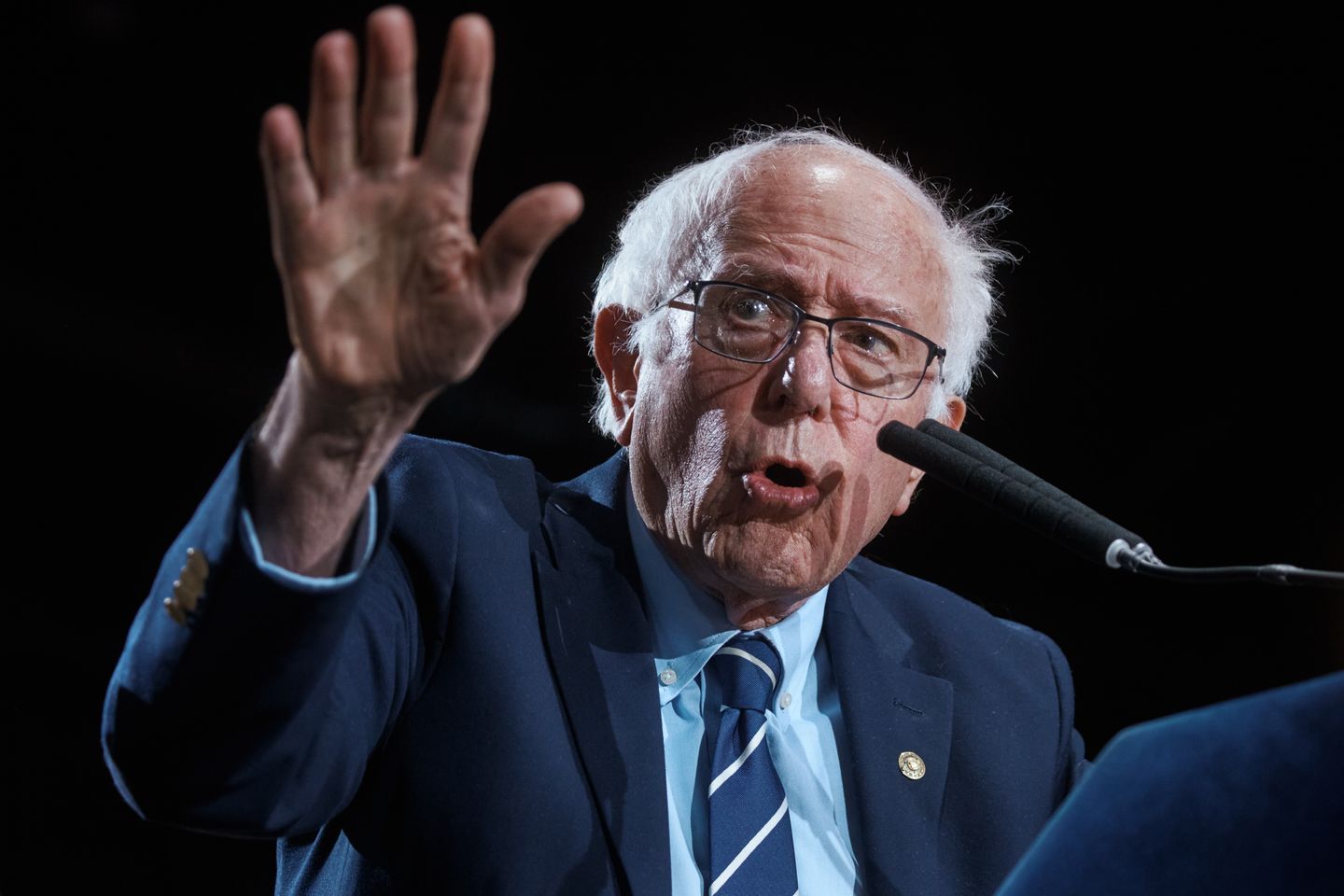
Mr. Sanders called it a milestone, claiming the growing opposition to sending more U.S. military aid to Israeli Prime Minister Benjamin Netanyahu and “his horrific, illegal wars” reflects the true will of the American people.
It is another sign that the party’s DNA is changing fast and that evolution will be tested in the midterm elections this fall.
The divisions have played out at the party’s highest levels as well.
At the DNC’s spring meeting in New Orleans last week, the party’s resolutions committee tied itself in knots over Israel-related proposals, rejecting a resolution condemning the American Israel Public Affairs Committee’s influence in Democratic primaries and punting on a pair of measures related to conditioning military aid to Israel, referring them instead to a Middle East working group that is trying to find common ground.
Meanwhile, Democrats running in Senate and House races across the country, including a special election Thursday in New Jersey’s 11th Congressional District, have accused Mr. Netanyahu of carrying out a “genocide” against the Palestinians. They boast that their refusal to take money from AIPAC is a badge of honor and that those who do deserve the scarlet-letter treatment.
Nowhere is that more true than in Michigan, where Abdul El-Sayed, who has Mr. Sanders’ backing, is leaning hard into this shift and picking up some serious steam.
He is facing off against state Sen. Mallory McMorrow, who has tried to carve out some middle ground, and Rep. Haley Stevens, who embraced AIPAC and stood her ground on Israel, in a primary that feels like a tug-of-war for the soul of the party.
Mr. El-Sayed last week campaigned alongside Hassan Piker, a left-wing political streamer with millions of Twitch followers who has been an outspoken critic of Israel and advocate for Palestinian rights.
Following the Oct. 7 Hamas attack that killed 1,200 people in Israel, Mr. Piker said he was the subject of smear campaigns seeking to cast him as a radical nutjob.
“But now, I can easily say f—- ’em because I am no longer alone, neither are you,” he said, drawing loud applause from the crowd.
Channeling an argument embraced by some Republicans, including former Rep. Marjorie Taylor Greene, Mr. Piker said: “Foreign policy is directly related to domestic policy because every single dollar that is spent on a bomb that blows up a school overseas is a dollar that is stolen from you.”
“That is a real theft, and we say enough is enough,” he said.
David Dulio, a political science professor at Oakland University in Michigan, says the race is a live look at Democratic infighting over the thorny issues of U.S. support for Israel’s war against Hamas and Iran.
“I think the progressive wing has influenced a shift among those who we could have called — or maybe we can still call — more mainstream Democrats, and the progressive wing is pulling them further left,” Mr. Dulio said.
He said the dynamic is driven by the growing clout of the party’s activist base.
“It is just pressure from loud and increasingly important voices from that faction that impact some of the base voters, and these days, the base is more important than it ever has been,” he said. “A lot of candidates are running, even in general elections, base-only campaigns, where they are trying to win by simply turning out their base more than the other side turns out its base.”
He said it is hard to pin down the chief thrust of the growing anti-Israel sentiment.
“I think the clear lines between anti-Zionism and anti-Netanyahu and anti-secularism have been blurred,” he said. “There used to be more of an ability for folks to mark the subtle differences between being anti-Netanyahu and anti-Israeli government and antisemitism. I think that has changed.”
The rise in opposition to Israel, which has also come from some Republicans, has coincided with a rising death toll in Gaza, which has climbed past 70,000, as well as with a global rise in antisemitism, which has set off alarm bells in Jewish communities.
It was not always this way.
In 2016, Hillary Clinton was singing Israel’s praises from the AIPAC stage. She declared: “We have always shared an unwavering, unshakable commitment to our alliance and to Israel’s future as a secure and democratic homeland for the Jewish people.”
She was equally direct about where America’s loyalties lay. “America can’t ever be neutral when it comes to Israel’s security or survival,” she said. “Some things aren’t negotiable. And anyone who doesn’t understand that has no business being our president.”
President Obama struck a similar chord four years earlier at the same conference. “Israel’s security is sacrosanct. It is non-negotiable,” he declared, adding that “when the chips are down, I have Israel’s back.”
Mr. Obama was equally emphatic that the alliance belonged to neither party. “America’s commitment to Israel has endured under Democratic and Republican presidents, and congressional leaders of both parties,” he said. “In the United States, our support for Israel is bipartisan, and that is how it should stay.”
AIPAC did not respond to a request for comment.
A Pew Research Center survey conducted last month found that eight in 10 Democrats and Democratic-leaning independents now hold an unfavorable view of Israel — up from 53% in 2022, a shift of 27 percentage points in just four years.
Among younger Democrats, the numbers are even starker, with 84% of those younger than 50 viewing Israel negatively. The survey was conducted about a month into the U.S. and Israeli airstrikes on Iran.
Pro-Israel voices have warned that the shift within the Democratic Party is fueling a broader rise in antisemitism, arguing that politicians who align themselves with strident critics of Israel are lending legitimacy to hate.
James Zogby, a DNC member and president of the Arab American Institute, pushed back sharply on that argument. “This is an effort to silence the debate by casting it as antisemitic,” he said. “It is not. And the efforts to get Congress to do it, to get the administration to do it — it’s all part of an ongoing effort at silencing debate. And it’s unseemly.”
He said the harder line from pro-Israel forces is backfiring. “Nobody quite likes the government intervening and telling you what you can say and can’t say,” Mr. Zogby said. “I think people who do it do so at risk.”
Asked whether the shift in public opinion could be reversed, Mr. Zogby was blunt. “This one’s over,” he said. “The question is how it plays out in terms of policy.”
Some Democrats warn that candidates are trying to model their campaigns on the success of Zohran Mamdani, the democratic socialist who won the New York City mayor’s race last year, while ignoring the fact that the race took place in deep-blue New York City.
Melissa DeRosa, a Democratic strategist, said the general election test remains an open question.
“The question is: Once you get to the general election, does that become a liability, and can you succeed when you are going towards these radicals who hang around with people who say things like America deserves 9/11 and Jews are inbred?” Ms. DeRosa said. “I like to believe no.”
Ms. DeRosa, who made the comments on “The Morning Meeting with Mark Halperin” podcast, blamed the shift on “an uneducated generation that is up and coming.”
For now, she predicted the trend will continue because “primary politics keep reinforcing that that is the position you need to take in order to be successful.”
“As long as they continue to get the reinforcement, they are going to stay there,” Ms. DeRosa said.
Republican National Committee spokesperson Kiersten Pels said that does not bode well for Democrats this fall, where voters will have an opportunity to cast their ballot against candidates, like Mr. El-Sayed, “who are actively rooting against America” and “campaigning with Hamas sympathizers.”
“It may win points in deep-blue primaries, but in competitive seats, it’s a glaring liability that will cost Democrats in the general election,” Ms. Pels said.