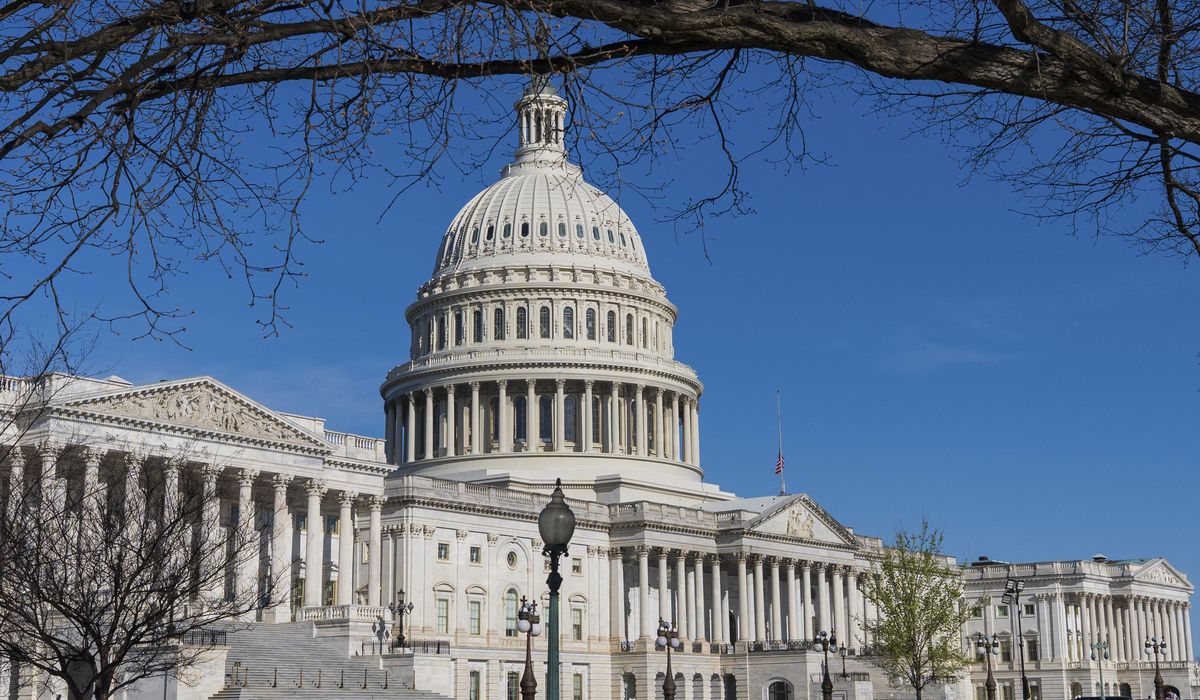
There’s been a renewed focus on weeding out fraud in government programs, but officials still don’t take the issue seriously enough, Congress’ chief watchdog agency told lawmakers on Wednesday.
Agencies don’t block bad spending at the front end, don’t do a good enough job verifying identities of those they’re sending money or benefits to, don’t cooperate across lines to weed out double-dippers, and don’t do enough to chase down and claw back money they wrongly paid out, Seto Bagdoyan, director of forensic audits at the Government Accountability Office, told the House.
“This mentality must change, and quickly,” he said.
He said allowing self-attestation — people to claim eligibility up front, and begin collecting benefits without formal vetting — was the “bane” of auditors who police fraud.
And he decried what he called a fund-and-forget approach that treated the money as beyond reach once it was shipped out.
He was testifying to the House Oversight Committee, which was examining the more than a trillion dollars in federal money sent to the states to administer assistance programs each year.
President Trump has put a spotlight on fraud, complaining about massive waste in government programs. His administration has suggested eliminating it could close the nearly $2 trillion federal budget deficit.
Experts doubt that, but do say there are hundreds of billions of dollars in potential savings if states and the feds fixed things.
Both red and blue states, following Mr. Trump’s lead, have begun to embrace anti-fraud rhetoric and to highlight successes in stopping bogus payments.
Allison Ball, Kentucky’s state auditor, said the national focus could help change what has often been a culture of acceptance of fraud.
“The attitude at the top really does make a difference,” she said.
The problem, the experts told Congress on Wednesday, is that there is just so much going on — some of it driven by international criminal organizations that figured out how easy it was to scam Uncle Sam during the pandemic.
Mr. Bagdoyan said once the money is out the door, the government is terrible at getting it back.
He pointed to pandemic assistance programs, such as enhanced unemployment benefits, where GAO says as much as $135 billion of the $800 billion was blown on fraud.
Despite thousands of criminal cases and repayment agreements, the government has still only collected “cents on the dollar,” he said.
OJ Oleka, the CEO of the State Financial Officers Foundation, suggested strategies to combat fraud, including establishing formal cooperation between state auditors and federal inspectors general; adopting controls up front to stop the money from going out the door; and giving states more incentives to take care of the money.
Right now, the feds pay the same whether a state has a good or bad record on fraud and improper payments.
“Congress should tie a meaningful portion of federal matching funds to verifiable reductions in fraud and improper payment rates,” Mr. Oleka said.
Some Democrats, while giving a nod to fraud, worried about beneficiaries who might struggle to keep benefits if controls get stricter.
“We must ensure that these critical programs run efficiently with minimal disruption,” said Delegate Eleanor Holmes Norton, the District’s nonvoting member of Congress.
Democrats also complained about President Trump’s firing of at least 17 inspectors general last year, saying he was taking some of the watchdogs off the front lines.