MANILA, Philippines — More than 17,000 American and Filipino military personnel will participate in one of their largest annual combat exercises in the Philippines that underscore the United States’ staunch commitment to Asia despite its preoccupation with the Middle East, a U.S. military official said Tuesday.
During the April 20-May 8 maneuvers, called the Balikatan, Japanese forces will fire a missile in a ship-sinking exercise in northwestern Philippine waters facing the disputed South China Sea. Japan’s defense chief has been invited to witness the live-fire drill, Philippine military officials said.
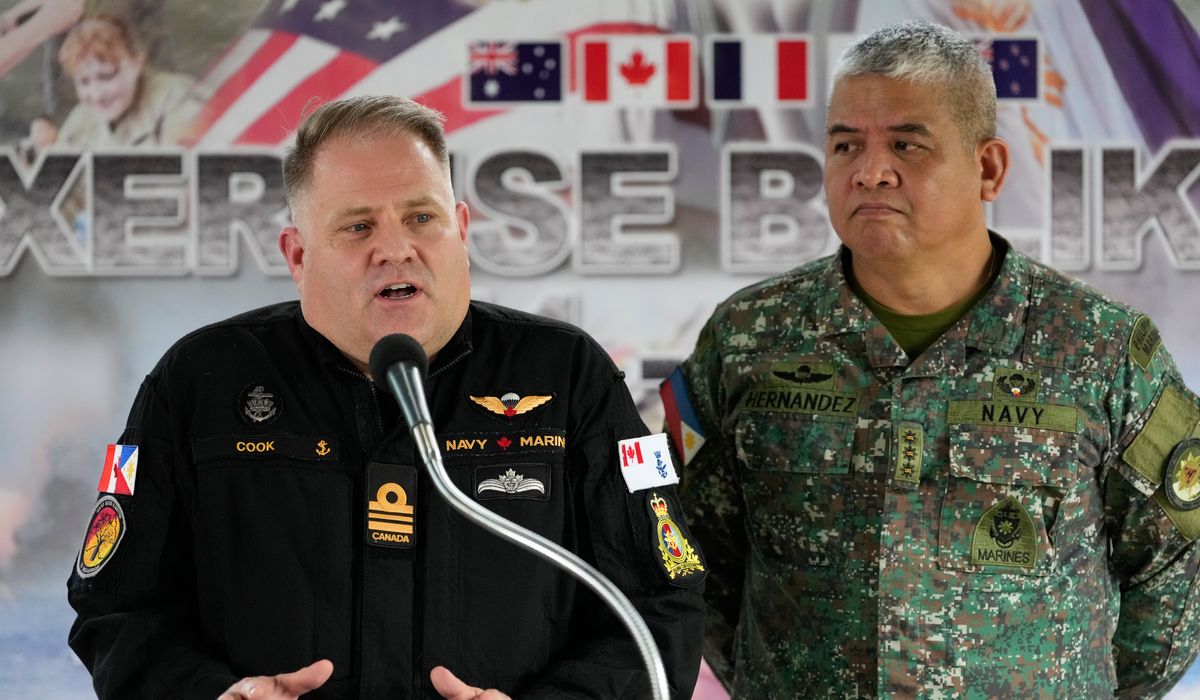
The large-scale combat drills between the U.S. and Philippines, which are longtime treaty allies, will expand this year to include other friendly forces, including those from Japan, France and Canada, which have signed visiting forces agreements with Manila, the Philippine military said.
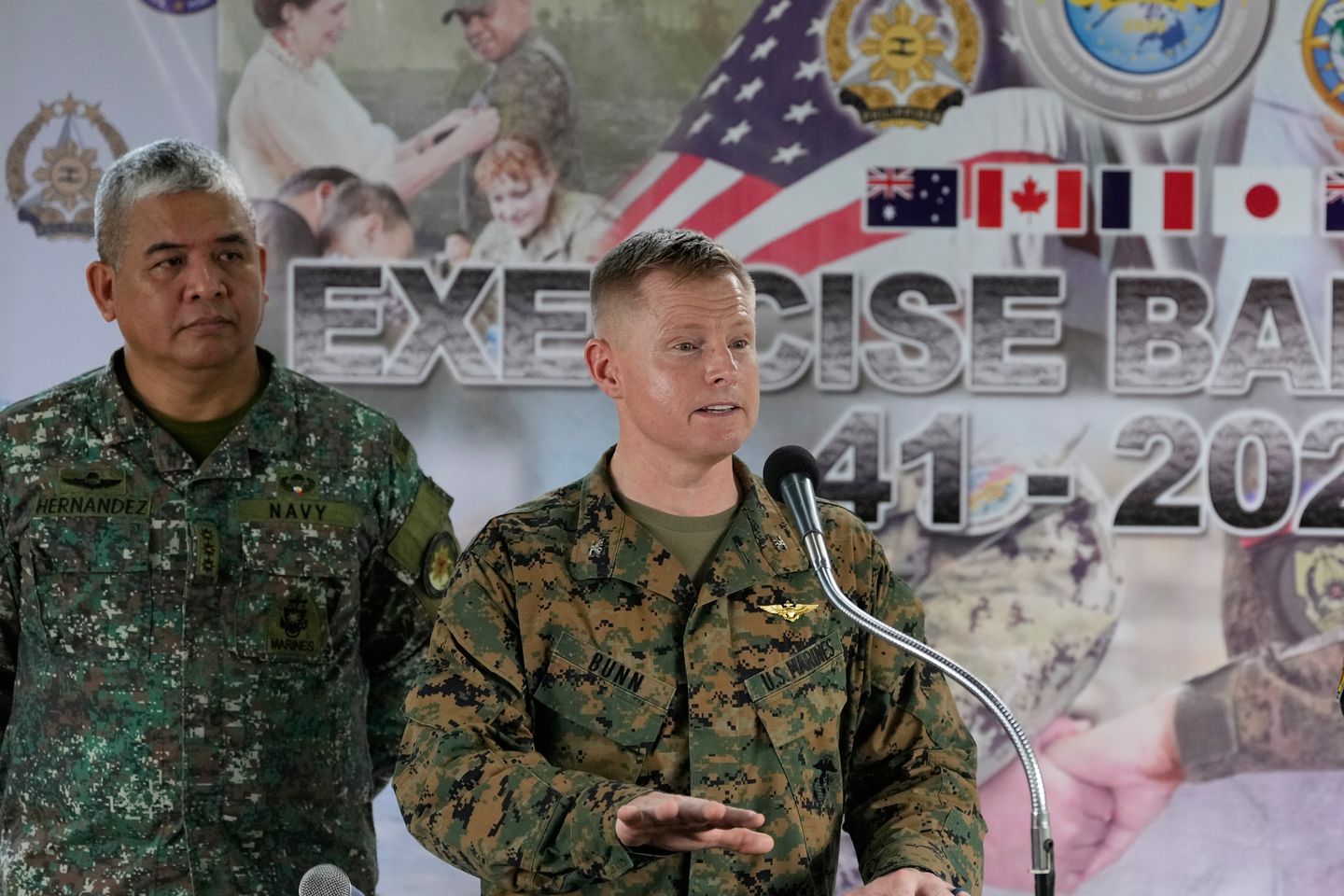
“Our message is our dedication and commitment to our alliance and regional security,” Col. Robert Bunn, a spokesperson for U.S. forces, said in a news briefing when asked what message the U.S. military wanted to send with its large Balikatan deployment despite the war in the Middle East.
Bunn did not immediately specify the number of U.S. forces joining the combat drills. Last year, about 9,000 U.S. military personnel joined the Balikatan — Tagalog for shoulder-to-shoulder — exercises.
“The defensive aspect of countering drones is very much a part of the exercise,” Bunn said in response to a question on the types of mock combat operations to be expected.
China has opposed combat drills, especially those involving U.S. forces, in the region, including in or near the disputed South China Sea, which Beijing claims virtually in its entirety.
The Philippines, Vietnam, Malaysia, Brunei and Taiwan also lay claims to the waters, a key global trade route, but territorial confrontations have particularly spiked between Chinese and Filipino forces in recent years.
The Philippine military says the combat exercises do not target any country but acknowledges that the combat exercises with the U.S. and security allies would help the Philippines defend the country’s interests in the disputed waters.
Last year, U.S. Defense Secretary Pete Hegseth assured Philippine officials while visiting Manila that the Trump administration would work with allies to ramp up deterrence against threats across the world, including China’s aggression in the South China Sea.
“Friends need to stand shoulder to shoulder to deter conflict, to ensure that there is free navigation, whether you call it the South China Sea or the West Philippine Sea,” Hegseth told Philippine President Ferdinand Marcos Jr.