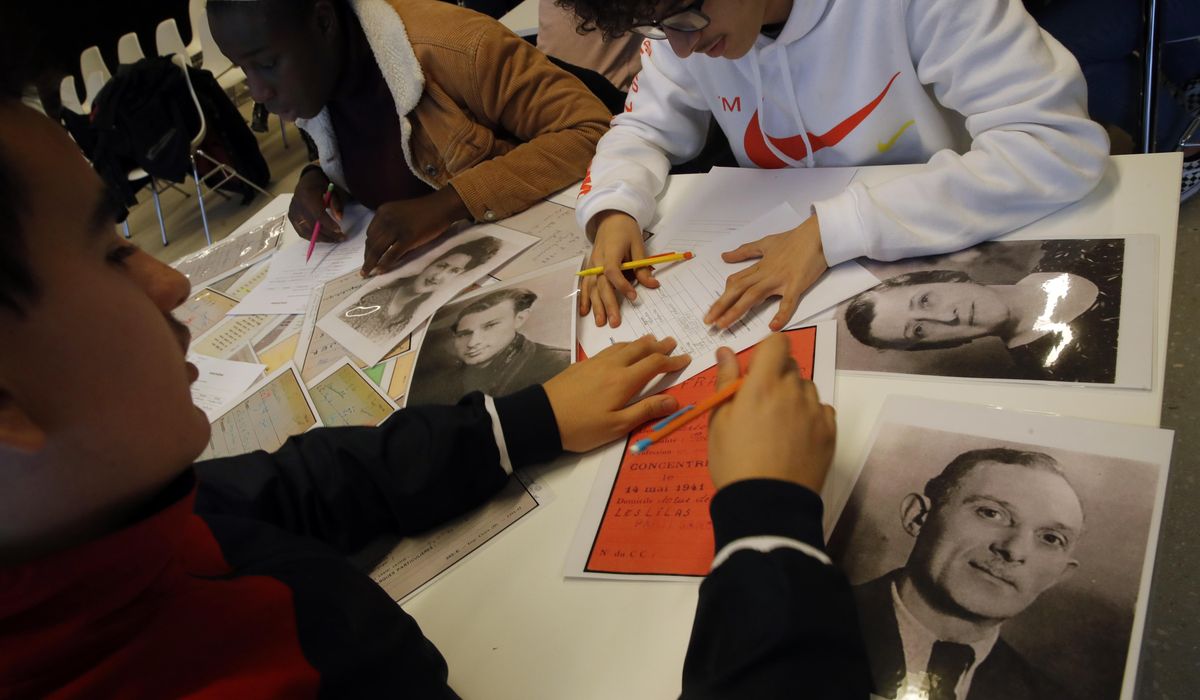
Yom HaShoah, the annual Jewish day of remembrance for the six million Jews killed in the Holocaust, begins Monday evening and continues through Tuesday. Yet Holocaust education laws remain uneven across the United States: 29 states require such instruction in public schools, six encourage it but do not require it, and nine have no Holocaust education legislation of any kind.
The patchwork of Holocaust education laws across the United States has grown significantly in recent decades, but the landscape remains incomplete. Twenty-nine states now have laws requiring public school students to be taught about the Holocaust. Another six states have permissive statutes that encourage but do not require such instruction, while nine have no Holocaust education legislation of any kind, according to the Holocaust education nonprofit Echoes & Reflections, which tracks state legislation. An additional 17 states support Holocaust education commissions or task forces.
Historical background
The movement to mandate Holocaust instruction in American schools gained momentum beginning in the 1970s and accelerated through the 1990s. New Jersey enacted the first statewide mandate in 1994, and states such as California, Florida, Illinois, and New York followed. The number of states requiring Holocaust education has risen sharply since 2020.
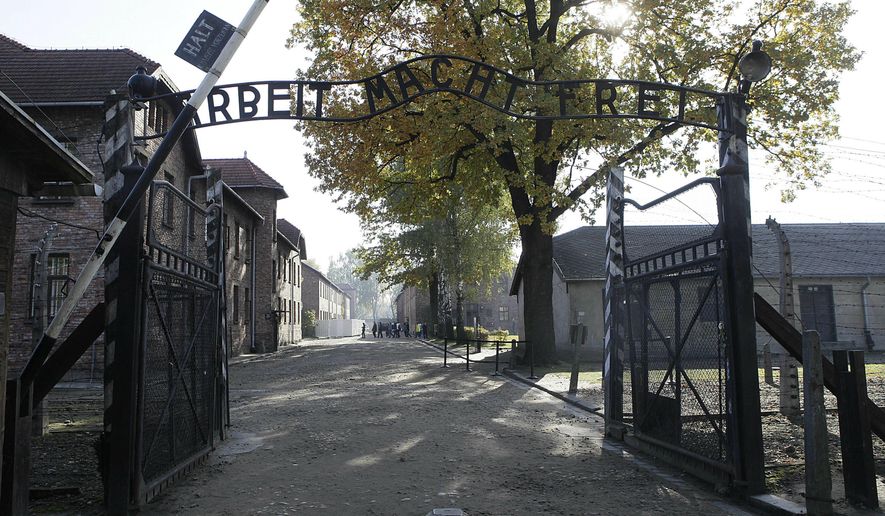
This Friday, Oct. 19, 2012, file …
more >
At the federal level, Congress passed the Never Again Education Act in 2020 with broad bipartisan support, authorizing $10 million over five years administered by the U.S. Holocaust Memorial Museum to develop Holocaust education resources and expand professional development programs for teachers nationwide. Congress reauthorized the program in December 2024, extending federal funding through fiscal year 2030. The reauthorization passed the House 402-12 and was signed into law as Public Law 118-197.
Separately, in January 2025, members of Congress reintroduced the HEAL Act — the Holocaust Education and Antisemitism Lessons Act — which would direct the USHMM to conduct a comprehensive national study of how and where Holocaust education is being taught in public schools.
States that have acted
Among states that have added or strengthened requirements in recent years: Arizona enacted a mandate in 2021 requiring genocide education at least twice between seventh and twelfth grades. Arkansas passed a similar measure that took effect in the 2022-23 school year, requiring Holocaust lessons in grades five through twelve. Maryland enacted legislation in 2023 requiring revised and enhanced Holocaust instruction in public schools beginning with the 2024-25 school year.
In California, Gov. Gavin Newsom in 2024 signed SB 1277, establishing the California Teachers Collaborative on Holocaust and Genocide Education as an official state program. In New York, a 2022 law directed state education officials to survey school districts on whether they are complying with Holocaust instruction requirements. Arizona’s State Superintendent of Public Instruction Tom Horne in 2024 also asked all school district superintendents to report on how they are implementing the state’s mandate.
Where requirements remain absent or weak
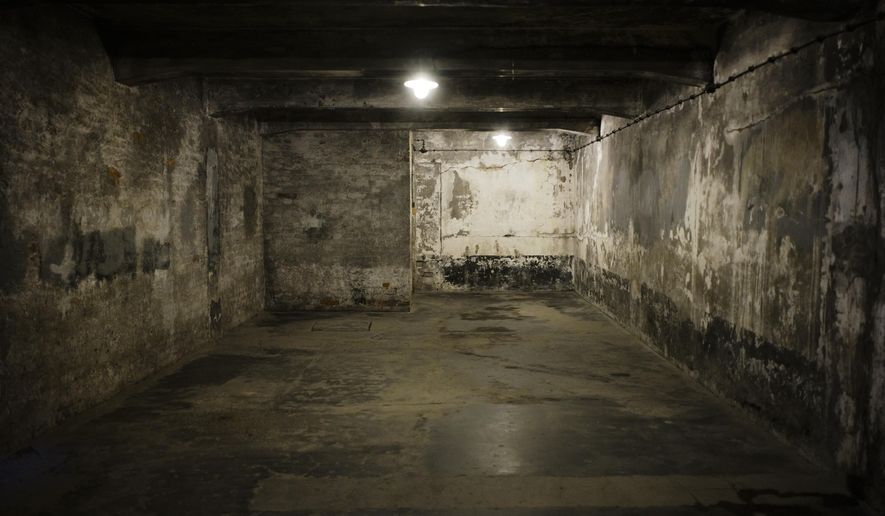
FILE – A view inside gas …
more >
Despite the growth in mandates, nine states have no Holocaust education legislation of any kind. Even among states with mandates on the books, researchers have documented persistent gaps between the law and the classroom. Holocaust curriculum mandates are often unfunded and do not include resources for materials and professional development, and passing a law requiring the teaching of a particular subject does not necessarily mean such teaching occurs.
A December 2024 analysis published in Phi Delta Kappan found that there is evidence that Holocaust education mandates do not always lead to changes in state curriculum standards, which teachers cite as a major driver of their decision making.
What surveys show about student knowledge
Survey data suggest that the growth in mandates has not fully closed the awareness gap among younger Americans. A 2020 survey conducted by the Conference on Jewish Material Claims Against Germany — known as the Claims Conference — and described as the first 50-state survey of Holocaust knowledge among millennials and Gen Z, found that 63 percent of all national respondents did not know that six million Jews were murdered, and 36 percent thought that two million or fewer Jews were killed during the Holocaust. Additionally, 48 percent of national respondents could not name a single one of the more than 40,000 concentration camps and ghettos established in Europe during the Holocaust.
The survey found wide variation by state. Wisconsin ranked highest in Holocaust awareness among U.S. millennials and Gen Z, while Arkansas had the lowest Holocaust knowledge score, with fewer than two in ten respondents meeting the survey’s knowledge criteria. The survey pre-dates Arkansas’s 2022 mandate.
A January 2025 eight-country index released by the Claims Conference found that nearly half of Americans surveyed remain unable to name a single camp or ghetto established by the Nazis during World War II.
The context of rising antisemitism
The debate over Holocaust education requirements is taking place against a backdrop of antisemitic incidents that have risen to record levels for four consecutive years. The Anti-Defamation League’s 2024 Audit of Antisemitic Incidents, released April 22, 2025, found that 9,354 antisemitic incidents were recorded across the United States in 2024 — a 5 percent increase from 2023, a 344 percent increase over the past five years, and the highest number on record since ADL began tracking antisemitic incidents 46 years ago. The 12-month total averaged more than 25 targeted anti-Jewish incidents per day — more than one per hour.
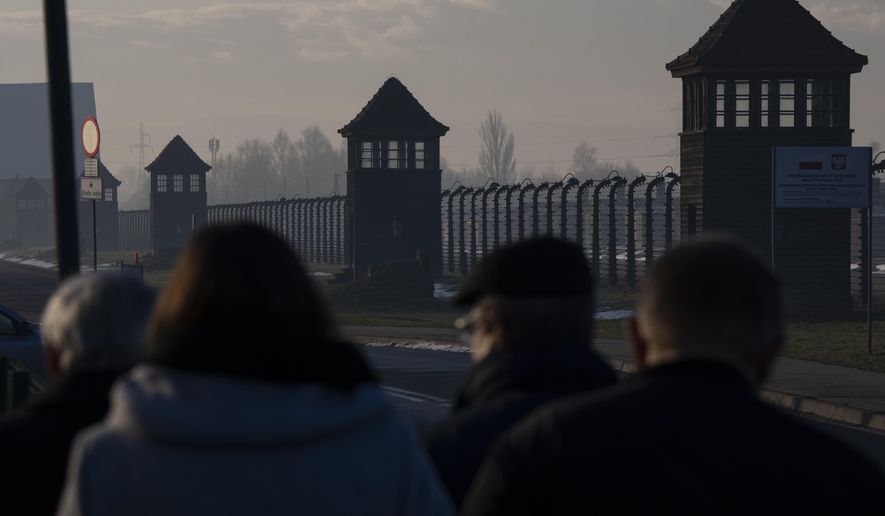
People walk outside the former Nazi …
more >
Incidents on college and university campuses rose more steeply than any other location category, with 1,694 campus incidents recorded in 2024 — 84 percent higher than in 2023 and comprising 18 percent of all incidents, a larger share than in any previous audit. Antisemitic incidents occurred in all 50 states and the District of Columbia. The ADL states it does not count general criticism of Israel or support for Palestinian rights as antisemitic, and that its classifications follow the International Holocaust Remembrance Alliance definition of antisemitism. For the first time in the audit’s history, a majority — 58 percent — of all 2024 incidents contained elements related to Israel or Zionism.
The Claims Conference’s 2020 survey found broad public support for addressing these gaps through schools: more than nine out of ten respondents said all students should learn about the Holocaust in school, and eight out of ten said it is important to keep teaching about the Holocaust so it does not happen again.
This article was constructed with the assistance of artificial intelligence and published by a member of The Washington Times’ AI News Desk team. The contents of this report are based solely on The Washington Times’ original reporting, wire services, and/or other sources cited within the report. For more information, please read our AI policy or contact Steve Fink, Director of Artificial Intelligence, at sfink@washingtontimes.com
The Washington Times AI Ethics Newsroom Committee can be reached at aispotlight@washingtontimes.com.