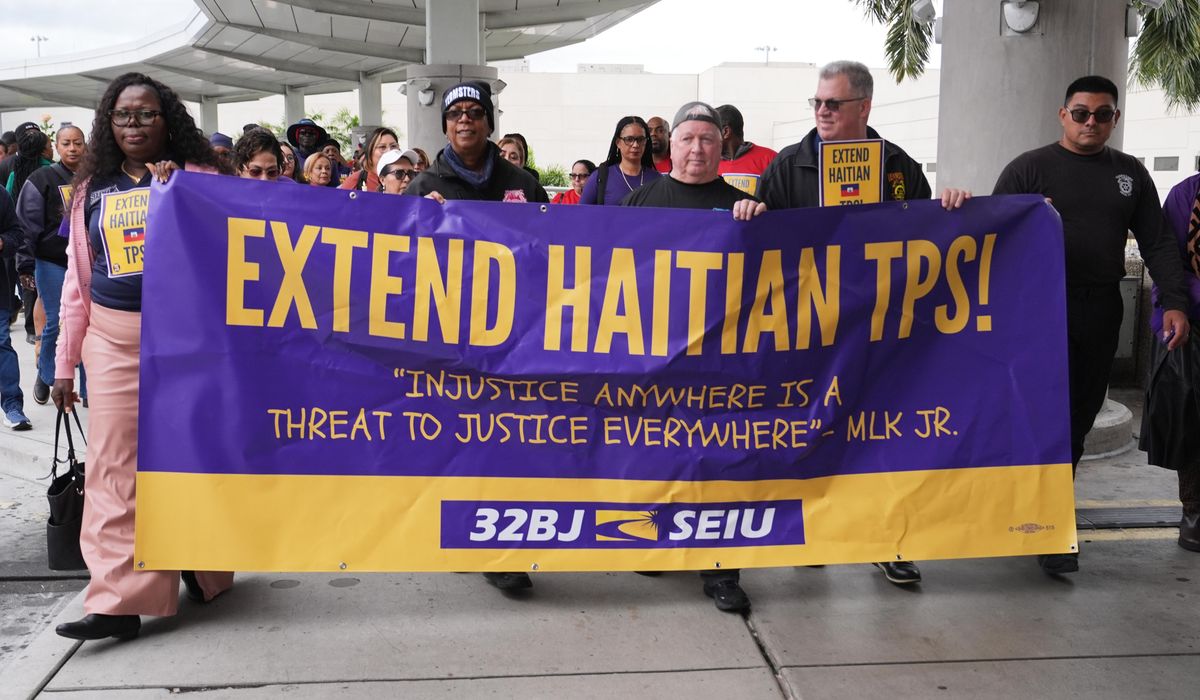
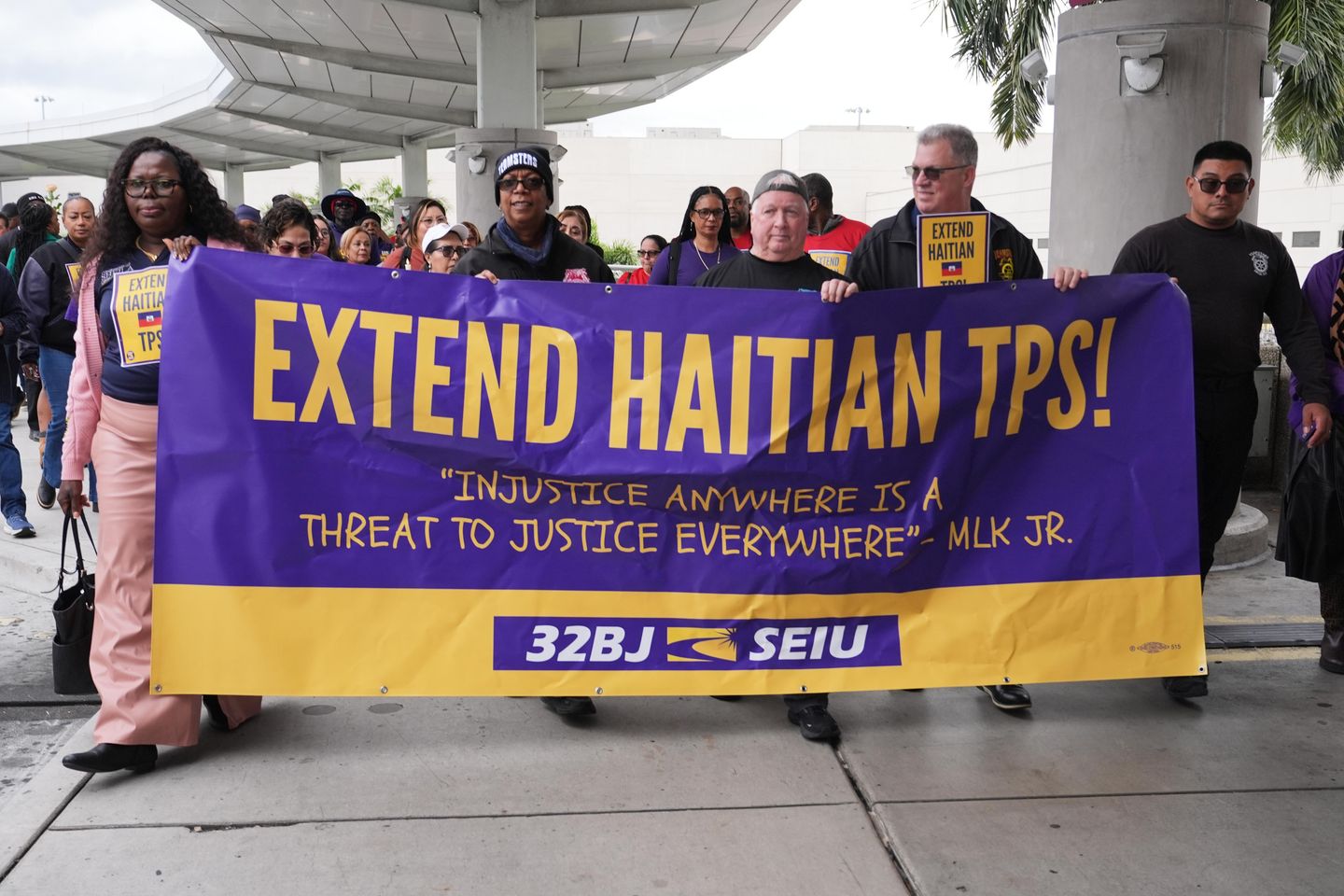
The administration sought permission Wednesday from the Supreme Court to cancel deportation amnesty for 350,000 Haitian migrants, saying lower judges have wrongly stymied President Trump’s plans.
Solicitor General D. John Sauer said Mr. Trump’s ability to manage immigration and foreign policy is at stake, adding that Homeland Security’s decisions must be free from second-guessing by judges.
At issue is Temporary Protected Status, a grant of leniency from the usual immigration law that allows people without firm status to remain in the U.S. while their countries recover from natural disaster, instability, war or disease.
The Trump administration has been steadily curtailing TPS, which at its peak in the Biden administration covered roughly 1.3 million people, protecting them from deportation and granting them some taxpayer benefits.
Lower courts have been conflicted, with a number of judges ruling DHS acted too precipitously, while some have said the administration could proceed.
Mr. Sauer said the Supreme Court needs to step in and give firm guidance.
“Given the pattern of lower-court rulings and the division of courts of appeals, this Court should grant review and provide guidance to lower courts. This case provides a suitable vehicle for resolving those cross-cutting questions,” he told the justices in a brief.
The high court has already let the administration wind down TPS for Venezuelans.
But lower courts have said the justices’ ruling was too inscrutable to apply to other TPS wind-downs regarding Haiti, Syria, Honduras, Nepal and Nicaragua — all of which are the subject of court cases.
In the case of Haiti, Judge Ana Reyes, a Biden appointee in Washington, said just-relieved Homeland Security Secretary Kristi Noem harbored a “hostility to nonwhite immigrants” that tainted her decision-making.
“Secretary Noem complains of strains that unlawful immigrants place on our immigration-enforcement system. Her answer? Turn 352,959 lawful immigrants into unlawful immigrants overnight. She complains of strains to our economy. Her answer? Turn employed lawful immigrants who contribute billions in taxes into the legally unemployable,” Judge Reyes wrote in a weighty 83-page ruling. “This approach is many things — in the public interest is not one of them.”
The federal appeals court in Washington declined to block her ruling, sending Mr. Sauer to the justices.
He previously asked the high court to put on hold a similar set of rulings out of a federal court in New York. The justices have yet to rule on that.
TPS is supposed to be temporary but in practice has become a backdoor immigration system.
Hundreds of thousands of migrants from Central America have been living under TPS for roughly a quarter century, and the Biden administration vastly expanded the program’s reach. From about 400,000 people in mid-2020, it boomed to 1.3 million by last March.