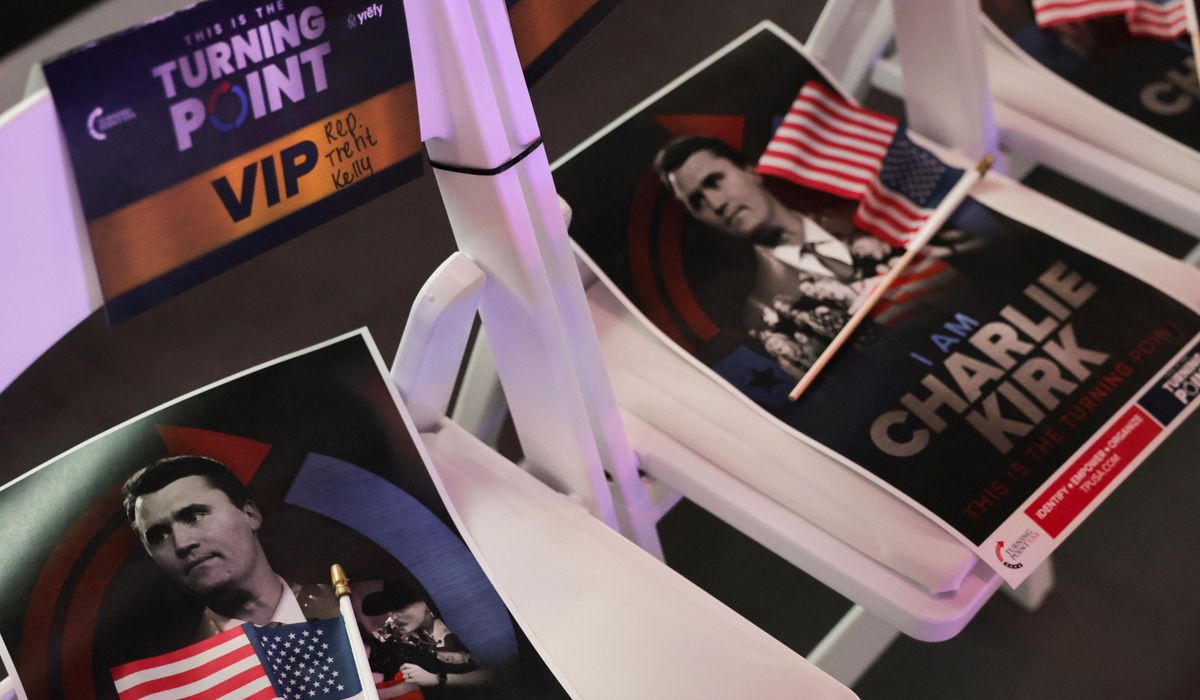
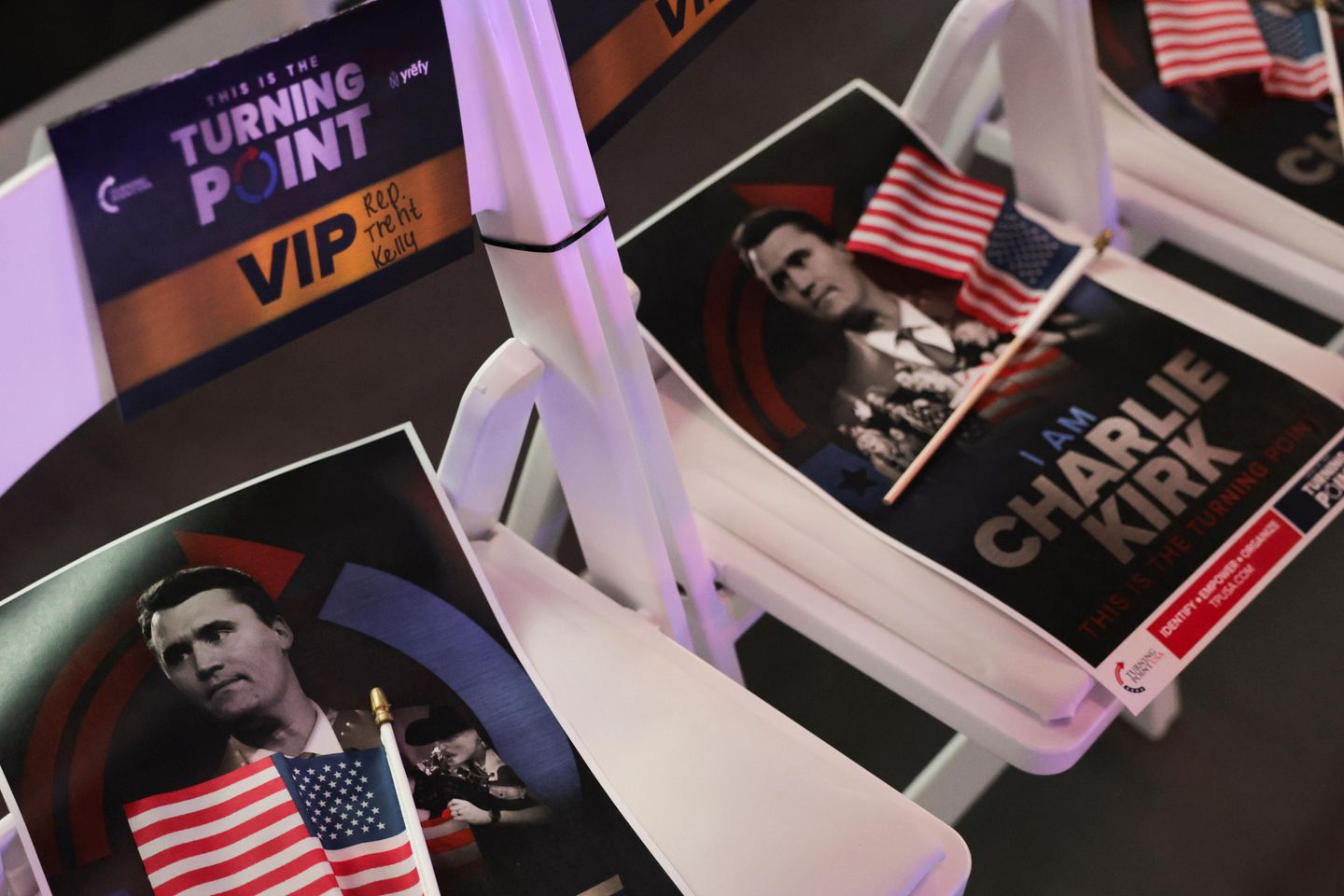
Conservative activist Charlie Kirk’s assassination became a national rallying cry for protecting freedom of speech, but that lesson was apparently lost on many college students.
Nine out of 10 undergraduates agreed to some extent that “words can be violence” in a report released Tuesday by the Foundation for Individual Rights and Expression, the first survey of campus free-speech attitudes conducted since Kirk was killed Sept. 10 during a public debate at Utah Valley University.
The foundation called the results “especially startling coming in the wake of Charlie Kirk’s assassination — an extreme and tragic example of the sharp difference between words and violence.”
Kirk, co-founder of Turning Point USA, was known for traveling to college campuses to engage with typically liberal students in debates.
“When people start thinking that words can be violence, violence becomes an acceptable response to words,” said Sean Stevens, FIRE chief research adviser. “Even after the murder of Charlie Kirk at a speaking event, college students think that someone’s words can be a threat. This is antithetical to a free and open society, where words are the best alternative to political violence.”
The poll conducted for the foundation by College Pulse surveyed 2,028 undergraduates from Oct. 3 to 31, including an oversample of 204 students at Utah Valley. The margin of error was plus or minus 2.2 percentage points.
“The goal was simple: to assess whether the assassination and reactions to it are having a chilling effect on campus. What we found is troubling,” said the 31-page report, “After the Earthquake: How the Assassination of Charlie Kirk is Reshaping Campus Speech Nationwide.”
Of the 91% who agreed that “words can be violence,” 22% said they agreed “completely,” 25% said “mostly,” 28% said “somewhat” and 15% said “slightly.” Just 9% said the statement did not describe their views.
A smaller but still robust majority of 79% agreed to various extents that “silence is violence.”
Another key finding: Most students said they have become more concerned about expressing their opinions since Kirk’s death, particularly conservative students.
A significant plurality said they were less comfortable expressing views on controversial political topics in class (45%), common areas (43%) and on social media accounts with fellow students (48%).
The Kirk assassination has also chilled attitudes on public events on campus.
Half of students polled said they were less comfortable attending or hosting controversial public events on campus, while 35% said they were less comfortable attending public events in general, and 21% said they were less comfortable even attending class.
In every instance, conservatives expressed the most discomfort. For example, 60% of conservative students said they were less comfortable hosting controversial events on campus versus 44% of liberal students.
“Concern is significantly more pronounced among students at UVU, and among politically conservative students nationwide,” said the report. “But students who do not identify with Kirk’s politics also report pulling back from public expression, suggesting that the effects of this political violence cross ideological lines.”
The poll also found a “clear ideological divide” on how Kirk’s death affected student perspectives on “disruptive or violent protest tactics,” such as shouting down speakers, blocking entrances to speaking events, and using violence to stop a speech.
“Moderate and conservative students became significantly less likely to say that shouting down a speaker, blocking entry to an event, or using violence to stop a campus speech are acceptable actions,” said the report. “In contrast, liberal students’ support for these tactics held steady, or even increased slightly.”
The survey showed 28% of students agreed that using violence to stop a campus speech is “always,” “sometimes,” or “rarely” acceptable, while 71% said violence is never acceptable.
Of the students who were OK with violence, 26% said “throwing projectiles” was acceptable; 22% said the same about using “chemical irritants” like bear spray, and 20% said that a “physical assault” on the speaker was a legitimate tactic. Nearly half, or 46%, said none of the above would be acceptable.
FIRE poll: 90% of undergrads believe words can be violence even after killing of Charlie Kirk https://t.co/cuXFCafEKv via @TheFIREorg
— Greg Lukianoff (@glukianoff) December 2, 2025
Kirk’s death followed two assassination attempts on President Trump during the 2024 campaign and the shooting of Republican Rep. Steve Scalise at the 2017 congressional baseball game by a left-wing activist.
Even so, 73% of students agreed that “Political violence is a problem among conservatives,” with 42% saying the statement describes their thoughts “completely” or “mostly.”
A smaller majority of 63% agreed that “Political violence is a problem among progressives.”
Opposition to controversial speakers on campus declined among conservative and moderate students, but increased slightly among liberal students, as compared with the results of the FIRE College Free Speech Rankings survey conducted in 2024.
“This suggests that moderate and conservative students may be pulling back from speaker bans, while liberal students are becoming more inclined to exclude speakers whose views they find harmful or offensive,” the report said. “The ideological gap in speaker tolerance appears to be widening, not narrowing, after a high-profile political killing.”
Students were less likely to say a professor should be fired for making certain controversial statements, a shift that the foundation called “encouraging,” even though their level of tolerance was significantly less than that of the general public.
The foundation said that “the broader takeaway is clear: The assassination has had a chilling effect — not just at UVU, but across the country.
“Students say they are pulling back, are speaking less, and are less comfortable attending events. This is not being done in response to policy, but because of fear,” the report said. “If campus leaders, faculty, and policymakers want to protect academic freedom and open inquiry, they must reckon with that fear, and work to rebuild a culture of expression that can withstand not just controversy, but crisis.”